Discover expert surgical guides, manufacturing standards, and clinical innovations across spinal, trauma, and arthroscopy implant technologies.

Stay informed with in-depth technical analysis on titanium alloys, pedicle screws, PEEK cages, and modern orthopedic instrumentation.
Choosing the right Spinal Fixation System in 2026 requires more than comparing product catalogs or price lists. Global buyers must evaluate anatomy, surgical approach, implant materials, instrument compatibility, and long-term clinical support. A system designed for thoracolumbar stabilization may not suit cervical reconstruction, even when both use familiar screw-and-rod concepts.
This guide introduces major system types, including pedicle screw-rod constructs, cervical plates, interbody fixation devices, hook-based systems, and minimally invasive solutions. Each category has distinct indications, handling requirements, radiographic considerations, and training demands. Experienced surgeons often assess screw trajectory, reduction control, imaging visibility, and revision options before approving a purchase. Procurement teams should also review manufacturer quality systems, technical documentation, sterilization instructions, and market-specific registration requirements.
The details matter.
A dependable supplier should provide traceable materials, validated instruments, clear labeling, and responsive clinical education. However, no classification is perfect. Some modern systems combine anterior, posterior, and interbody functions, making simple product categories less reliable. Buyer priorities also differ across hospitals, distributors, and specialized spine centers. A lower unit price may become costly when instruments are incomplete or compatible implants are difficult to obtain.
This overview helps international buyers compare Spinal Fixation System types with greater discipline. It focuses on practical selection rather than marketing language. Clinical judgment remains essential, and product decisions should follow qualified medical advice, institutional protocols, and applicable regulations.
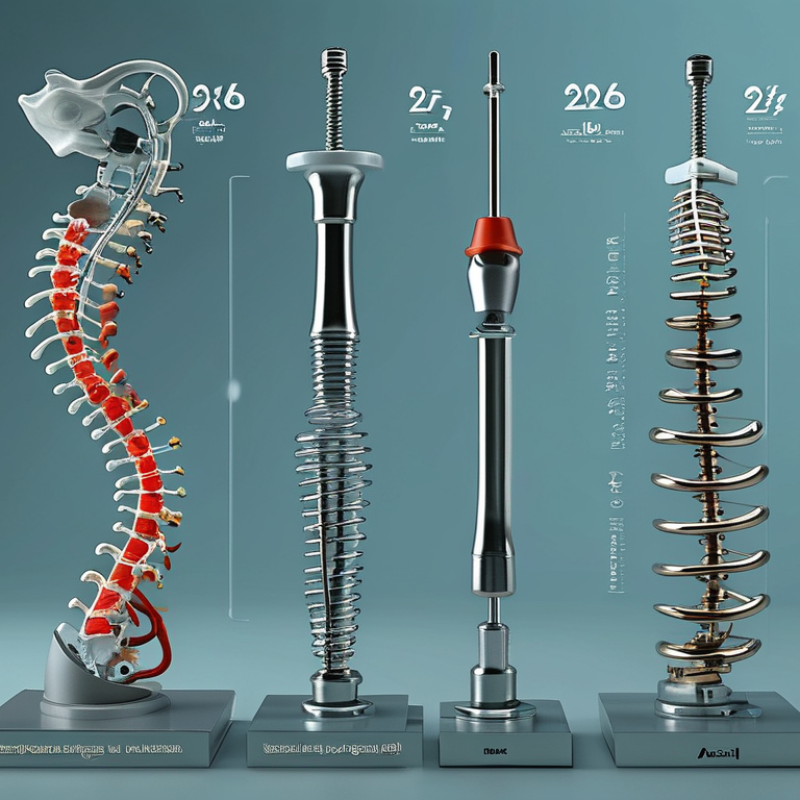
A spinal fixation system stabilizes vertebrae during healing, fusion, or deformity correction. It does not replace careful diagnosis or surgical judgment. The World Health Organization reported that 619 million people experienced low back pain in 2020. That figure may reach 843 million by 2050, increasing demand for dependable spinal care.
Core components usually include pedicle screws, rods, plates, hooks, cross-connectors, and interbody cages. Screws anchor into vertebrae, while rods maintain alignment and distribute mechanical loads. Interbody cages restore disc height and support bone growth between vertebral bodies. Small design details matter. Thread shape, surface treatment, connector strength, and instrument compatibility can affect procedural control.
Posterior systems often use screw-rod assemblies. Anterior systems may combine plates with interbody devices. Global buyers should examine material specifications, imaging compatibility, sterilization instructions, and evidence from clinical studies. Grand View Research identifies continued growth in the spinal implants market, driven partly by aging populations and rising degenerative disorders. Yet market growth alone proves little. A 2024 report from Fortune Business Insights also highlights regional differences in surgical access and healthcare spending. Product selection remains imperfect when hospitals compare price without assessing training, inventory depth, and revision needs. Regulatory documentation must be checked for each destination market.
Main Types of Spinal Fixation Systems Used in 2026
Spinal fixation systems stabilize unstable vertebrae and support fusion after decompression or trauma. Posterior pedicle screw-and-rod systems remain widely selected for lumbar and thoracic reconstruction. They provide strong three-dimensional control, especially when deformity or instability is present. Anterior cervical plates support alignment after disc removal. Interbody cages restore disc height and encourage bone growth between vertebrae.
Other important types include lateral and oblique interbody systems, hook-and-wire constructs, and minimally invasive percutaneous screws. Expandable cages can help restore collapsed spinal segments, but their use demands careful imaging and endplate assessment. The AO Spine Surgery Reference emphasizes that fixation choice should match anatomy, stability, bone quality, and surgical objectives. A convenient system is not always the safest system.
Demand is also influenced by the growing burden of spinal disorders. The World Health Organization reported that low back pain affected about 619 million people in 2020, with projections reaching 843 million by 2050. Grand View Research has estimated continued growth in the global spinal implants market through this decade, supported by aging populations and surgical innovation. These figures describe opportunity, not guaranteed clinical value. Global buyers should examine clinical evidence, sterilization controls, traceability, imaging compatibility, and surgeon training. Some market reports combine implants with instruments, which can blur comparisons. That limitation deserves attention.
| Spinal Fixation System Type | Primary Spinal Region | Main Structural Components | Typical Materials | Fixation Principle | Common Clinical Applications | Key Advantages | Important Considerations for Global Buyers |
|---|---|---|---|---|---|---|---|
| Posterior Pedicle Screw–Rod System | Thoracic, lumbar and lumbosacral spine | Polyaxial screws Rods Set screws Cross-connectors | Titanium alloy is common; cobalt-chromium rods and commercially pure titanium components may also be used. | Screws are inserted through the pedicles into the vertebral bodies and connected with longitudinal rods to control motion and maintain alignment. | Degenerative instability, deformity correction, spondylolisthesis, trauma, tumor-related instability and posterior fusion procedures. | Strong three-column control, segmental fixation, deformity-correction capability and compatibility with many posterior fusion techniques. | Requires accurate screw sizing and placement; image-guidance compatibility, rod diameter, screw range, locking mechanism and implant traceability should be reviewed. |
| Anterior Cervical Plate System | Anterior cervical spine | Bone screws Anterior plate Locking mechanism | Usually titanium alloy; radiolucent markers may be incorporated into some designs. | The plate and screws stabilize the anterior cervical construct and help limit graft or interbody-device displacement after discectomy or corpectomy. | Anterior cervical discectomy and fusion, cervical corpectomy reconstruction and selected treatment of cervical instability. | Low-profile designs can reduce soft-tissue prominence; fixed-angle and variable-angle screw options support different surgical techniques. | Assess plate profile, screw locking security, radiographic visualization, compatibility with interbody implants and availability of multiple lengths. |
| Cervical Lateral Mass Screw–Rod System | Subaxial cervical spine, generally C3–C6 | Lateral mass screws Rods Connectors | Titanium alloy is widely used; cobalt-chromium components may be selected for increased rod stiffness. | Screws engage the lateral masses and are linked by rods to provide posterior segmental stabilization. | Posterior cervical decompression and fusion, cervical trauma, deformity, instability and selected revision procedures. | Useful when posterior cervical stabilization is needed without relying on pedicle fixation; supports multilevel constructs. | Requires attention to vertebral artery and nerve-root anatomy, screw trajectory, rod contouring and compatibility with occipital or thoracic extensions. |
| Cervical Pedicle Screw–Rod System | Upper and lower cervical spine, selected cases | Cervical pedicle screws Rods Cross-links | Titanium alloy is most common in spinal fixation applications. | Pedicle-based anchors provide three-column purchase and are connected with rods for posterior stabilization and deformity correction. | High-instability trauma, cervical deformity, tumor reconstruction and revision surgery requiring stronger posterior fixation. | High mechanical purchase compared with many posterior cervical anchor options, particularly in selected complex constructs. | Placement is technically demanding; navigation, intraoperative imaging, training requirements and anatomical safety protocols are important purchasing factors. |
| Occipitocervical Fixation System | Skull base, upper cervical spine and cervicothoracic junction | Occipital plate Cervical screws Rods Connectors | Titanium alloy is commonly used for plates, screws and rods. | Links cranial fixation to cervical anchors to stabilize the craniocervical junction and upper cervical segments. | Craniocervical instability, selected upper cervical trauma, rheumatoid or congenital instability, tumor and revision reconstruction. | Provides an integrated transition from the occiput to the cervical spine and can be configured for complex anatomy. | Review occipital screw options, plate footprint, rod-contouring capability, access to different connector types and interference with the foramen magnum region. |
| Anterior Lumbar Plate or Screw System | Anterior lumbar spine, commonly L4–S1 or selected lumbar levels | Anterior screws Plate or buttress device Locking components | Titanium alloy is typical; some systems use radiographic markers or polymer-based components in associated implants. | Anterior fixation supports the interbody graft or cage and helps resist migration and segmental motion. | Selected anterior lumbar interbody fusion procedures, reconstruction after discectomy and treatment of anterior column instability. | Direct anterior access to the vertebral bodies and useful supplemental stabilization in carefully selected cases. | Requires assessment of approach-specific anatomy, implant profile, screw trajectory, vascular-access considerations and compatibility with the interbody device. |
| Interbody Device with Integrated Fixation | Cervical, lumbar and selected lateral or oblique approaches | Interbody cage Integrated screws or blades Locking features | PEEK, titanium, porous titanium and combinations of radiolucent polymer with radiopaque markers are used depending on design. | Restores disc-space height and supports fusion while integrated screws or blades provide direct anchoring to adjacent vertebral bodies. | Selected cervical or lumbar interbody fusion procedures where reduced supplementary fixation or a low-profile construct is clinically appropriate. | Fewer separate components, streamlined implantation and potential reduction in anterior or lateral profile compared with a separate plate-and-cage construct. | Confirm endplate-contact geometry, subsidence considerations, imaging characteristics, bone-graft compatibility and whether supplemental posterior fixation is permitted or recommended. |
| Translaminar or Transfacet Screw System | Lower cervical, thoracic or lumbar posterior spine, depending on technique | Cortical screws Washers Rods or plates | Titanium alloy is commonly used. | Screws pass through the lamina or facet region to provide posterior compression and supplemental segmental stability. | Selected posterior fusion procedures, salvage fixation and situations where conventional pedicle access is limited. | Can provide an alternative or supplementary anchor in anatomically selected patients. | Indications and biomechanical performance are technique- and anatomy-dependent; verify screw trajectory guidance, construct compatibility and surgeon training requirements. |
| Laminar Hook and Hybrid Hook–Screw System | Thoracic and cervical posterior spine | Lamina hooks Pedicle or lateral mass screws Rods | Titanium alloy is commonly used; some rods may be cobalt-chromium alloy. | Hooks engage the lamina while screws engage posterior spinal elements; both are connected by rods to distribute corrective forces. | Spinal deformity correction, posterior fusion and selected cases with small or compromised pedicles. | Provides fixation alternatives when screw placement is limited and allows hybrid construct planning. | Hook fit, laminar integrity, neurologic safety, rod contouring and compatibility with mixed anchor types should be evaluated. |
| Sacropelvic Fixation System | Sacrum, ilium and lumbosacral junction | Iliac screws S2-alar-iliac screws Pelvic connectors Rods | Titanium alloy is common; cobalt-chromium rods may be used in long or high-stiffness constructs. | Transfers load from long spinal constructs into the pelvis and improves fixation at the lumbosacral junction. | Adult spinal deformity, long fusion to the sacrum, pelvic discontinuity, sacral fracture, tumor reconstruction and revision surgery. | Improves distal anchorage for long constructs and supports correction of sagittal or coronal imbalance. | Check connector versatility, screw length and diameter range, rod contouring, prominence management, imaging compatibility and compatibility with sacral fixation components. |
| Spinal Deformity Correction System | Multilevel thoracic, lumbar and lumbosacral spine | Multiple anchor types Contoured rods Derotation tools Cross-connectors | Titanium alloy and cobalt-chromium alloy are commonly selected according to construct requirements. | Combines segmental anchors with rod contouring, translation, compression, distraction and derotation techniques to correct three-dimensional deformity. | Adolescent idiopathic scoliosis, adult spinal deformity, kyphosis, degenerative scoliosis and complex revision reconstruction. | Broad configuration flexibility and compatibility with multiple correction maneuvers and anchor strategies. | Evaluate rod stiffness, reduction capability, implant fatigue performance, connector options, instrument ergonomics and availability of pediatric and adult sizes. |
| Spinal Fixation System for Minimally Invasive Surgery | Thoracolumbar spine, with selected cervical and pelvic applications | Percutaneous screws Guidewires Cannulated rods Extension towers | Titanium alloy is widely used; radiopaque markers and compatible navigation instruments may be included. | Implants are inserted through small incisions using guidewires, targeting instruments, fluoroscopy or navigation, and are connected subfascially or percutaneously. | Selected thoracolumbar trauma, degenerative instability, minimally invasive fusion and staged or revision procedures. | Supports smaller-incision techniques and may reduce muscle disruption compared with open posterior exposure in suitable patients. | Instrument compatibility, tower stability, guidewire control, imaging workflow, sterilization logistics and operating-room training are critical purchasing considerations. |
| Spinal Tethering System | Primarily thoracic spine in skeletally immature patients | Anterior vertebral anchors Flexible tether Tensioning components | Titanium alloy anchors and high-strength polymer tether materials may be used according to the approved system design. | Applies controlled tethering to the convex side of a growing spine to modulate vertebral growth and reduce curve progression. | Selected progressive early-onset or adolescent scoliosis cases in patients with substantial remaining growth. | Growth-preserving approach that may avoid repeated traditional lengthening procedures in appropriately selected patients. | Patient-selection criteria, growth requirements, tether fatigue behavior, revision options, regulatory authorization and specialized surgical training must be confirmed. |
| Sub-Iaminar Band or Tape System | Thoracic and lumbar posterior spine | Polymer or metal bands Laminar passage instruments Rod connectors | High-strength polymer tapes and titanium alloy connectors are used in different system configurations. | A band passes around or beneath the lamina and is secured to a rod to provide a posterior anchor without a conventional pedicle screw. | Selected deformity correction, revision surgery and constructs requiring additional posterior anchors. | Offers an alternative fixation point where pedicle anatomy is small, altered or otherwise unsuitable for standard screw placement. | Assess laminar integrity, passage technique, tissue-protection features, connector compatibility and the system’s approved indications in each target market. |
Reference note: The classifications, anatomical applications and material descriptions reflect commonly used spinal fixation technologies and general surgical practice. Actual indications, implant combinations and market availability depend on the device’s regulatory authorization, labeling, surgeon training and local clinical protocols.
2026 Top Spinal Fixation System Types for Global Buyers
Spinal fixation systems differ sharply by region, anatomy, and surgical objective. The cervical spine usually needs low-profile plates, lateral mass screws, or posterior screws. These designs protect movement while stabilizing smaller vertebrae. In the thoracic and lumbar spine, pedicle screw-rod systems provide stronger three-column control. Larger fixation demands better resistance to rotation and bending. It is not simply a size issue.
Procedure choice changes the hardware. Anterior cervical procedures often combine plates with interbody devices. Posterior lumbar fusion may use bilateral pedicle screws and an interbody cage. Deformity correction can require long constructs across several levels. Minimally invasive procedures use smaller access paths and specialized instruments. These systems may reduce tissue disruption, but visibility and screw placement become more demanding.
The World Health Organization reported that low back pain affected about 619 million people in 2020. It projects nearly 843 million cases by 2050. This rising burden supports continued demand for fixation technologies, but demand alone should not guide procurement. Grand View Research estimated the global spinal implants market at roughly USD 10 billion in 2023, with continued growth through 2030. Buyers should compare imaging compatibility, screw-angle options, material performance, sterilization requirements, and training support. A neat regional classification can mislead. Real cases often blur categories, and surgeon judgment remains decisive.
Spinal fixation systems vary by surgical approach, anatomy, and stability requirements.
Common types include posterior, anterior, and minimally invasive systems. Materials strongly influence performance. Titanium alloys offer strength, corrosion resistance, and imaging compatibility. Cobalt-chromium may provide higher rigidity, but it can create more imaging interference. Some systems use stainless steel for selected applications. Material choice should match clinical needs, imaging plans, and local regulatory requirements.
Tips:
Ask for material certificates, fatigue-test data, and implant traceability records. Review sterilization instructions carefully. Confirm that instruments fit the implant design. A familiar locking mechanism can reduce operating-room delays. Still, no design suits every patient. Buyer assumptions often need revision after surgeon feedback.
Modern systems may include polyaxial screws, modular rods, reduction features, and low-profile connectors.
Thread geometry can improve purchase in different bone conditions. Some designs support minimally invasive placement through smaller access points. Navigation compatibility may improve accuracy, but it also requires trained teams and dependable software. These technologies should be evaluated through published evidence and practical surgical experience.
Look beyond catalog claims. Ask how the system performs during difficult alignment, revision procedures, and instrument handling. A lighter construct may seem attractive, yet insufficient rigidity can create concerns. Careful sizing remains essential. Global buyers should compare technical files, quality controls, training support, and long-term supply reliability before choosing a fixation platform.
Global buyers should assess spinal fixation systems through safety, compatibility, regulation, and supply reliability. The World Health Organization reports that about one in ten patients experiences harm during healthcare delivery, highlighting the need for controlled implant selection (WHO, Global Patient Safety Factsheet, 2023). Buyers should examine fatigue strength, pullout resistance, corrosion behavior, and sterilization instructions. Small details matter. For example, a tray missing one driver can delay surgery.
Compatibility requires more than matching screw diameters. Rod profiles, connector geometry, imaging performance, and instrument interfaces must work together. ASTM F1717 testing helps evaluate spinal implant constructs under laboratory conditions, but clinical performance still depends on anatomy and surgical technique. Buyers should request evidence for intended levels, bone quality, and revision procedures. A spreadsheet cannot replace surgeon feedback.
Regulatory review should include certificates, technical files, risk-management records, clinical evidence, labeling, and unique device identification. The EU Medical Device Regulation 2017/745 emphasizes post-market surveillance and traceability, while United States clearance pathways require evidence of substantial equivalence for many devices. Requirements differ across markets. Check them early. Supply decisions also need batch traceability, validated packaging, shelf-life data, and realistic lead times. WHO’s Global Patient Safety Action Plan 2021–2030 stresses learning from incidents, so suppliers should provide complaint trends and corrective-action records. Yet, no checklist is perfect. Buyers may still underestimate training needs, inventory costs, or emergency replacement delays.
: It stabilizes vertebrae during healing, fusion, or deformity correction. It supports alignment. It does not replace diagnosis or surgical judgment.
Common parts include pedicle screws, rods, plates, hooks, and cross-connectors. Interbody cages can restore disc height and support bone growth. Small details matter.
Screws anchor into vertebrae. Rods connect the screws and maintain alignment. They also distribute mechanical loads across the construct.
Common options include posterior, anterior, lateral, oblique, and trauma-focused systems. Posterior systems often use screw-and-rod assemblies. Anterior systems may combine plates with interbody devices.
An expandable cage may help restore a collapsed spinal segment. Its use requires careful imaging and endplate assessment. More expansion is not always better.
Review material specifications, imaging compatibility, sterilization instructions, and clinical evidence. Check traceability and instrument compatibility. Local requirements differ.
Training supports controlled placement and proper instrument use. Adequate inventory can reduce delays during surgery or revision. Price alone is incomplete.
Compare anatomy, stability, bone quality, and surgical objectives. Also assess revision needs, documentation, and long-term support. Market growth proves little. This comparison remains imperfect.
A Spinal Fixation System is a group of medical devices designed to stabilize and align the spine during surgical treatment of fractures, deformities, degeneration, and other spinal conditions. Core components may include screws, rods, plates, connectors, cages, and fixation instruments. In 2026, common system types include pedicle screw and rod systems, anterior cervical plates, interbody fusion devices, posterior fixation systems, and minimally invasive solutions. Each type is selected according to the spinal region, surgical approach, patient anatomy, and required level of stability.
For global buyers, important considerations include material quality, biocompatibility, imaging compatibility, modular design, ease of implantation, and instrument integration. Titanium alloys, stainless steel, and advanced polymers may be used for different clinical purposes. Buyers should also evaluate product safety, sterilization requirements, documentation, regulatory approvals, technical support, supply consistency, and compatibility with existing surgical workflows. Careful assessment of these factors helps healthcare providers choose reliable fixation solutions that support surgical efficiency, patient safety, and long-term spinal stability.