Blog

China Top Orthopedic Trauma Implants Manufacturers

China Top Orthopedic Trauma Implants Manufacturers

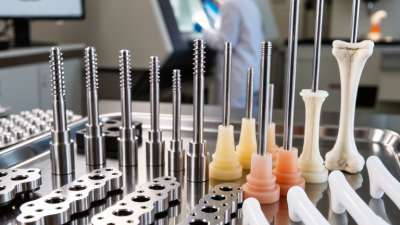
China’s orthopedic manufacturing sector has developed into an important source of orthopedic trauma implants for hospitals and distributors worldwide. This introduction outlines how to assess leading Chinese manufacturers beyond attractive catalogs and low quotations. Product reliability depends on material control, engineering accuracy, sterilization processes, and consistent quality management. A credible manufacturer should provide traceable records for titanium alloys, stainless steel, and implant-grade polymers. It should also explain machining tolerances, surface finishing, packaging, and shelf-life testing. ISO 13485 certification can support confidence, but certification alone proves little. Buyers should review applicable regulatory approvals, audit reports, clinical feedback, and post-market support. Surgeon experience matters here. The strongest suppliers usually maintain dedicated research teams, modern CNC equipment, inspection laboratories, and documented corrective-action systems. Their portfolios may include plates, screws, intramedullary nails, external fixation systems, and specialized instruments. Product fit is critical. A plate that looks precise may still perform poorly if its contour, screw trajectory, or locking mechanism does not match surgical needs. Communication also reveals operational maturity. Can the manufacturer explain lead times clearly? Can it respond to a complaint with evidence? These details matter. Some company information remains incomplete or difficult to verify, so rankings should not be treated as permanent conclusions. This guide therefore considers technical capability, clinical cooperation, customization, quality transparency, and delivery reliability when discussing China’s top Orthopedic Trauma Implants manufacturers. Local regulatory requirements and hospital protocols must remain central to every purchasing decision.
Read more »
Lillian By:Lillian - October 13, 2026
China Top 10 Posterior Cervical Fixation System Manufacturers

China Top 10 Posterior Cervical Fixation System Manufacturers

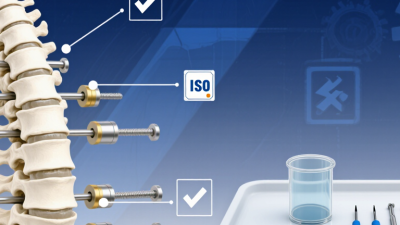
China’s spinal-device sector has become an important sourcing base for hospitals, distributors, and international medical companies. This introduction examines China’s top 10 Posterior Cervical Fixation System manufacturers through a practical, evidence-based lens. Grand View Research estimates the global spinal implants market reached approximately USD 11 billion in 2023. Fortune Business Insights reports similar market momentum, although its forecasts differ by methodology and product definition. These figures include cervical plates, screws, rods, and related implants. They do not measure posterior cervical systems alone. That distinction matters. Clinical reliability begins with design control. A dependable system should provide secure screw placement, suitable rod contouring, and compatibility with surgical instruments. Manufacturing evidence also matters. ISO 13485 certification, traceability records, sterilization controls, and validated packaging can reveal operational maturity. Regulatory pathways, including FDA 510(k) clearance or applicable European requirements, require separate verification for each product. Not every large supplier is the best fit. This list therefore considers product range, material quality, engineering support, documented quality systems, export experience, and responsiveness. Public catalogs can look impressive, yet they may not explain fatigue testing or revision support. Buyers should request current certificates, technical drawings, surgical technique guides, and independent test records. Manufacturer rankings are never absolute. Hospital protocol, surgeon preference, and local registration rules can change the final decision. The companies discussed here represent different strengths, from cost-efficient production to specialized spinal engineering. Their suitability should be confirmed through direct audits and clinical evaluation. Data helps narrow the field, but careful verification protects patients and purchasing teams.
Read more »
Amelia By:Amelia - October 8, 2026
China Top 10 PEEK Cervical Cages Manufacturers

China Top 10 PEEK Cervical Cages Manufacturers

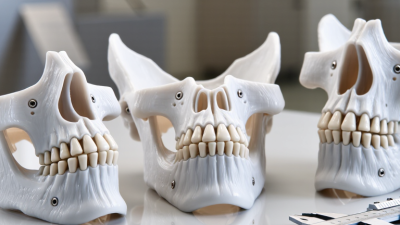
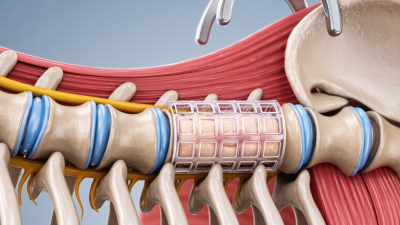
China’s spinal implant sector has developed rapidly, supported by advanced machining, biomaterials research, and expanding medical manufacturing capacity. This guide introduces China’s top 10 manufacturers of PEEK Cervical Cages, focusing on practical indicators rather than promotional claims. The assessment considers product design, material traceability, manufacturing controls, and experience with cervical fusion systems. Clinical relevance matters most. A reliable manufacturer should explain its PEEK grade, radiolucent properties, surface treatment, and sterilization process clearly. It should also provide dimensional drawings, inspection records, and evidence of quality management. Look for ISO 13485 certification, appropriate regulatory registrations, and documented risk-control procedures. These details can reveal more than a polished company profile. Small details matter. The review also considers cage geometry, graft-window design, lordotic options, marker placement, and compatibility with surgical instruments. Strong suppliers usually support private-label projects, design verification, sample testing, and controlled production batches. However, public information is often incomplete, and rankings can change as certifications, facilities, and clinical evidence develop. Therefore, this list should support supplier screening, not replace technical audits or professional clinical judgment. Readers should compare each manufacturer’s communication speed, engineering response, packaging quality, and post-market support. Ask for current certificates. Confirm every claim independently. A lower price may reflect efficiency, but it may also indicate hidden compromises. That uncertainty deserves attention. By combining technical evidence with practical due diligence, buyers can identify manufacturers capable of delivering consistent PEEK Cervical Cages for regulated medical applications.
Read more »
Lillian By:Lillian - October 3, 2026
China Top 10 Pedicle Screw System Manufacturers?

China Top 10 Pedicle Screw System Manufacturers?

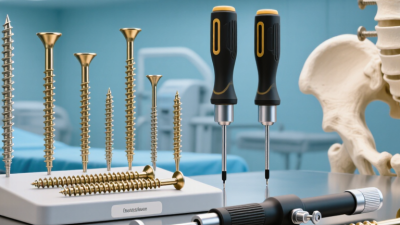
China’s pedicle screw market includes established orthopedic companies and specialized spinal-device makers. Yet a manufacturer’s name alone says little about a system’s clinical suitability. A Pedicle Screw System must work as part of a complete construct, from screw and rod compatibility to instrumentation, imaging visibility, and surgical workflow. Small details matter: thread design, screw-head movement, connection strength, and the feel of instruments during placement. This overview examines ten manufacturers through practical considerations, including product range, engineering, quality documentation, clinical evidence, and international availability. It does not treat popularity as proof of performance. Nor can a single ranking account for every patient, anatomy, or surgeon preference. Fit matters. Evidence matters. For a clinical perspective, orthopedic spine surgeon Alexander R. Vaccaro is a relevant expert in the field. However, no source text was supplied for a verified quotation from him, so attributing a direct quote would risk misrepresentation. Instead, this article uses the following editorial principle: “Evaluate the system, its evidence, and its intended use—not the brand name alone.” That distinction is important when comparing manufacturers. Product specifications can look convincing on paper, but surgeons also need dependable instruments, clear technical information, and suitable options for real operating-room conditions. Some public manufacturer claims may be difficult to compare directly. Readers should check current product documentation and independent clinical evidence before drawing conclusions.
Read more »
Lillian By:Lillian - September 28, 2026
Why Choose Lumbar Interbody Cages for Spinal Fusion?

Why Choose Lumbar Interbody Cages for Spinal Fusion?

Lumbar Interbody Cages have become important tools in modern spinal fusion. They are placed between damaged vertebral bodies after the disc is removed. The cage helps restore disc height, support spinal alignment, and create space for bone growth. Imagine a small structural spacer working deep inside the lower back. Its role is precise, but never simple. Spine surgeon Dr. Lawrence Lenke has emphasized, “Every patient is different, and every patient needs an individualized treatment plan.” That principle explains why surgeons consider more than the cage alone. They assess symptoms, bone quality, spinal balance, nerve compression, previous operations, and overall health. A well-designed cage may improve stability and help maintain alignment. It may also support indirect nerve decompression in selected patients. The surgical approach matters too. So does the patient’s recovery plan. Still, Lumbar Interbody Cages are not automatically the best answer. Fusion can involve pain, nonunion, infection, nerve injury, or adjacent-segment problems. Results vary. The evidence is strong in some conditions, but less certain in others. That uncertainty deserves honest discussion. Surgeons must match implant design and surgical technique to the individual anatomy, not marketing language. Patients should ask why fusion is recommended, what alternatives exist, and how success will be measured. A cage is only one part of a larger biological and mechanical process. The real goal is not an impressive implant. It is durable stability, useful pain relief, and a safer return to daily movement.
Read more »
Amelia By:Amelia - September 23, 2026
Top 10 Anterior Cervical Plate System Suppliers?

Top 10 Anterior Cervical Plate System Suppliers?

Choosing among the Top 10 Anterior Cervical Plate System Suppliers requires more than comparing product catalogs or market visibility. Hospitals and spine surgeons must examine fixation strength, plate profile, screw design, imaging compatibility, and manufacturing consistency. In a real operating room, a few millimeters can affect soft-tissue contact, visibility, and surgical confidence. Dr. K. Daniel Riew, a respected cervical spine surgeon, has stated, “The anterior approach is a very versatile approach to the cervical spine.” That versatility increases the importance of dependable implant systems and clear supplier support. A strong supplier should provide validated materials, documented testing, traceability, surgeon training, and responsive technical service. Regulatory compliance also matters, but compliance alone does not prove clinical value. This overview compares leading suppliers through a practical, evidence-aware lens. It considers product breadth, design innovation, quality systems, distribution reach, and published clinical experience. It also recognizes an uncomfortable limitation: supplier websites often present polished claims without enough independent, long-term data. That gap deserves attention. Not every popular supplier fits every hospital. The best choice depends on surgical technique, patient anatomy, regional approvals, inventory needs, and surgeon preference. Readers should treat rankings as a starting point, not a final purchasing decision. Careful evaluation remains essential when an Anterior Cervical Plate System becomes part of a patient’s treatment pathway.
Read more »
Evelyn By:Evelyn - September 18, 2026
2026 Top Spinal Fixation System Types for Global Buyers

2026 Top Spinal Fixation System Types for Global Buyers

Choosing the right Spinal Fixation System in 2026 requires more than comparing product catalogs or price lists. Global buyers must evaluate anatomy, surgical approach, implant materials, instrument compatibility, and long-term clinical support. A system designed for thoracolumbar stabilization may not suit cervical reconstruction, even when both use familiar screw-and-rod concepts. This guide introduces major system types, including pedicle screw-rod constructs, cervical plates, interbody fixation devices, hook-based systems, and minimally invasive solutions. Each category has distinct indications, handling requirements, radiographic considerations, and training demands. Experienced surgeons often assess screw trajectory, reduction control, imaging visibility, and revision options before approving a purchase. Procurement teams should also review manufacturer quality systems, technical documentation, sterilization instructions, and market-specific registration requirements. The details matter. A dependable supplier should provide traceable materials, validated instruments, clear labeling, and responsive clinical education. However, no classification is perfect. Some modern systems combine anterior, posterior, and interbody functions, making simple product categories less reliable. Buyer priorities also differ across hospitals, distributors, and specialized spine centers. A lower unit price may become costly when instruments are incomplete or compatible implants are difficult to obtain. This overview helps international buyers compare Spinal Fixation System types with greater discipline. It focuses on practical selection rather than marketing language. Clinical judgment remains essential, and product decisions should follow qualified medical advice, institutional protocols, and applicable regulations.
Read more »
Amelia By:Amelia - September 11, 2026
Top Arthroscopic Knee Implants Manufacturers

Top Arthroscopic Knee Implants Manufacturers

Choosing the top Arthroscopic Knee Implants manufacturers requires more than comparing product catalogs or polished company websites. Hospitals and orthopedic teams examine implant design, material quality, sizing options, delivery systems, and clinical evidence. They also review manufacturing consistency, sterilization controls, regulatory approvals, and post-market surveillance. These details matter in the operating room, where a small instrument problem can delay a procedure or affect surgical confidence. Real-world experience remains essential. Surgeons often assess how smoothly an implant deploys, how clearly it appears under imaging, and how reliably it performs during rehabilitation. Manufacturers with strong technical support, transparent training programs, and responsive complaint handling may offer greater practical value. Peer-reviewed studies and long-term follow-up should guide decisions, not advertising language alone. Patient anatomy differs. This overview introduces leading manufacturers through a balanced, evidence-aware lens. It considers innovation, clinical credibility, production capabilities, and global quality practices. However, the word “top” is not absolute. A company respected for sports medicine products may not suit every hospital, procedure, or patient population. Available evidence can also be uneven, especially for newer technologies. That limitation deserves attention. Buyers should verify current approvals, published outcomes, surgeon feedback, and procurement requirements before making decisions. The strongest manufacturer is usually the one that combines dependable engineering with documented clinical support, ethical communication, and consistent performance in real surgical settings.
Read more »
Lillian By:Lillian - September 11, 2026
What Is Orthopedic Implants Manufacturing?

What Is Orthopedic Implants Manufacturing?

Orthopedic Implants Manufacturing is the controlled process of turning medical design concepts into safe, functional devices for the human body. It covers implants such as hip stems, knee components, spinal cages, bone plates, and trauma screws. Each product begins with a clinical need, not merely a drawing. Engineers, surgeons, and quality specialists often review loading conditions, anatomy, surgical technique, and patient variability before production starts. Materials matter greatly. Titanium alloys may provide strength and biocompatibility, while cobalt-chromium alloys support demanding joint applications. Some implants use medical-grade polymers, including ultra-high-molecular-weight polyethylene. Machining can involve computer-controlled milling, laser cutting, forging, or additive manufacturing. A small surface defect may affect fixation or wear performance. Therefore, manufacturers inspect dimensions, surface texture, cleanliness, and mechanical strength throughout the process. Reliable production also depends on documented validation. Teams may use coordinate measuring machines, sterilization testing, fatigue testing, and microscopic inspection. Traceability links each implant to materials, equipment, operators, and inspection records. Regulatory expectations differ across markets, so manufacturers must follow applicable medical-device requirements and maintain disciplined quality systems. No process is perfect. Unexpected variation can still appear, especially when designs become more complex. Continuous improvement requires honest investigation, not attractive claims. The strongest manufacturers combine practical shop-floor experience with engineering evidence, clinical feedback, and transparent risk management. Their goal is simple but demanding: produce implants that perform consistently and support surgeons and patients safely.
Read more »
Lillian By:Lillian - September 11, 2026