Discover expert surgical guides, manufacturing standards, and clinical innovations across spinal, trauma, and arthroscopy implant technologies.

Stay informed with in-depth technical analysis on titanium alloys, pedicle screws, PEEK cages, and modern orthopedic instrumentation.
China’s spinal implant sector has developed rapidly, supported by advanced machining, biomaterials research, and expanding medical manufacturing capacity. This guide introduces China’s top 10 manufacturers of PEEK Cervical Cages, focusing on practical indicators rather than promotional claims. The assessment considers product design, material traceability, manufacturing controls, and experience with cervical fusion systems.
Clinical relevance matters most. A reliable manufacturer should explain its PEEK grade, radiolucent properties, surface treatment, and sterilization process clearly. It should also provide dimensional drawings, inspection records, and evidence of quality management. Look for ISO 13485 certification, appropriate regulatory registrations, and documented risk-control procedures. These details can reveal more than a polished company profile.
Small details matter.
The review also considers cage geometry, graft-window design, lordotic options, marker placement, and compatibility with surgical instruments. Strong suppliers usually support private-label projects, design verification, sample testing, and controlled production batches. However, public information is often incomplete, and rankings can change as certifications, facilities, and clinical evidence develop. Therefore, this list should support supplier screening, not replace technical audits or professional clinical judgment.
Readers should compare each manufacturer’s communication speed, engineering response, packaging quality, and post-market support. Ask for current certificates. Confirm every claim independently. A lower price may reflect efficiency, but it may also indicate hidden compromises. That uncertainty deserves attention. By combining technical evidence with practical due diligence, buyers can identify manufacturers capable of delivering consistent PEEK Cervical Cages for regulated medical applications.
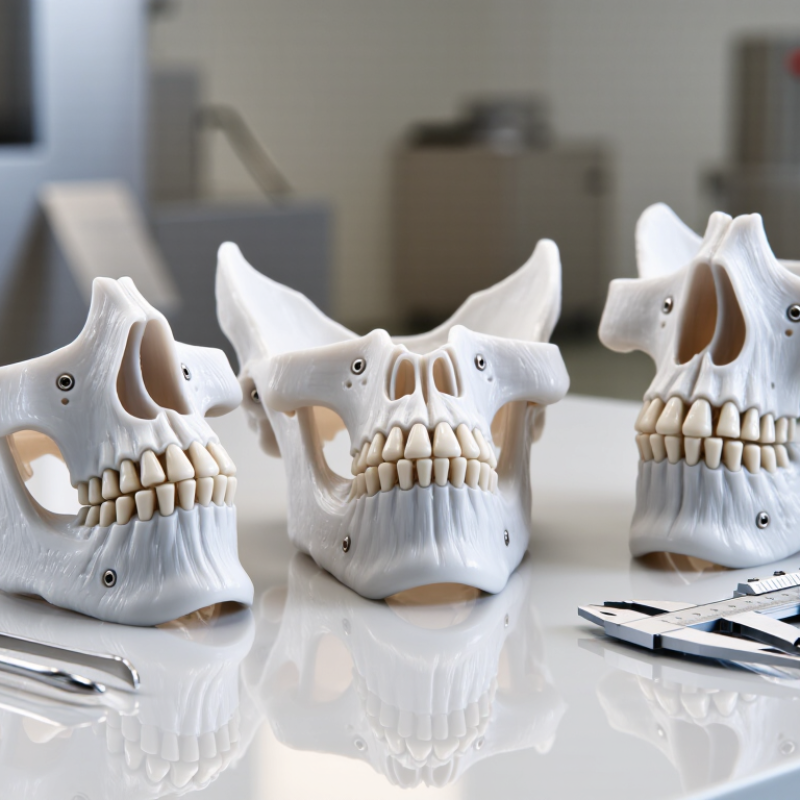
PEEK cervical cages combine radiolucency, chemical stability, and a bone-like elastic response. PEEK’s modulus is about 3–4 GPa, while cortical bone commonly ranges from 7–30 GPa. This difference may reduce stress shielding compared with much stiffer metals. ASTM F2026 specifies requirements for implantable PEEK materials, including processing and material consistency. Medical-grade resin is not enough. Manufacturing history matters.
Cage design controls contact with the endplates. Broad footprints can improve load distribution, while teeth and central graft windows support initial stability and bone growth. Some designs add surface texturing or coatings to improve osteointegration. Computed tomography can show fusion more clearly because PEEK creates fewer imaging artifacts than metal. However, radiolucency can hide marker movement or subtle cage migration. That is a practical weakness.
Clinical evidence remains encouraging but uneven. Systematic reviews of anterior cervical discectomy and fusion commonly report fusion rates above 90% at twelve months, although study methods and patient populations differ. Subsidence still occurs, especially with poor endplate preparation, oversized distraction, or low bone density. FDA guidance and ISO 10993 testing support biological safety evaluation, but they do not replace long-term clinical follow-up. A dependable manufacturer should provide lot traceability, dimensional inspection, sterilization validation, and peer-reviewed outcome data. The cage is small. The quality system is not.
| Data Dimension | Material or Design Data | Clinical Relevance |
|---|---|---|
| Base Polymer | Polyether ether ketone (PEEK), a high-performance thermoplastic polymer used in implantable spinal devices. | PEEK provides mechanical stability, chemical resistance, and radiolucency, making it suitable for interbody fusion applications. |
| Elastic Modulus | Unfilled PEEK has an elastic modulus of approximately 3–4 GPa, while cortical bone is commonly reported in the range of roughly 7–30 GPa depending on the test method and anatomical site. | The relatively bone-like stiffness of PEEK may reduce stress shielding compared with substantially stiffer metallic implants; actual performance depends on cage geometry, endplate contact, and loading conditions. |
| Radiographic Characteristics | PEEK is radiolucent and creates substantially less imaging artifact than many metallic implant materials. | Radiolucency helps clinicians evaluate graft incorporation, interbody fusion, implant position, and subsidence on postoperative radiographs and computed tomography. |
| Radiographic Markers | Radiopaque markers, commonly made from materials such as tantalum or titanium, are incorporated into many cage designs. | Markers identify cage boundaries and orientation while preserving the imaging advantages of the radiolucent polymer body. |
| Surface Modification | Common approaches include roughening, porous texturing, plasma treatment, hydroxyapatite coating, titanium coating, and additive-manufactured porous surfaces. | Because untreated PEEK is relatively bioinert, surface modification is intended to improve bone apposition and support osteointegration; clinical results depend on coating durability and design quality. |
| Cage Geometry | Typical cervical cages use lordotic or parallel endplates, an internal graft chamber, anti-migration teeth or ridges, and a footprint selected for the target disc space. | Geometry influences segmental lordosis, anterior column support, migration resistance, graft volume, and the risk of endplate damage or subsidence. |
| Approach Compatibility | Cervical interbody cages are designed primarily for anterior cervical discectomy and fusion, with dimensions and insertion features matched to the surgical approach. | The cage is used after disc removal and endplate preparation to restore disc-space height, support decompression, and facilitate fusion with an appropriate bone graft or graft substitute. |
| Graft-Filling Strategy | Many cages contain a central or large graft cavity that can be packed with autograft, allograft, or a regulated bone-graft substitute. | The graft chamber provides a location for bone-growth material; fusion depends on biological factors, preparation technique, stability, patient health, and the selected graft material. |
| Mechanical Performance | Design verification commonly evaluates compression, subsidence, expulsion, static and dynamic loading, and fatigue behavior using applicable medical-device testing methods. | Mechanical testing supports assessment of whether the cage can maintain disc-space support under expected loads, but bench performance does not replace clinical evaluation. |
| Clinical Applications | Common indications include symptomatic cervical degenerative disc disease, disc-space collapse, cervical radiculopathy, and selected cases requiring decompression and fusion. | Patient selection, neurological status, bone quality, deformity, instability, operative technique, and use of supplemental fixation should be assessed by the treating spine surgeon. |
| Potential Benefits | Reported design objectives include radiographic visibility, a bone-compatible stiffness profile, graft containment, restoration of disc height, and maintenance of cervical alignment. | These objectives may support fusion assessment and construct stability, but outcomes vary among patients and cannot be attributed to material choice alone. |
| Potential Complications | Recognized risks include subsidence, migration or expulsion, pseudarthrosis, adjacent-segment disease, infection, neurological injury, dysphagia, and implant-related failure. | Risk is affected by cage footprint, endplate preparation, implant positioning, bone density, number of treated levels, smoking status, and overall surgical management. |
| Sterilization and Processing | PEEK spinal implants are commonly supplied sterile or validated for sterilization using an approved method specified in the device instructions for use. | Sterilization parameters must follow the validated instructions because excessive heat, radiation, or unsuitable processing can affect polymer properties and device performance. |
| Regulatory and Quality Controls | Commercial devices require documented design controls, material traceability, biocompatibility assessment, risk management, sterilization validation, and mechanical performance testing. | Quality-system compliance and applicable medical-device regulations help demonstrate that the finished cage is suitable for its intended clinical use. |
It is an implant placed between cervical vertebral bodies during spinal fusion. It supports alignment and creates space for bone growth. The cage is small. The quality system is not.
PEEK has a bone-like elastic response and a modulus near 3–4 GPa. Cortical bone commonly ranges from 7–30 GPa. This may reduce stress shielding compared with much stiffer metals. No material is perfect.
A broad footprint can distribute loads across the endplate. Teeth may resist early movement. A central graft window supports bone growth through the cage. Angles should match the patient’s anatomy.
PEEK creates fewer imaging artifacts than metal. Computed tomography can show fusion more clearly. However, radiolucency may hide subtle migration or marker movement. That weakness matters.
Reviews of anterior cervical fusion commonly report fusion rates above 90% at twelve months. Study methods and patient groups differ. Long-term evidence remains uneven. Encouraging, but incomplete.
Poor endplate preparation can weaken support. Oversized distraction may increase loading on the endplates. Low bone density also raises concern. Fit matters greatly.
Buyers should review material consistency, dimensional inspection, and lot traceability. They should also check sterilization validation and biological safety testing. Compression and subsidence data are useful. Factory size alone can mislead.
No. A catalogue shows design claims, not necessarily patient outcomes. Peer-reviewed follow-up and post-market surveillance provide stronger evidence. Some advanced-looking products still have limited public data. That gap deserves careful reflection.
This article provides a practical overview of PEEK Cervical Cages, covering their material properties, structural design, radiolucency, biocompatibility, and role in cervical spine procedures. It explains how cage geometry, surface treatment, graft windows, and fixation options can influence stability, fusion potential, imaging, and surgical efficiency. The article also examines China’s growing manufacturing landscape, highlighting the importance of production experience, engineering capabilities, quality management, and consistent supply performance.
A dedicated selection framework helps readers evaluate Chinese manufacturers by considering raw material traceability, precision molding, testing procedures, regulatory documentation, customization support, packaging, and international delivery capabilities. The profiles of the top ten manufacturers are presented from a neutral, criteria-based perspective, allowing hospitals, distributors, and medical device developers to compare potential suppliers more effectively. Overall, the article emphasizes that reliable quality control, flexible design services, transparent communication, and dependable global supply are essential when selecting a long-term manufacturing partner for PEEK Cervical Cages.