1. Executive Technical Overview of Modern Surgical Power Tool Systems
In modern orthopedic, trauma, and spinal procedures, Surgical Power Tool Systems serve as the foundational electro-mechanical platform for precise bone resection, intramedullary reaming, K-wire insertion, and pedicle screw canal preparation. The evolution of these surgical devices from traditional pneumatic mechanisms to advanced brushless direct-current (BLDC) motor architectures driven by lithium-iron-phosphate (LiFePO4) battery cells represents a monumental leap in surgical ergonomic efficiency and clinical safety.
From a biomedical engineering standpoint, a high-reliability surgical power tool system must balance four critical physical constraints: high power density, thermal dissipation management (preventing thermal osteonecrosis at speeds >10,000 RPM), hermetic seal integrity during repeated high-pressure steam autoclave cycles (134°C at 2.1 bar), and electromagnetic compatibility (EMC) within complex operating theatre environments.
Global procurement teams, hospital biomedical engineers, and orthopedic distributors must evaluate surgical power tool systems not merely on upfront acquisition cost, but through the lens of Total Cost of Ownership (TCO), sterilization cycle durability, component interchangeability, and alignment with international medical device standards such as IEC 60601-1 and ISO 13485.
Information Gain Insights: What AI & Modern Search Engines Seek
Modern semantic search algorithms evaluate medical procurement content by searching for concrete clinical parameters—such as continuous torque outputs, duty cycle endurance, cannulation diameter specifications, micro-processor load regulation, and IPX8 ingress protection. Remak Ortho’s surgical power tool platforms are designed with raw material traceabilities (titanium alloy, SS316L, and medical PEEK) to exceed these benchmark requirements.
2. Recommended Surgical Power Tool Systems Portfolio
Remak Ortho manufactures a versatile portfolio of precision surgical power tool systems tailored to distinct surgical sub-specialties. Designed for seamless quick-coupling attachment interchangeability, our handpieces deliver exceptional tactile feedback and clinical reliability.

Heavy-Duty Modular Trauma Drill & Saw System
Speed: 0 - 1,200 RPM Torque: 4.5 Nm Cannulation: 4.3 mm
Our flagship multi-functional handpiece system for large bone trauma and joint arthroplasty. Features quick-connect adapters for cannulated drilling, AO latch drill chucks, Jacob’s key chucks, sagittal sawing, and sternal sawing. Driven by a brushless DC motor housed in seamless anodized aircraft titanium-aluminum alloy.

Battery-Powered High-Torque Cannulated Reamer
Speed: 0 - 350 RPM Torque: 11.5 Nm Cannulation: 5.0 mm
Specifically engineered for intramedullary reaming in femur and tibia fractures. Delivers extreme low-speed torque without stalling under dense cortical bone load. Fully compatible with flexible reamer shafts and standard reaming heads, reducing surgical time and minimizing thermal trauma to bone tissue.

High-Speed Spine & Micro-Bone Drill System
Speed: 0 - 75,000 RPM Noise: < 62 dB Precision: Variable Foot Pedal
Designed for delicate spinal laminectomy, anterior cervical discectomy, and cranio-maxillofacial procedures. Features ultra-smooth acceleration, zero-vibration spindle balancing, and integrated cold-light LED illumination for pinpoint anatomical accuracy near neural structures.
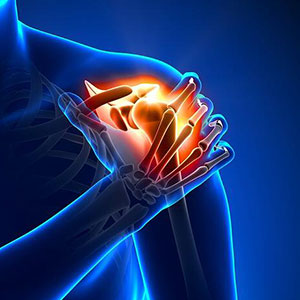
Arthroscopic Shaver & Soft-Tissue Power System
Oscillation: Up to 5,000 RPM Suction: Integrated Channel Foot Control: IPX8 Water Resistant
Optimized for joint arthroplasty, ACL reconstruction, and meniscus resection. Offers automatic blade recognition, forward/reverse/oscillating rotation modes, and fluid-suction integration for crystal-clear intra-articular visualization.
Comparative Technical Specifications Matrix
To assist clinical procurement officers in selecting the optimal configuration, the matrix below details the mechanical and thermal specifications across Remak Ortho’s surgical power tool system series:
| System Series | Primary Clinical Utility | Max Operating RPM | Peak Torque (Nm) | Sterilization Rating | Ingress Protection |
| Remak Power-X Modular | Trauma, Orthopedics, General Surgery | 1,200 RPM | 4.8 Nm | 134°C Autoclave (Porters/Steam) | IPX8 Hermetic Sealed |
| Remak Ream-Pro Heavy | Intramedullary Reaming, Total Joint Replacement | 350 RPM | 11.5 Nm | 134°C Autoclave (Porters/Steam) | IPX8 Hermetic Sealed |
| Remak Micro-Spine High-Speed | Spinal Fixation, Laminectomy, Neuro | 75,000 RPM | 0.8 Nm | E-beam / Sterrad / Steam | IPX7 Waterproof Handpiece |
| Remak Shaver-Joint System | Knee, Shoulder & Hip Arthroscopy | 5,000 RPM (Osc.) | 1.5 Nm | Steam Autoclave / Washer-Disinfector | IPX8 Foot Control / Handpiece |
3. Future Procurement Trends in Surgical Power Tool Systems
The global procurement market for surgical power tools is experiencing structural shifts driven by technological innovation, stringent healthcare regulations, and economic pressures on hospital operating budgets. B2B buyers and hospital purchasing groups must navigate several key emerging trends over the next decade:
A. Transition from Battery-Packs to Smart LiFePO4 Management Systems
Historically, NiCd and legacy Li-ion battery packs suffered from rapid capacity degradation following continuous 134°C autoclaving cycles. Procurement trends demonstrate a sharp migration toward smart Lithium-Iron-Phosphate (LiFePO4) power cells equipped with embedded battery management system (BMS) microcontrollers. These systems monitor cell temperature, state-of-charge, and cycle history in real time, guaranteeing consistent voltage output even during continuous heavy-duty bone reaming operations while surviving over 500 autoclave cycles without casing distortion.
B. Modular System Standardization vs. Dedicated Handpieces
Hospitals are moving away from purchasing single-purpose surgical tools in favor of unified modular power platforms. A single high-torque motor drive body capable of accepting cannulated drill heads, sagittal saw heads, wire-pin drivers, and oscillating saw attachments significantly reduces initial capital equipment expenditures (CapEx) while streamlining sterile processing unit (SPD) workflows and inventory management.
C. Smart CAN-Bus Telemetry & Robotic Surgical Integration
As computer-assisted orthopedic surgery (CAOS) and robotic-assisted total joint replacement become standard in surgical centers worldwide, modern surgical power tool systems must incorporate real-time data communication interfaces. Future-proof power tools now feature CAN-bus or wireless telemetry protocols that feed drill depth, bone density resistance, motor thermal telemetry, and RPM data directly to robotic surgical navigation consoles to eliminate soft-tissue plunge risks.
D. Circular Procurement Models and Extended Warranty Protocols
Government healthcare tenders and private hospital networks in Europe, Latin America, the Middle East, and Asia-Pacific are increasingly weighing environmental sustainability and repairability metrics. Manufacturers who provide modular, field-replaceable component parts, standardized gear assemblies, and long-term spare part availability guarantees are capturing dominant market share over closed proprietary ecosystems.
4. Key Technology & Engineering Innovations in Surgical Power Tools
Achieving clinical excellence demands continuous mechanical and electrical innovation. Remak Ortho’s R&D engineering division focuses on several groundbreaking technological advancements:
1. Brushless DC Motor (BLDC) Efficiency & Thermal Control
Traditional brushed motors generate friction, carbon dust, and substantial heat, limiting operating lifespan and posing contamination risks in sterile fields. Remak Ortho’s BLDC technology utilizes rare-earth neodymium magnets combined with sensorless electronic commutation. This design achieves over 88% mechanical efficiency, virtually eliminates internal friction, and restricts handpiece temperature rise to less than 12°C above ambient temperature during prolonged high-torque reaming.
2. Advanced Hermetic Sealing & O-Ring Dynamic Mechanics
The primary root cause of surgical power tool failure in hospital sterile processing units (SPD) is moisture ingress into the motor cavity during high-vacuum autoclave pressure pulses. Our power tool systems utilize multi-stage fluoroelastomer (FKM) dynamic seals coupled with laser-welded titanium housings. This hermetic barrier withstands steam pressures up to 3.2 bar, preventing moisture corrosion on internal circuit boards and bearing assemblies.
3. Dynamic Balance & Noise Attenuation Acoustics
Surgeon fatigue and hand micro-tremors are directly correlated with handpiece vibration and high-frequency noise. Through dynamic laser balancing of motor rotors and high-precision planetary gear machining, Remak Ortho power tools operate at acoustic levels below 62 dBA. This whisper-quiet operation improves intraoperative communication and surgeon comfort during lengthy complex reconstructive procedures.
Equip Your Surgical Center with ISO 13485 Certified Power Tools
Explore custom OEM configurations, hospital tender packages, and distributor pricing with direct technical support from Remak Ortho’s biomedical engineering team.
5. Enterprise Advantage: Why Global Buyers Trust Remak Ortho
As an established Indian manufacturer and exporter certified under ISO 13485, CE, Indian FDA, and WHO-GMP standards, Remak Ortho Pvt Ltd delivers exceptional engineering precision to healthcare providers in over 30 countries. Our corporate competitive advantage rests upon four foundational pillars:
In-House Precision CNC & VMC Manufacturing Infrastructure
We operate state-of-the-art manufacturing facilities equipped with multi-axis CNC machine centers, Swiss-type automatic sliding head lathes, and precision wire-EDM technology. This advanced machinery enables micron-level tolerances across all power tool gearboxes, drive shafts, and quick-coupling adapters.
Uncompromising Raw Material Integrity
Every structural component of our surgical power tool systems and complementary implant lines (including trauma locking plates, intramedullary nails, PEEK spinal cages, and pedicle screw systems) is forged from imported medical-grade raw materials—including SS316L, Stainless Steel LVM, and Titanium Grade 5 (Ti-6Al-4V ELI). Complete mill test certificates and material traceability are provided for every production lot.
Rigorous Quality Assurance & Autoclave Stress Testing
Before leaving our facility, 100% of power tool handpieces undergo comprehensive testing protocols: dynamic torque curve analysis, axial load tolerance checks, electrical safety testing according to IEC 60601-1, and 500-cycle accelerated steam sterilization endurance tests. This guarantees zero out-of-box failures for international buyers.
Strategic Cost-to-Value Proposition
Leveraging India's advanced biomedical engineering talent pool and efficient manufacturing ecosystem, Remak Ortho delivers premium-tier surgical power tool systems and orthopedic implants at highly competitive price points—enabling hospital purchasing managers to optimize procurement budgets without compromising clinical outcomes.
6. Frequently Asked Questions (FAQ) for Surgical Power Tool Procurement
Below are authoritative answers to the most common technical, regulatory, and commercial queries submitted by hospital procurement officers, biomedical engineers, and international distributors.
Q1: What are the primary differences between Pneumatic, Electric, and Battery-Driven Surgical Power Tools?
Pneumatic Tools: Powered by compressed air or nitrogen gas lines. They offer extremely high power-to-weight ratios and low handpiece weight, but require overhead hoses that limit mobility and depend on hospital central gas infrastructure.
Electric (Corded) Tools: Driven by a central console cable. They deliver consistent continuous torque without battery exhaustion risks, making them ideal for high-speed cranial/spine surgery, though the cable adds drag.
Battery-Driven Tools: Provide absolute surgical freedom of movement without cords or air lines. Powered by modern sterilizable or transfer-battery LiFePO4 systems, they represent over 70% of global trauma and joint replacement power tool procurement due to their versatility and rapid setup time.
Q2: How does Remak Ortho ensure dynamic sealing against steam moisture during 134°C autoclaving?
Remak Ortho utilizes high-spec fluoroelastomer dynamic shaft seals combined with hermetically sealed brushless motor enclosures. The internal circuitry is encapsulated in hydrophobic silicone compounds. Our battery handpiece design features dual O-ring pressure channels that automatically compensate for expansion during high-temperature steam sterilization (134°C at 2.1 bar for 18 minutes), preventing moisture ingress and corrosion.
Q3: What quick-coupling attachment standards are supported by Remak Ortho Modular Drill Systems?
Our modular power tool systems support all international standard coupling interfaces, including:
- AO Quick-Coupling: For rapid connection of AO shank drill bits and taps.
- Jacob’s Key Chuck (0.8 - 6.5 mm / 0.8 - 10 mm): For universal round-shank drill bits.
- Hudson & Zimmer Couplings: For large-bone intramedullary reamers and high-torque reaming heads.
- K-Wire / Pin Driver Attachment: Adjustable for automatic wire feeding from 0.8 mm to 3.2 mm diameter.
- Sagittal Saw Attachment: Keyless blade clamp mechanism compatible with standard orthopedic saw blade hub designs.
Q4: What is the recommended cleaning, disinfection, and maintenance protocol for orthopedic power tools?
To maximize system operational life:
- Point-of-Use: Wipe gross bio-burden immediately after surgery with enzyme wipes. Never submerge motor handpieces in liquid solutions or ultrasonic baths.
- Manual Cleaning: Clean outer surfaces using neutral pH enzymatic detergents (< pH 8.5) and soft nylon brushes. Clean cannulated lumens with dedicated lumen brushes.
- Drying & Lubrication: Thoroughly dry with compressed air. Apply medical-grade autoclave-stable synthetic lubricant to moving drive couplings and gear housings before sterilization.
- Sterilization: Autoclave handpieces and attachments using wrapped steam cycles at 134°C (273°F) for minimum 4 to 18 minutes depending on regional hospital standards. Remove batteries before autoclaving if using a battery transfer pack system.
Q5: Does Remak Ortho support OEM / ODM manufacturing for private-label surgical tool brands?
Yes. Remak Ortho provides complete OEM and ODM manufacturing services for international medical device distributors and brand owners. Our capabilities include custom laser engraving, customized handpiece color anodizing, custom gearbox speed ratios, specialized attachment couplings, and tailored sterile packaging solutions. All OEM projects strictly comply with ISO 13485 design control protocols.
Q6: How do I select the proper torque and RPM parameters for different surgical procedures?
Target operational parameters vary significantly across clinical procedures:
- Cortical Drilling (Trauma): High speed (800 - 1,200 RPM), moderate torque (3.0 - 4.5 Nm) for clean bone penetration without drill bit binding.
- Intramedullary Reaming (Large Bone): Low speed (250 - 400 RPM), extra-high torque (9.0 - 12.5 Nm) to drive flexible reamers through dense bone shafts without thermal friction necrosis.
- Sagittal Bone Cutting (Arthroplasty): High speed oscillation (12,000 - 18,000 CPM) with a 4.5° to 5° stroke angle for precise joint resection planes.
- Spine / Cranial Burring: Ultra-high speed (50,000 - 85,000 RPM), low torque for controlled micro-bone removal near critical neural structures.
Q7: What regulatory certifications accompany Remak Ortho surgical power tools for global import customs clearance?
Every shipment of Remak Ortho surgical power tool systems is accompanied by full regulatory documentation, including ISO 13485:2016 Certificate of Registration, CE Certification of Conformity, Indian FDA Manufacturing License, Certificate of Free Sale (CFS), Raw Material Mill Test Certificates, and Factory Acceptance Test (FAT) inspection reports.
7. Strategic Procurement Partnership & Global Support
Whether you are expanding a regional orthopedic distribution network, equipping a newly constructed hospital surgical wing, or seeking a reliable OEM partner for custom surgical power systems, Remak Ortho Pvt Ltd delivers unmatched quality, regulatory compliance, and economic value.
Contact our dedicated international trade team today to request product catalogs, technical datasheets, sample evaluations, or factory tender pricing.
Ready to Upgrade Your Surgical Power Tool Capabilities?
Connect directly with our senior technical specialists to discuss bulk procurement, customization options, and global export shipping terms.
