
0%

Choosing among the Top 10 Anterior Cervical Plate System Suppliers requires more than comparing product catalogs or market visibility. Hospitals and spine surgeons must examine fixation strength, plate profile, screw design, imaging compatibility, and manufacturing consistency. In a real operating room, a few millimeters can affect soft-tissue contact, visibility, and surgical confidence.

Dr. K. Daniel Riew, a respected cervical spine surgeon, has stated, “The anterior approach is a very versatile approach to the cervical spine.” That versatility increases the importance of dependable implant systems and clear supplier support. A strong supplier should provide validated materials, documented testing, traceability, surgeon training, and responsive technical service. Regulatory compliance also matters, but compliance alone does not prove clinical value.

This overview compares leading suppliers through a practical, evidence-aware lens. It considers product breadth, design innovation, quality systems, distribution reach, and published clinical experience. It also recognizes an uncomfortable limitation: supplier websites often present polished claims without enough independent, long-term data. That gap deserves attention.

Not every popular supplier fits every hospital.

The best choice depends on surgical technique, patient anatomy, regional approvals, inventory needs, and surgeon preference. Readers should treat rankings as a starting point, not a final purchasing decision. Careful evaluation remains essential when an Anterior Cervical Plate System becomes part of a patient’s treatment pathway.
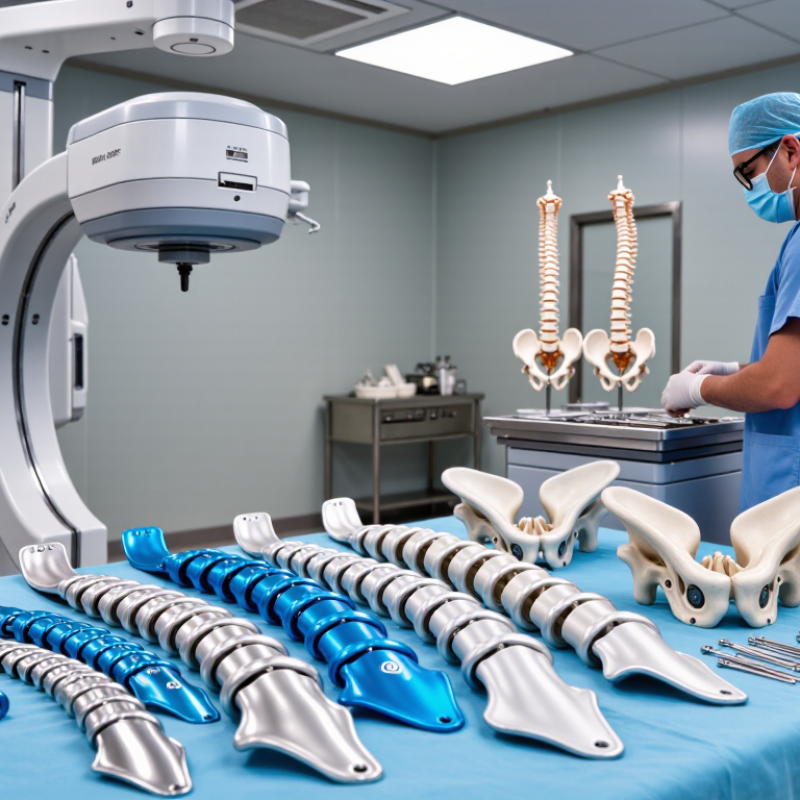
Top 10 Anterior Cervical Plate System Suppliers?

Definition and Role of Anterior Cervical Plate Systems

Anterior cervical plate systems are fixation devices used in neck surgery, especially after discectomy or corpectomy. A typical system includes a contoured plate, screws, and dedicated instruments. The plate sits across the treated vertebral levels. It helps maintain alignment and supports the graft while fusion develops.

The system also helps reduce graft migration and limits excessive motion during early healing. It does not create fusion by itself. Bone quality, surgical technique, patient health, and postoperative care still matter. Screw designs may use fixed or variable angles. Locking features can improve construct stability.

Materials such as titanium offer strength and established clinical use, while low-profile designs may reduce soft-tissue irritation. Small details matter, including screw visibility, instrument grip, and the fit between plate and vertebral anatomy.

When comparing the top 10 anterior cervical plate system suppliers, clinical teams should examine more than price or catalog images. They should review design validation, manufacturing controls, traceability, sterile packaging, and training support. Clear surgical instructions are essential. Supplier reliability also depends on consistent inventory and responsive technical service. A polished product page proves little. No plate is universally best. Anatomical variation can expose weaknesses that bench testing misses. Surgeons may also value simple instruments over complicated features. Selection remains a balance between evidence, handling, and patient-specific needs. Some evaluations are imperfect, and that should be acknowledged before a purchasing decision.

Key Criteria for Evaluating Plate System Suppliers

When comparing the top 10 anterior cervical plate system suppliers, procurement teams should assess more than catalog breadth. A reliable supplier provides documented implant materials, dimensional tolerances, and sterilization instructions. Ask for traceability from raw material to finished plate. That record matters when a lot requires investigation. Clinical evidence deserves close attention. Look for peer-reviewed studies, post-market surveillance, and clearly defined patient populations. Marketing language cannot replace outcome data. It should not.

Surgeon feedback adds practical experience. Evaluate screw angulation, locking feedback, plate profile, and visibility during fluoroscopy. Trial the instruments with gloved hands. Small usability problems can lengthen a procedure. Check whether the system supports varied anatomy without forcing excessive inventory. A supplier should explain design limits, not hide them. Training materials must show assembly, revision steps, and common errors. Independent education is more credible than a sales demonstration alone.

Quality systems are equally important. Review regulatory approvals for the target market, complaint handling, change control, and audit history. Confirm production capacity, lot consistency, and replacement-part availability. Delivery promises need written service levels. Price matters, but a low purchase price may conceal instrument gaps or weak support. Compare total cost across implants, trays, training, and returns. No supplier is perfect. Document unanswered questions and revisit them with clinical, quality, and purchasing staff before selection. One overlooked detail can matter.

Profiles of the Top 10 Anterior Cervical Plate Suppliers

The leading anterior cervical plate suppliers differ in design focus, manufacturing depth, and clinical support. One profile emphasizes low-profile plates for reduced soft-tissue prominence. Another develops modular systems for varied cervical anatomy. A third is known for broad implant sizing and instrument compatibility. The fourth focuses on locking-screw stability and reliable intraoperative handling.

A fifth supplier highlights radiographic visibility and clear implant markings. The sixth offers extensive surgeon education and procedural training. The seventh concentrates on streamlined instruments, which may shorten operating-room preparation. An eighth profile combines cervical plates with compatible interbody devices. The ninth serves hospitals through regional distribution and responsive technical support. The tenth prioritizes customized production for original equipment manufacturers.

Details matter.

A credible evaluation should examine material traceability, fatigue testing, sterilization guidance, and quality-control records. Engineers and surgeons should also review screw angulation, plate contouring, and the consistency of insertion tools. Published clinical evidence can strengthen confidence, although marketing summaries rarely show every limitation.

Public supplier data may be incomplete, and product availability can vary by region. That weakness deserves attention. In practice, the best choice depends on anatomy, surgical technique, inventory support, and documented performance rather than reputation alone. A supplier may offer excellent engineering but weaker training resources. Another may provide strong support while having fewer size options. These trade-offs require careful review.

Comparison of Product Features and Clinical Applications

Top 10 Anterior Cervical Plate System Suppliers: Comparison of Product Features and Clinical Applications

Comparing ten leading anterior cervical plate suppliers requires more than checking market visibility. Plate thickness, screw angulation, locking reliability, and radiographic markers affect daily surgical decisions. Most systems support anterior cervical discectomy and fusion, while stronger constructs may suit corpectomy or multilevel instability. A 2023 review in the European Spine Journal reported that postoperative dysphagia remains a meaningful concern after anterior cervical surgery, particularly with prominent implants. Low-profile designs may help, but they cannot remove patient-specific risk.

Material choice also matters. Titanium offers familiar imaging behavior and strong fixation. Radiolucent polymers can improve graft assessment, yet their handling and screw interface require careful evaluation. According to Grand View Research, the global cervical fusion devices market is projected to expand steadily through 2030, driven by degenerative disease and aging populations. However, market growth does not prove clinical superiority. That distinction is often missed.

Tips: Ask suppliers for independent fatigue testing, published clinical follow-up, and revision data. Check whether the system covers one to four levels. Review screw pullout results, plate-to-disc distance, and sterilization instructions. In my view, ranking systems by price alone is weak. Surgeon feedback can also be inconsistent. A better comparison combines imaging, operative workflow, training support, and peer-reviewed evidence. The “best” plate may change with anatomy, bone quality, and surgical exposure.

Top 10 Anterior Cervical Plate System Suppliers? - Comparison of Product Features and Clinical Applications

Rank Anonymous Supplier Profile Typical Plate Material Plate Profile Screw Configuration Locking Mechanism Typical Treated Levels Primary Clinical Applications Notable Design Considerations
1 Supplier Profile 01 Titanium alloy Low-profile, radiolucent-window design Fixed-angle and variable-angle screws Integrated screw blocking mechanism One to four levels Anterior cervical discectomy and fusion for degenerative disc disease, foraminal stenosis, and selected instability Balances construct stability with reduced anterior soft-tissue prominence
2 Supplier Profile 02 Titanium alloy Slim plate with tapered ends Variable-angle screws with optional rescue sizes Independent locking caps or locking rails One to three levels Routine single-level and multilevel ACDF where contour adaptation is important Tapered geometry may help limit contact with adjacent discs and soft tissue
3 Supplier Profile 03 Titanium alloy Multilevel plate with broad footprint Fixed-angle screws for primary fixation Rigid mechanical locking system Two to four levels Multilevel cervical spondylotic myelopathy, kyphotic deformity correction, and long-segment fusion Broader coverage can support multilevel fixation but may increase implant prominence
4 Supplier Profile 04 Titanium alloy Ultra-low-profile plate Variable-angle screws with bicortical or unicortical options Low-profile locking feature One to two levels Single-level ACDF and short-segment treatment of radiculopathy or disc herniation Prioritizes reduced implant height and clearance from the adjacent disc space
5 Supplier Profile 05 Titanium alloy Contoured plate with multiple length options Fixed-angle and variable-angle screw mix Rotating or sliding locking element One to five levels Degenerative disease, traumatic instability, and selected revision procedures Length range and contour options support varied cervical anatomy
6 Supplier Profile 06 Titanium alloy Standard-profile plate with central graft window Variable-angle screws Single-step screw locking One to three levels Common ACDF procedures requiring efficient intraoperative screw placement Simplified instrumentation may reduce procedural steps and setup complexity
7 Supplier Profile 07 Titanium alloy Lordotic plate with precontoured sagittal profile Fixed-angle screws with optional variable-angle screws Mechanical anti-backout feature Two to four levels Restoration or maintenance of cervical lordosis during multilevel fusion Sagittal contour should be matched to patient alignment and operative goals
8 Supplier Profile 08 Titanium alloy Low-profile plate with optimized screw trajectory Variable-angle screws Screw-head capture with locking plate One to three levels Anterior stabilization for degenerative conditions and selected fractures Trajectory flexibility can assist with anatomy-specific fixation and endplate purchase
9 Supplier Profile 09 Titanium alloy Modular plate available in short and long lengths Fixed-angle and variable-angle screws Dual-point locking system One to six levels, subject to indication and approval Short-segment fusion through extended multilevel cervical reconstruction Modularity may simplify inventory planning across different operative levels
10 Supplier Profile 10 Titanium alloy Anatomically contoured, low-profile plate Variable-angle screws with multiple diameters Integrated anti-backout locking system One to four levels Routine ACDF, post-traumatic instability, and selected reconstruction cases Diameter selection and contouring options may support patient-specific fixation strategies
Comparison note: Anterior cervical plate systems commonly use titanium alloy, locking screws, and one- to multilevel configurations. Actual indications, approved levels, implant dimensions, screw trajectories, MRI conditions, and clinical evidence vary by device and jurisdiction; final selection should follow the applicable instructions for use, surgeon judgment, patient anatomy, and local regulatory requirements.

Regulatory, Quality, and Procurement Considerations

Top 10 Anterior Cervical Plate System Suppliers?

Regulatory, Quality, and Procurement Considerations

Selecting among leading suppliers requires more than comparing catalog prices. Confirm the device’s approval status in each target market. Review intended use, indications, contraindications, and labeling language. Ask for current technical files, clinical evidence, biocompatibility data, and sterilization validation. Regulatory pathways differ. A certificate alone proves very little.

Quality assessment should reach the production floor. Request evidence of ISO 13485-based controls, supplier audits, batch traceability, and nonconformance handling. Examine how the manufacturer manages design changes, complaints, recalls, and corrective actions. For an anterior cervical plate, inspect screw locking performance, plate geometry, instrument compatibility, and surface finish. Small dimensional variations can affect surgical handling. They may also affect imaging.

Procurement teams should compare lead times, minimum order quantities, training support, warranty terms, and replacement instruments. Ask whether critical components come from qualified secondary sources. During a site visit, observe packaging controls and lot identification on actual cartons. Do not rely only on polished presentations. I would also request recent quality metrics, although suppliers may provide incomplete figures. That gap deserves discussion. A top-ten ranking can guide research, but it should not replace a documented risk assessment, surgeon feedback, and local regulatory review.

FAQS

What documents should a supplier provide for an anterior cervical plate system?

Request material certificates, dimensional tolerances, sterilization instructions, and raw-material traceability. Traceability matters. It helps investigate a questionable production lot.

How should clinical evidence be evaluated?

Look for peer-reviewed studies, post-market surveillance, and clearly defined patient populations. Marketing claims cannot replace outcome data. The evidence may still contain gaps.

Which design features deserve practical testing?

Test screw angulation, locking feedback, plate profile, fluoroscopic visibility, and instrument compatibility. Use the instruments with gloved hands. Small handling problems can extend operating-room time.

How can hospitals assess system flexibility?

Review plate sizes, contour options, screw choices, and support for varied cervical anatomy. A flexible system may reduce inventory pressure. Too many options can create confusion.

What training materials should a supplier offer?

Training should explain assembly, revision procedures, instrument use, and common errors. Independent education is useful. A sales demonstration is not enough.

Which quality and regulatory records should procurement teams review?

Confirm market approvals, intended use, contraindications, labeling, complaint handling, and change control. Also review audits, recalls, corrective actions, and nonconformance procedures. A certificate alone proves little.

What procurement details can affect the real cost?

Compare implant prices with instruments, trays, training, returns, replacement parts, and service support. Check lead times, minimum orders, warranty terms, and written delivery commitments. A low price may hide missing instruments.

How should a supplier site visit be conducted?

Observe packaging controls, lot identification, production consistency, and storage practices. Ask about qualified secondary sources for critical components. Do not rely on polished presentations alone. Some supplier data may remain incomplete.

Conclusion

An Anterior Cervical Plate System is a medical device used to support and stabilize the cervical spine after procedures such as anterior cervical discectomy and fusion. By helping maintain spinal alignment, preserve disc height, and encourage fusion, it can contribute to patient recovery when selected and applied appropriately. Evaluating suppliers requires attention to implant design, material quality, fixation strength, screw and plate compatibility, instrumentation, ease of use, and evidence supporting clinical performance.

A review of the top 10 Anterior Cervical Plate System suppliers should compare their product portfolios, technological features, and suitability for different cervical conditions and surgical techniques. It should also consider regulatory approvals, manufacturing quality systems, traceability, surgeon training, technical support, supply reliability, and procurement costs. Hospitals and healthcare professionals should assess each supplier through documented quality assurance, clinical feedback, and compatibility with existing surgical workflows, while making final decisions according to patient needs, professional judgment, and applicable medical-device requirements.


Evelyn

Evelyn

Evelyn is a dedicated marketing professional with a deep understanding of the company’s products, market positioning, and customer needs. With a strong background in content strategy, market research, and business communication, she transforms complex product information into clear, practical, and......
