Discover expert surgical guides, manufacturing standards, and clinical innovations across spinal, trauma, and arthroscopy implant technologies.

Stay informed with in-depth technical analysis on titanium alloys, pedicle screws, PEEK cages, and modern orthopedic instrumentation.
China’s pedicle screw market includes established orthopedic companies and specialized spinal-device makers. Yet a manufacturer’s name alone says little about a system’s clinical suitability. A Pedicle Screw System must work as part of a complete construct, from screw and rod compatibility to instrumentation, imaging visibility, and surgical workflow. Small details matter: thread design, screw-head movement, connection strength, and the feel of instruments during placement.
This overview examines ten manufacturers through practical considerations, including product range, engineering, quality documentation, clinical evidence, and international availability. It does not treat popularity as proof of performance. Nor can a single ranking account for every patient, anatomy, or surgeon preference. Fit matters. Evidence matters. For a clinical perspective, orthopedic spine surgeon Alexander R. Vaccaro is a relevant expert in the field. However, no source text was supplied for a verified quotation from him, so attributing a direct quote would risk misrepresentation. Instead, this article uses the following editorial principle: “Evaluate the system, its evidence, and its intended use—not the brand name alone.” That distinction is important when comparing manufacturers. Product specifications can look convincing on paper, but surgeons also need dependable instruments, clear technical information, and suitable options for real operating-room conditions. Some public manufacturer claims may be difficult to compare directly. Readers should check current product documentation and independent clinical evidence before drawing conclusions.
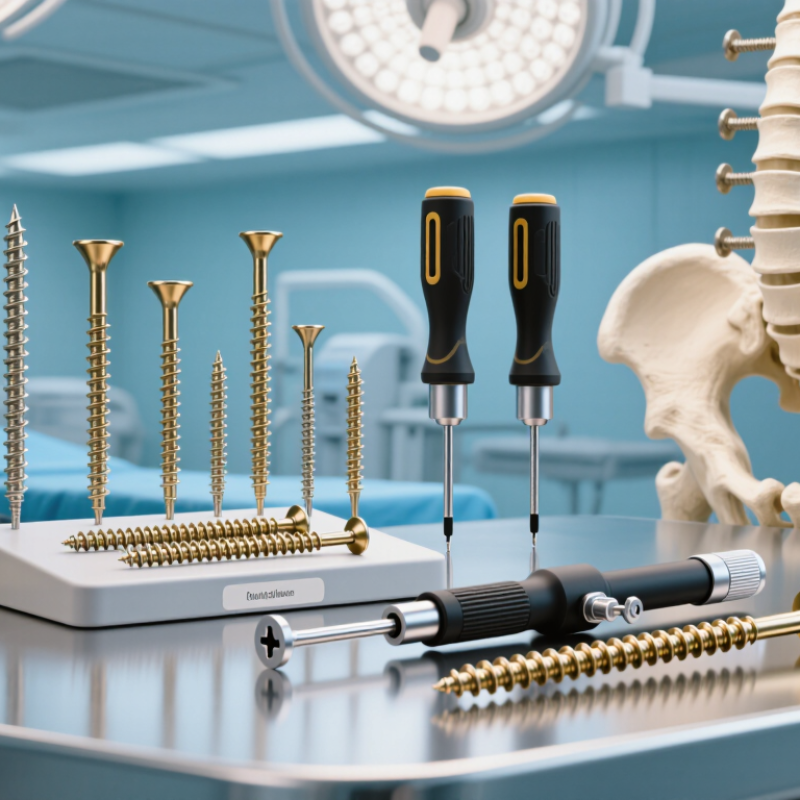
A pedicle screw system is a set of implants used to steady part of the spine. Screws are placed through the bony pedicles of selected vertebrae and connected by metal rods. The construct can limit unwanted movement while bone heals after a spinal fusion. Some systems also include connectors or cross-links, depending on the surgical plan. Precision matters. Screw size, angle, and position are chosen for each patient’s anatomy, often using preoperative imaging. The goal is stable fixation, not simply adding hardware.
Surgeons may use these systems for conditions such as spinal instability, certain fractures, deformity, or vertebrae that have shifted out of alignment. The decision depends on symptoms, examination findings, imaging, and overall health. During surgery, imaging or navigation tools may help guide placement, but they do not remove the need for surgical judgment. A useful detail to remember: screws support the spine, but they do not make bone fusion happen by themselves. Healing takes time. Risks can include infection, nerve irritation, loosening, or failure of the bones to fuse. Even well-planned surgery has uncertainties, and the best approach may not be obvious at first.
Manufacturer-neutral overview of ten common pedicle screw system features and selection considerations. No company or brand names are listed; the rows are not a manufacturer ranking.
| No. | System feature | What it is | How it is used | Practical selection or verification point |
|---|---|---|---|---|
| 1 | Pedicle screws | Bone screws designed to pass through the vertebral pedicle and engage the vertebral body. | Screws are placed in selected vertebrae and connected with rods to provide spinal fixation. They are commonly used as part of fusion procedures. | Diameter and length are selected for the patient’s anatomy, spinal level, and surgical plan; they are not universal across patients or systems. |
| 2 | Connecting rods | Longitudinal metal rods that link the screw heads on one or both sides of the spine. | Rods help maintain the planned spinal alignment and stabilize the instrumented levels while fusion heals. | Confirm rod material, diameter, contouring requirements, and compatibility with the screw-head and locking components in the same system. |
| 3 | Screw-head and locking components | The screw head receives the rod; a locking cap or set screw secures the rod in the head. | After the rod is seated, the locking component is tightened using the system’s specified instruments and technique. | Instrument compatibility and the manufacturer-specified tightening method matter; components from different systems should not be assumed to be interchangeable. |
| 4 | Polyaxial screws | Screws with a head that can angle relative to the screw shaft before final locking. | The adjustable head can help accommodate rod placement when screw trajectories differ. | Head mobility and locking behavior vary by design. The surgeon should follow the applicable system instructions for use. |
| 5 | Monoaxial screws | Screws with a head fixed in line with the screw shaft. | They provide a fixed head-to-shaft relationship and may be selected when the planned screw and rod geometry supports their use. | Rod alignment can be less forgiving than with an angulating head, so trajectory and construct planning are important. |
| 6 | Cannulated screws | Screws with a central channel that can be used with a guidewire during placement. | A guidewire can help guide the screw along a planned trajectory, subject to the system’s approved technique. | Verify guidewire and instrument compatibility, and use appropriate imaging and placement checks. |
| 7 | Fenestrated screws | Screws with openings in the shaft that may allow bone cement to be delivered through the screw in selected procedures. | They may be considered for cement augmentation in certain patients, including some with poor bone quality. | Cement augmentation has specific indications and risks, including cement leakage. It requires careful patient selection and adherence to the device instructions and clinical protocol. |
| 8 | Reduction screws | Screws with extended tabs or similar features that can help bring a rod toward the screw head. | They can assist with rod seating and correction maneuvers during construct assembly. | Reduction features and removal steps differ by design; confirm the required instruments and technique before use. |
| 9 | Instrumentation and imaging support | System-specific tools may include probes, taps, drivers, rod holders, and imaging-compatible guides. | These tools support trajectory preparation, screw insertion, rod placement, and intraoperative verification. Fluoroscopy or navigation may be used according to clinical practice. | Check instrument completeness, calibration where applicable, sterilization status, and compatibility with the selected implants. |
| 10 | Materials and system compatibility | Implants are made from specified implant-grade materials; spinal fixation systems may use materials such as titanium alloys, stainless steel, or cobalt-chromium alloys, depending on the component and design. | Material and design choices affect the implant’s mechanical properties and its compatibility with other components and imaging requirements. | Review the product labeling, applicable standards, regulatory documentation, and instructions for use. Do not mix components unless compatibility is explicitly established. |
Review clinical evidence, engineering details, and support. Catalog size alone tells little.
It reviewed 37,337 screws across 130 studies. Placement accuracy varied by technique and spinal region.
Not always. Studies may define “accuracy” differently, so one headline figure can mislead.
Ask for regulatory records, material traceability, fatigue and corrosion testing, and clear instructions for use.
Check screw dimensions, thread options, instrument layouts, and tool availability. Missing instruments can disrupt workflow.
Review material batch records, inspection steps, packaging, and sample instruments where possible. Paperwork still needs verification.
No. Capabilities and public information can change. Check supply capacity, service, and current specifications directly.
Compare total system expenses, not just unit prices. Include instruments, availability, and support. It takes more work.
This article explains what a Pedicle Screw System is, how its components support spinal fixation, and the clinical contexts in which such systems may be used. It also outlines how China’s manufacturing sector is organized, from product development and component production to assembly and distribution. Readers will find a practical framework for comparing suppliers, including considerations such as engineering capabilities, product range, manufacturing consistency, technical support, and supply reliability.
The article also presents a structured overview of ten Chinese manufacturers without focusing on brand promotion. It discusses how to assess quality systems, review relevant regulatory approvals and documentation, and evaluate a supplier’s experience and production processes. Together, these topics offer buyers and industry readers a useful starting point for understanding the market and conducting a careful, evidence-based supplier assessment.