Discover expert surgical guides, manufacturing standards, and clinical innovations across spinal, trauma, and arthroscopy implant technologies.

Stay informed with in-depth technical analysis on titanium alloys, pedicle screws, PEEK cages, and modern orthopedic instrumentation.
China’s spinal-device sector has become an important sourcing base for hospitals, distributors, and international medical companies. This introduction examines China’s top 10 Posterior Cervical Fixation System manufacturers through a practical, evidence-based lens.
Grand View Research estimates the global spinal implants market reached approximately USD 11 billion in 2023. Fortune Business Insights reports similar market momentum, although its forecasts differ by methodology and product definition. These figures include cervical plates, screws, rods, and related implants. They do not measure posterior cervical systems alone. That distinction matters.
Clinical reliability begins with design control. A dependable system should provide secure screw placement, suitable rod contouring, and compatibility with surgical instruments. Manufacturing evidence also matters. ISO 13485 certification, traceability records, sterilization controls, and validated packaging can reveal operational maturity. Regulatory pathways, including FDA 510(k) clearance or applicable European requirements, require separate verification for each product.
Not every large supplier is the best fit.
This list therefore considers product range, material quality, engineering support, documented quality systems, export experience, and responsiveness. Public catalogs can look impressive, yet they may not explain fatigue testing or revision support. Buyers should request current certificates, technical drawings, surgical technique guides, and independent test records. Manufacturer rankings are never absolute. Hospital protocol, surgeon preference, and local registration rules can change the final decision.
The companies discussed here represent different strengths, from cost-efficient production to specialized spinal engineering. Their suitability should be confirmed through direct audits and clinical evaluation. Data helps narrow the field, but careful verification protects patients and purchasing teams.
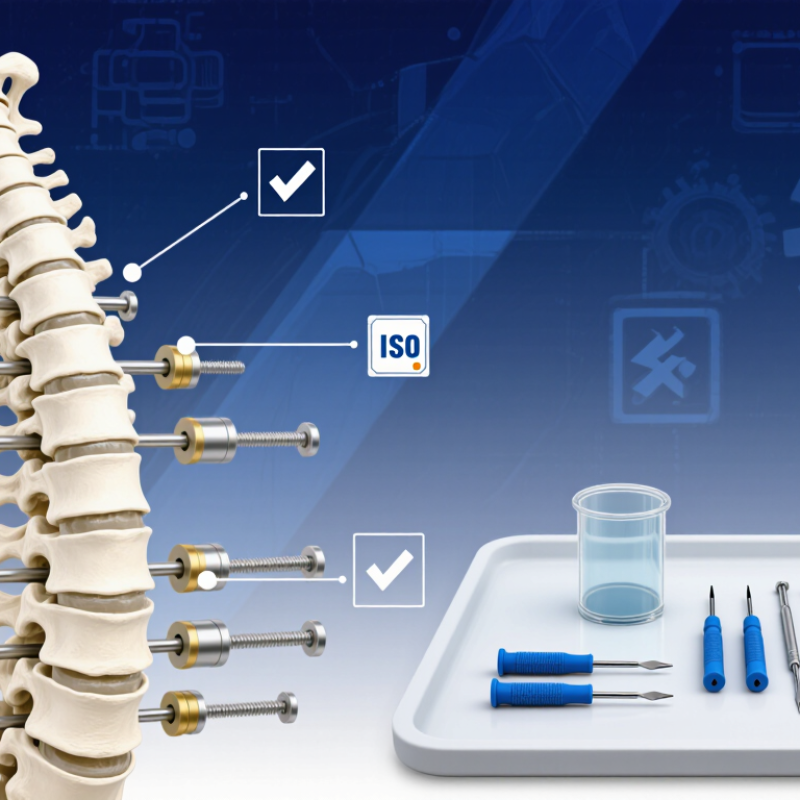
Definition and Role of Posterior Cervical Fixation Systems
Posterior cervical fixation systems stabilize the neck from behind. They use screws, rods, connectors, and bone graft materials. Surgeons select them when the cervical spine shows instability, deformity, trauma, or compression across several levels. The construct links stronger vertebrae around the weakened segment. It acts like an internal support frame while fusion develops.
A 2024 Fortune Business Insights report valued the global spinal implants market at about USD 12.65 billion in 2023. This figure covers many implant categories, not cervical fixation alone. It still reflects growing demand for dependable spinal reconstruction. Clinical decisions must rely on anatomy and evidence, not market growth. A 2022 review in Global Spine Journal emphasized that posterior fusion can improve stability, but complications may include infection, blood loss, and adjacent-level stress.
In practice, fixation planning resembles building a small bridge. Screw position, bone quality, alignment, and rod contour all matter. Poor alignment can leave the patient with persistent pain or imbalance. No construct is perfect. Even experienced teams may revise the plan during surgery. Professional guidance from organizations such as AOSpine supports careful imaging, neurological assessment, and patient-specific planning. Long-term follow-up remains essential because radiographic fusion does not always equal comfort or function.
Technical data overview of posterior cervical fixation systems, their common configurations, clinical roles, and design considerations
| No. | Data Dimension | Typical Technical Data | Definition, Role, or Clinical Significance |
|---|---|---|---|
| 1 | System Definition | Segmental spinal instrumentation positioned through a posterior cervical surgical approach | A posterior cervical fixation system mechanically stabilizes selected cervical vertebrae by connecting bone anchors, such as lateral-mass or pedicle screws, with longitudinal rods. |
| 2 | Primary Surgical Role | Restoration and maintenance of spinal stability during fusion or reconstruction | The system helps limit excessive translation, rotation, and angulation while bone graft healing and arthrodesis develop. It is an adjunct to decompression, deformity correction, or reconstruction rather than a replacement for biological fusion. |
| 3 | Common Cervical Levels | Most commonly used from approximately C2 to C7; the construct may extend to the upper thoracic spine when clinically required | Instrumentation level selection depends on pathology, vertebral anatomy, the cervicothoracic junction, bone quality, deformity, and the need for a stable upper and lower fixation zone. |
| 4 | Typical Bone Anchors | Lateral-mass screws, cervical pedicle screws, laminar screws, hooks, and selected hybrid combinations | Lateral-mass screws are frequently used in subaxial cervical fixation. Pedicle screws can provide strong three-column purchase but require careful three-dimensional imaging and advanced anatomical planning because of nearby neural and vascular structures. |
| 5 | Rod Configuration | Pre-contoured or intraoperatively contoured rods; commonly available in small spinal-implant diameters such as approximately 3.5 mm | Rods link the anchors into a unified construct and help maintain alignment. Rod contouring should respect the desired cervical lordosis and avoid excessive stress at screw–rod connections. |
| 6 | Common Implant Materials | Medical-grade titanium alloys are widely used; cobalt-chromium and other implant alloys may be selected for specific mechanical requirements | Material selection affects strength, fatigue resistance, radiographic artifact, MRI considerations, stiffness, and compatibility with the intended surgical application. Materials must comply with applicable medical-device requirements. |
| 7 | Fixation Mechanism | Threaded screws or hooks anchored to posterior cervical bone and secured to rods with locking caps or equivalent connectors | The screw–rod interface transfers corrective and stabilizing forces across the construct. Polyaxial screw heads may facilitate rod alignment and reduce the need for precise screw-head orientation. |
| 8 | Typical Clinical Indications | Instability, traumatic fracture or dislocation, degenerative deformity, cervical kyphosis, tumor-related reconstruction, infection-related instability, and selected cases of myelopathy requiring stabilization | Posterior fixation may be considered when the posterior elements provide a suitable anchor base or when anterior treatment alone is insufficient. The final indication is determined by imaging, neurological status, alignment, bone quality, and surgical judgment. |
| 9 | Imaging and Planning Requirements | Preoperative radiographs and CT are commonly used; MRI is important for neural compression, spinal cord condition, tumors, infection, and soft-tissue assessment | Detailed imaging supports selection of screw trajectory, diameter, length, fixation levels, and the need for navigation or intraoperative imaging. Three-dimensional CT assessment is particularly valuable for complex anatomy and pedicle screw planning. |
| 10 | Key Benefits and Limitations | Benefits include immediate mechanical support and deformity-control capability; limitations include risks of neurovascular injury, infection, implant loosening, rod or screw breakage, junctional problems, and nonunion | Posterior cervical fixation can improve construct stability and protect alignment, but outcomes depend on accurate placement, adequate decompression, bone quality, soft-tissue handling, grafting, postoperative care, and patient-specific factors. |
Note: The technical ranges and descriptions represent commonly reported characteristics of posterior cervical fixation systems. Actual dimensions, materials, indications, and surgical techniques vary according to the validated specifications of each medical-device system and applicable regulatory requirements.
It stabilizes the neck from behind. Screws, rods, connectors, and bone grafts form an internal support frame. Fusion develops over time.
It may be considered for instability, deformity, trauma, or compression across several neck levels. The decision depends on imaging, symptoms, bone quality, and neurological findings.
Screws anchor into stronger vertebrae around a weakened area. Rods connect these anchors and help maintain alignment. It resembles a small bridge.
Lateral mass screws, rods, connectors, and instruments must fit together smoothly. A misaligned connector can interrupt the surgical workflow. Small details matter.
Titanium alloys are common because they combine strength, corrosion resistance, and imaging compatibility. Material certificates should confirm the stated composition.
Review dimensional tolerances, fatigue testing, packaging controls, and lot traceability. Factory audits can reveal calibrated tools and trained technicians. Brochures are not enough.
Examine independent clinical feedback, complication reports, regulatory documents, and post-market monitoring. A complete catalog does not prove strong clinical performance.
Possible concerns include infection, blood loss, persistent pain, imbalance, and stress on nearby spinal levels. No construct is perfect. Radiographic fusion may not equal comfort or normal function.
Imaging helps assess anatomy, alignment, bone quality, and neurological risks before surgery. Follow-up checks healing and function. Plans may change during surgery.
This article provides a practical overview of the Posterior Cervical Fixation System, explaining its role in stabilizing the cervical spine, supporting alignment, and assisting treatment for conditions such as spinal instability, deformity, trauma, and degenerative disease. It introduces key design features, including screw and rod configurations, fixation strength, anatomical adaptability, material selection, and compatibility with surgical techniques. The discussion also highlights how these systems are evaluated in clinical applications and why precision, biocompatibility, and reliable performance are essential.
The article further examines China’s manufacturing environment, focusing on production standards, quality control, regulatory compliance, testing procedures, traceability, and engineering capabilities. It presents a framework for understanding the top ten manufacturer categories without emphasizing specific brands, and concludes with practical guidance for selecting a reliable Chinese supplier. Important considerations include product certification, manufacturing experience, research and development capacity, documentation, customization support, delivery consistency, after-sales service, and communication throughout the procurement process.