Discover expert surgical guides, manufacturing standards, and clinical innovations across spinal, trauma, and arthroscopy implant technologies.

Stay informed with in-depth technical analysis on titanium alloys, pedicle screws, PEEK cages, and modern orthopedic instrumentation.
Choosing a China Best Intramedullary Nailing System Manufacturer requires more than comparing prices or polished product photographs. It requires evidence, clinical understanding, and disciplined manufacturing. An experienced supplier should demonstrate control over titanium or stainless-steel materials, dimensional accuracy, sterilization compatibility, and fatigue testing. It should also provide traceable production records and practical technical support for surgeons and hospitals.
Gerhard Küntscher, a pioneer of intramedullary fixation, stated, “The medullary cavity is the ideal place for a splint.” His insight remains relevant today. A modern Intramedullary Nailing System must support stable fixation while respecting anatomy, surgical workflow, and patient recovery. Nail geometry, locking options, targeting instruments, and radiographic visibility all influence the procedure. Small details matter.
Real manufacturing experience exposes the difficult parts. Instruments may feel balanced on a workbench but awkward in a busy operating room. A design can pass laboratory testing and still require refinement after clinical feedback. No factory is perfect. That is uncomfortable, but useful. Reliable manufacturers respond with corrective action, documented validation, and transparent communication.
This guide examines how Chinese manufacturers build credibility in the global orthopedic market. It considers engineering capability, quality management, product consistency, customization, regulatory awareness, and after-sales service. The strongest partner is not simply the one claiming to be the best. It is the one that can show repeatable results, explain limitations honestly, and keep improving when evidence reveals a weakness.
What Is an Intramedullary Nailing System?
An intramedullary nailing system is an orthopedic implant set for stabilizing fractures in long bones. It uses a metal nail placed inside the bone’s medullary canal. Locking screws hold the nail in position and control rotation or shortening. It is internal support. Common applications include fractures of the femur, tibia, and humerus, depending on the injury and patient condition.
The system usually includes nails, locking screws, end caps, and surgical instruments. Each part must work together with accurate sizing and reliable connection. Experienced orthopedic teams review X-rays or CT images before selecting the nail diameter and length. During surgery, they check alignment, screw placement, and limb rotation. Small parts matter. A poorly matched implant can complicate recovery, even when the main nail appears suitable.
Manufacturing quality also affects clinical confidence. Medical-grade titanium alloys or stainless steel may be selected according to design requirements. Controlled machining, surface inspection, cleaning, packaging, and traceability support consistent performance. Yet no implant fits every fracture. That limitation deserves attention. Patient anatomy, bone quality, fracture pattern, and surgical technique can change the result. Manufacturers should provide clear technical data, validated instruments, and dependable documentation. Healthcare professionals must make the final treatment decision.
| Data Dimension | Typical Information | Clinical or Technical Relevance |
|---|---|---|
| Definition | An intramedullary nailing system is an orthopedic fixation system that places a metal nail inside the medullary canal of a long bone. | The nail supports alignment and load sharing while the fracture heals. |
| Primary Components | Intramedullary nail, locking screws or bolts, end cap, insertion handle, targeting guide, drill sleeves, guide wire, and optional reamers. | The components work together to insert, position, lock, and remove the implant when required. |
| Commonly Treated Bones | Femur, tibia, humerus, and selected forearm or other long-bone fractures. | The implant design, diameter, length, and locking configuration must match the anatomy and fracture pattern. |
| Typical Materials | Medical-grade titanium alloys, such as Ti-6Al-4V, or stainless steel, such as 316L, are commonly used. | Material selection affects strength, elasticity, corrosion resistance, imaging characteristics, and compatibility with surgical instruments. |
| Nail Diameter | Adult long-bone nails are commonly available in approximately 8–15 mm diameters, although the range varies by bone and system. | The selected diameter should provide adequate stability without compromising the cortical bone or blood supply. |
| Nail Length | Available lengths commonly cover short, standard, and long configurations; exact lengths depend on the bone and anatomical measurement. | Correct length helps achieve appropriate fracture coverage and proximal or distal fixation. |
| Locking Options | Static locking, dynamic locking, and, in some designs, multiple-angle or multidirectional locking. | Locking controls rotation, shortening, and axial movement according to the fracture stability required. |
| Insertion Technique | The nail may be inserted using a reamed or unreamed technique, depending on the fracture, bone condition, and surgical plan. | Reaming can enlarge the canal for nail insertion and may improve implant fit, while unreamed techniques may be selected in specific clinical situations. |
| Fracture Applications | Common applications include transverse, oblique, spiral, comminuted, and selected segmental or open fractures. | Treatment suitability depends on fracture location, soft-tissue condition, patient factors, and the surgeon’s assessment. |
| Imaging Guidance | Fluoroscopy is commonly used during entry-point preparation, fracture reduction, nail positioning, and locking-screw placement. | Imaging helps confirm alignment, implant position, screw length, and final fracture reduction. |
| Main Advantages | Load-sharing fixation, preservation of some fracture-site soft tissues, strong rotational control, and potential for early mobilization. | Clinical benefits vary according to fracture stability, surgical technique, bone quality, and patient recovery. |
| Potential Risks | Infection, malalignment, delayed union, nonunion, implant breakage, screw irritation, anterior knee pain in selected tibial procedures, and neurovascular injury. | Risk varies with the injury, patient health, implant selection, surgical approach, and postoperative care. |
| Sterilization Status | Implants are generally supplied sterile or sterilized before use according to the product’s validated instructions; reusable instruments require validated cleaning and sterilization. | Healthcare facilities must follow the applicable instructions for use and local infection-control requirements. |
| Selection Criteria | Bone anatomy, fracture classification, canal diameter, nail length, locking-hole configuration, bone quality, and patient-specific factors. | Final implant selection and surgical technique must be determined by a qualified orthopedic professional. |
An intramedullary nailing system stabilizes long-bone fractures through controlled internal support. The nail carries axial loads and helps maintain alignment inside the medullary canal. Its diameter, length, curvature, and material stiffness must match the patient’s anatomy. Global Burden of Disease Study 2019, published in The Lancet, recorded about 178 million new fractures worldwide. This scale increases the need for reliable, reproducible fixation systems.
Interlocking screws secure the nail proximally and distally. They resist rotation, shortening, and unwanted translation. Dynamic slots can permit controlled compression during weight bearing, while static holes provide stronger length control. The end cap closes the nail and may prevent tissue ingrowth or later migration. A targeting guide supports accurate screw placement, especially when the nail is deep beneath soft tissue. Reaming instruments prepare the canal and can improve nail fit, although excessive reaming may raise thermal or biological concerns. Small details matter.
China Best Intramedullary Nailing System Manufacturer
Materials, design features, and manufacturing processes determine the reliability of an intramedullary nailing system. Titanium alloy is widely selected for its strength, corrosion resistance, and relatively low weight. Stainless steel remains useful when higher stiffness and familiar surgical handling are required. Material certificates, chemical analysis, and lot traceability should support every production batch.
Design begins with anatomy, not appearance. A nail needs controlled curvature, suitable diameter ranges, and accurate locking holes. Distal and proximal options should support different fracture patterns. Fluted surfaces may assist insertion and reduce material weight. End caps can protect threads and help maintain alignment. Instruments must also feel balanced in the surgeon’s hand. Small details matter.
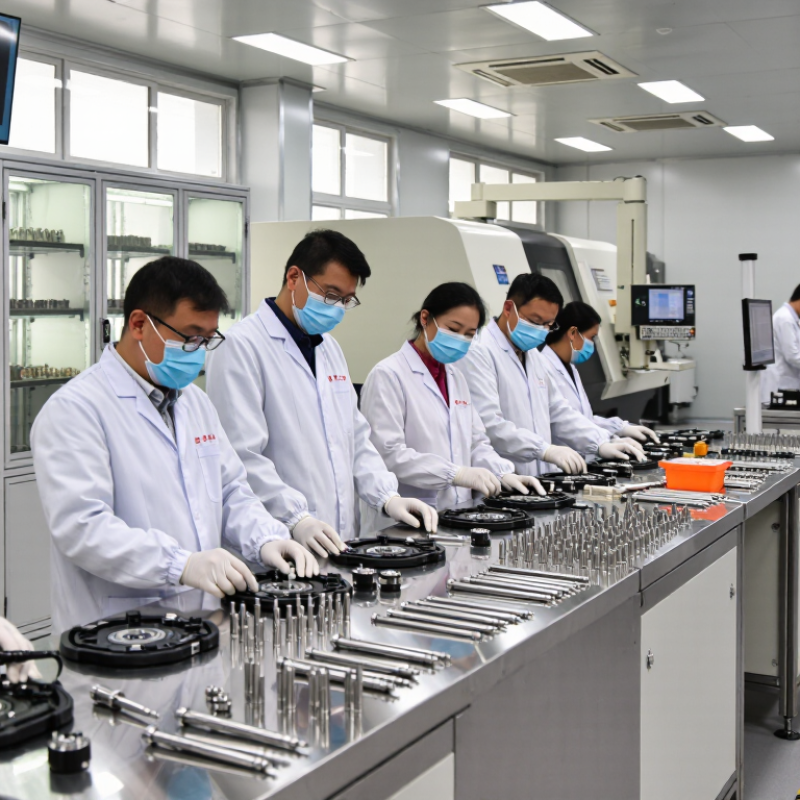
Manufacturing quality depends on disciplined repetition. Forging or bar processing creates the initial form, while CNC machining refines holes, slots, and threads. Each feature requires dimensional inspection. Surface finishing, cleaning, passivation, and packaging follow validated procedures. Non-destructive testing can reveal hidden defects. Production teams should document deviations instead of hiding them. A polished process can still produce an occasional mismatch. That possibility deserves review, corrective action, and honest communication. Cadaver studies, usability checks, and engineering verification can improve future revisions. No geometry fits every patient.
Material selection for intramedullary nails balances strength, fatigue resistance, corrosion performance, imaging compatibility, and stiffness. Titanium alloy generally has a lower elastic modulus than stainless steel and cobalt-chromium alloy, which may help reduce stiffness mismatch with bone. Typical manufacturing routes include precision forging, CNC machining, drilling, surface finishing, cleaning, and sterilization.
Values shown are representative room-temperature elastic-modulus values for commonly used implant metals: Ti-6Al-4V, 316L stainless steel, and cobalt-chromium alloy. Actual values vary with alloy grade, processing route, heat treatment, and product design.
Choosing a China-based manufacturer requires more than comparing prices. The World Health Organization reported that 1.71 billion people live with musculoskeletal conditions worldwide in 2022. This demand makes implant quality and supply stability critical. Ask for ISO 13485 certification, current NMPA registration, and a complete device history record. Check whether each nail, screw, and instrument has a traceable lot number.
Inspect the technical evidence closely. ASTM F1264 fatigue testing can show how an intramedullary nail performs under repeated loading. ISO 10993 documentation helps assess biological safety, while ISO 14971 records risk-control decisions. Request test methods, sample sizes, acceptance limits, and original laboratory reports. A certificate alone is not enough. Review the manufacturer’s experience with titanium or stainless-steel processing, cannulation, surface finishing, and dimensional inspection. Small burrs near locking holes can complicate surgery.
Production capacity also needs practical verification. Grand View Research has projected continued growth in the global orthopedic devices market, increasing pressure on reliable supply chains. Visit the factory, or arrange a documented remote audit. Observe cleaning areas, calibration labels, packaging controls, and nonconformance records. Ask how quickly the team investigates a rejected batch. The answer may reveal more than a sales presentation. I would also request surgeon feedback and shipment records, while recognizing that testimonials can be selective. No audit is perfect. A careful buyer should keep questioning the evidence.
Quality control begins with material traceability, not the final inspection. Each intramedullary nail should carry a documented lot number, alloy certificate, machining record, and sterilization status. ISO 13485 supports this process through risk-based quality management. ISO 14971 then helps identify hazards such as bending, fatigue, corrosion, and incorrect locking. Small details matter: a rough hole edge can affect screw seating during surgery.
The clinical need is substantial. The Global Burden of Disease 2019 study reported about 178 million new fractures worldwide in 2019. Trauma teams therefore need reliable instruments, predictable sizing, and clear surgical guidance. A capable manufacturer should provide dimensional inspection data, fatigue-test methods, packaging validation, and complaint-trend reviews. Certifications are valuable evidence, but they do not replace product-specific testing or independent clinical judgment.
Clinical support should remain practical. It may include surgical technique guides, instrument training, case-based discussions, and rapid answers about nail diameter or locking options. Support staff need orthopaedic knowledge, not only sales scripts. This is where many suppliers still need improvement. Response time can be promised, yet difficult cases may expose gaps. Regular feedback from surgeons, distributors, and hospitals should update training materials and risk controls. WHO reports that approximately one in ten patients experiences harm in healthcare, with many events considered preventable. That figure deserves humility, careful documentation, and continuous review.
It is an internal implant system for stabilizing long-bone fractures. A metal nail sits inside the bone’s medullary canal. Locking screws limit rotation and shortening.
It may support fractures of the femur, tibia, or humerus. Suitability depends on fracture pattern, bone quality, anatomy, and patient condition. No single nail fits every case.
A typical system includes nails, locking screws, end caps, and surgical instruments. Accurate sizing and secure connections are essential. Small parts matter.
Orthopedic teams review X-ray or CT images before choosing nail length and diameter. During surgery, they check alignment, screw placement, and limb rotation.
Medical-grade titanium alloys or stainless steel may meet different design requirements. Material selection should consider strength, fatigue resistance, corrosion behavior, and clinical use.
Quality control should begin with material traceability, not the final inspection. Records may include lot numbers, alloy certificates, machining details, and sterilization status. A rough screw hole can affect seating.
Useful documents include dimensional inspection records, fatigue-test methods, packaging validation, and complaint reviews. Risk-based quality systems can help identify bending, corrosion, and locking problems.
Practical support may include surgical technique guides, instrument training, and case-based discussions. Staff should understand orthopedic procedures, not only repeat sales scripts. Support can look complete on paper, yet difficult cases may reveal gaps.
No. Certification provides useful evidence, but it does not replace product-specific testing or clinical judgment. Patient anatomy and surgical technique still influence recovery. That limitation deserves attention.
An Intramedullary Nailing System is a surgical solution designed to stabilize and align long-bone fractures by placing a nail inside the medullary canal. Its main components typically include the intramedullary nail, locking screws, end caps, targeting instruments, and surgical guides, each supporting fracture fixation, rotational control, and accurate placement. Effective systems are developed with biocompatible materials, precise dimensions, fatigue resistance, and designs that support minimally invasive procedures and varied anatomical needs.
When evaluating a China-based manufacturer, buyers should examine engineering capabilities, production consistency, material traceability, sterilization procedures, and inspection standards. Reliable manufacturers should demonstrate robust quality-control processes, appropriate regulatory certifications, documented testing, and clear technical specifications. Equally important are clinical training, surgical instrumentation support, responsive communication, and after-sales service. A comprehensive assessment of product safety, manufacturing reliability, customization capacity, and clinical support can help hospitals and distributors select a dependable manufacturing partner.