
Discover expert surgical guides, manufacturing standards, and clinical innovations across spinal, trauma, and arthroscopy implant technologies.

Stay informed with in-depth technical analysis on titanium alloys, pedicle screws, PEEK cages, and modern orthopedic instrumentation.
High-precision orthopedic implants manufactured under ISO 13485 standards, featuring medical-grade Titanium Alloy (Ti-6Al-4V ELI) and PEEK polymer for superior osseointegration.
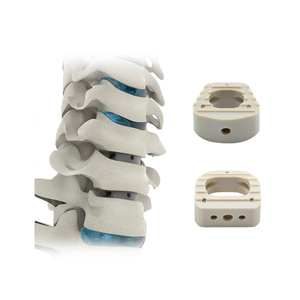
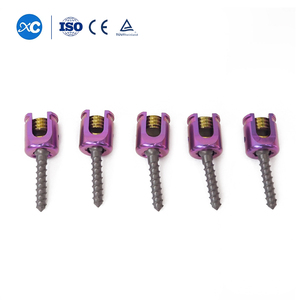
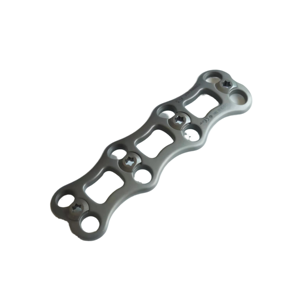
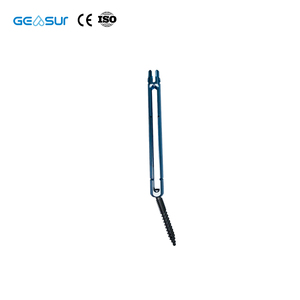
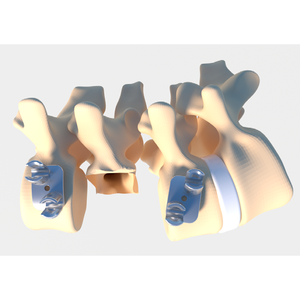
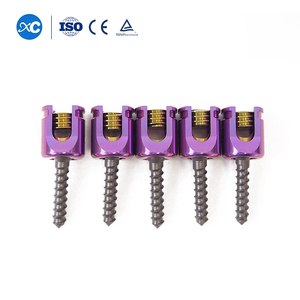
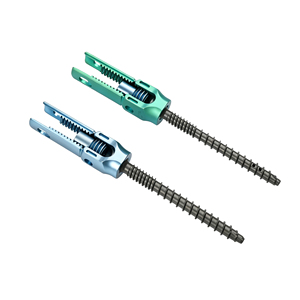
The global spinal surgery landscape is undergoing a monumental paradigm shift. Traditional open thoracolumbar and cervical surgeries—historically characterized by extensive muscle dissection, significant blood loss, and prolonged postoperative recovery cycles—are rapidly being superseded by Minimally Invasive Spine Surgery (MISS) techniques. Driven by advancements in intraoperative fluoroscopy, 3D navigation guidance, and robotic assistance, hospital procurement departments and orthopedic distributors worldwide are prioritizing suppliers capable of delivering precision-engineered, CE-marked minimally invasive spine implants.
Minimally invasive spine implants, including percutaneous poly-axial pedicle screws, expansive PEEK interbody cages, and low-profile anterior cervical plates, require significantly higher manufacturing precision than traditional implants. Because these devices are delivered through narrow tubular retractors or small percutaneous incisions, their mechanical stability, locking reliability, and surface biocompatibility must meet stringent zero-defect benchmarks.
SEO & Clinical Information Gain Note: B2B buyers evaluating spinal implant manufacturers should note that under the European Union Medical Device Regulation (EU MDR 2017/745), spine implants are categorized as Class III high-risk medical devices. Certification requires rigorous Clinical Evaluation Reports (CER), 5-axis CNC dimensional verification, and ISO 14971 risk management compliance.
As qualified factories and suppliers, medical device partners must go beyond basic machining. Modern procurement managers evaluate suppliers on their complete quality management ecosystem—spanning medical-grade raw material traceability (Ti-6Al-4V ELI conforming to ASTM F136 and PEEK-OPTIMA® conforming to ASTM F2026), 10,000-class cleanroom packaging, dynamic fatigue testing (ASTM F1717 / ASTM F2077), and robust regulatory dossier support.
A comparative analysis of clinical-grade implant materials utilized in CE-certified minimally invasive spine fixation devices.
| Implant Material Type | Young's Modulus (GPa) | Radiolucency & Imaging | Primary Clinical Indication | Manufacturing Technology |
|---|---|---|---|---|
| Ti-6Al-4V ELI (Grade 23) | 110 GPa | Radiopaque (Slight Artifact) | Percutaneous Pedicle Screws, Rods | 5-Axis Swiss CNC Turning / Anodization |
| Medical Grade PEEK Polymer | 3.6 GPa (Bone-Matched) | 100% Radiolucent (X-Ray Invisible) | ACDF Cages, PLIF/TLIF Interbody Devices | Precision CNC Milling & Injection Molding |
| Trabecular 3D Titanium | 2.5 - 5.0 GPa (Porous) | Radiopaque with Pore Visibility | Direct Osseointegration MIS Cages | Direct Metal Laser Sintering (DMLS) |
| Stainless Steel 316L / LVM | 200 GPa | Radiopaque (Moderate Artifact) | Rigid Deformity Correction Fixation | High-Torque Machining & Passivation |
Leveraging state-of-the-art infrastructure, strict quality control systems, and transparent global export networks.
Our manufacturing plant operates imported 5-axis CNC machining centers and automated Swiss sliding head lathes. We achieve sub-micron thread precision and flawless surface micro-finishing essential for percutaneous screw cannulation and internal locking mechanisms.
Every batch of spinal implants undergoes rigorous testing, including coordinate measuring machine (CMM) dimensional verification, static axial compression, dynamic torsional fatigue testing, and cleanroom bioburden validation before international dispatch.
From custom implant geometry co-development and rapid prototyping to technical file preparation for FDA 510(k) and CE MDR submissions, we empower global brand owners, hospital chains, and distributors with turnkey private label solutions.
As hospital purchasing groups (GPOs) and international medical distributors re-evaluate their supply chains in 2026, several critical technological trends are governing procurement decisions for minimally invasive spinal hardware:
Partnering with a supplier that proactively integrates these biomechanical advancements ensures distributors remain ahead of market demands while minimizing regulatory friction across regulatory domains.
Essential technical and regulatory information for B2B buyers, medical device importers, and hospital procurement officers.
Partner with an established, CE-certified minimally invasive spine implant manufacturer. Contact our international business team today for pricing catalogs, technical files, and OEM customization quotes.
