
Discover expert surgical guides, manufacturing standards, and clinical innovations across spinal, trauma, and arthroscopy implant technologies.

Stay informed with in-depth technical analysis on titanium alloys, pedicle screws, PEEK cages, and modern orthopedic instrumentation.
Precision-engineered 3.5mm Titanium & Stainless Steel elbow fixation solutions certified to CE, ISO 13485, and FDA benchmarks.
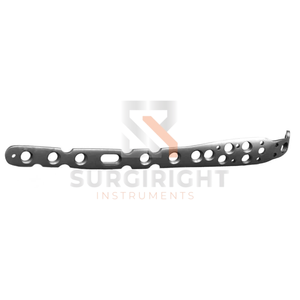
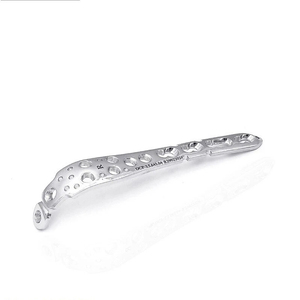
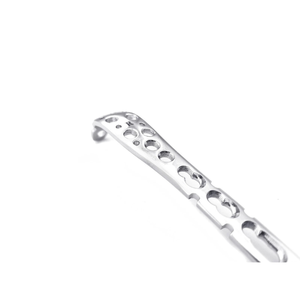
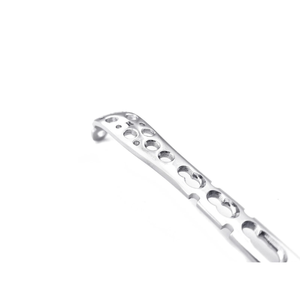
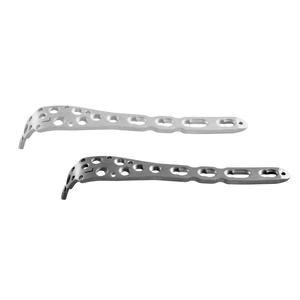
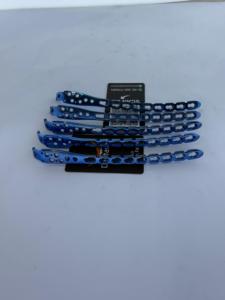
Fractures of the proximal ulna, specifically olecranon fractures, constitute approximately 10% of all upper extremity trauma presentations in emergency orthopedic surgery. The anatomical configuration of the olecranon process serves as the vital insertional site for the triceps brachii tendon, converting powerful contractile forces into elbow extension. Consequently, any disruption to the articular continuity of the trochlear notch demands precise anatomical reduction, rigid internal fixation, and early active mobilization to prevent joint stiffness, malunion, or secondary post-traumatic osteoarthritis.
Historically, simple transverse olecranon fractures (Mayo Type IA and IIA) were routinely managed using tension band wiring (TBW) constructs. However, extensive clinical trials and biomechanical testing have highlighted significant complications associated with traditional Kirschner wire techniques, including symptomatic hardware prominence (occurring in up to 80% of patients), loss of reduction under high triceps loading, and high revision rates. Modern orthopedic trauma protocols have shifted unequivocally toward contour anatomical Locking Compression Plates (LCP).
Anatomical olecranon compression plates provide a stable angularly locked construct that effectively acts as a fixed-angle beam across the fracture site. By converting tensile forces generated by the triceps muscle into compressive dynamics across the opposing cortex, locked plating achieves superior torsional and axial stability. This biomechanical behavior is essential in comminuted intra-articular fractures (Mayo Type IIB and Type III), monteggia fracture-dislocations, and osteopenic bone where conventional cortical screw threads fail to achieve adequate purchase.
The mechanical performance of an olecranon compression plate is directly tied to raw material selection and metallurgical processing. Leading global manufacturers utilize two primary medical-grade materials compliant with international surgical implant standards:
1. Titanium Alloy (Ti-6Al-4V ELI - Grade 5 / ISO 5832-3 / ASTM F136): Offers optimal elastic modulus (110 GPa) closer to human cortical bone (18 GPa) than stainless steel, reducing stress shielding effects. Features exceptional biocompatibility, zero allergic response risk, and full MRI artifact reduction capability.
2. Stainless Steel (SS 316L / SS LVM / ISO 5832-1 / ASTM F138): Vacuum Melted implant-grade steel providing superior tensile strength, high fatigue endurance limit, and cost-efficient procurement profiles for global health systems.
At Remak Ortho Pvt Ltd, our manufacturing plant incorporates 5-axis CNC Swiss sliding head automatic lathe machines and high-precision Vertical Machining Centers (VMC). Plate contours and screw thread profiles are cut with micron-level tolerances (±0.005mm), ensuring flawless thread engagement between the locking screw head and the threaded plate hole.
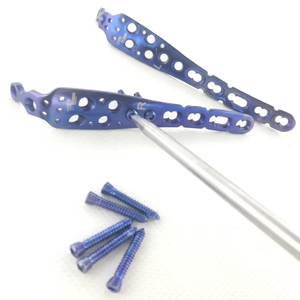
Furthermore, titanium olecranon compression plates undergo Type II Electrochemical Anodization, forming a dense titanium oxide passive layer that exponentially enhances corrosion resistance, eliminates fretting debris, and color-codes anatomical implant sizes for rapid intraoperative identification.
Navigating the complex regulatory landscape is paramount for international hospital procurement teams and orthopedic device distributors. Olecranon compression plates are classified as Class IIb medical devices under the European Union Medical Device Regulation (EU MDR 2017/745) and Class II under US FDA 510(k) frameworks. Surgical manual instrument sets designed for plate insertion fall under Class I medical device regulations.
Demonstrating compliance requires rigorous testing protocols in accordance with international standard benchmarks:
The global market for orthopedic trauma implants is undergoing rapid evolution. Procurement specialists, hospital group buyers, and B2B medical exporters must adapt to key macro trends reshaping the orthopedic manufacturing ecosystem:
1. Shift Toward OEM/ODM Contract Manufacturing Integration: Leading European and North American brand owners are increasingly partnering with certified Indian manufacturers like Remak Ortho Pvt Ltd to capitalize on advanced engineering infrastructure, high-precision CNC capabilities, and cost-efficient production models without compromising quality standards.
2. Complete Modular Surgical Set Packaging: Global buyers favor bundled procurement—requesting 3.5mm olecranon plates (left and right configurations, 3 to 10 holes) supplied in dedicated aluminum sterilization trays complete with color-coded drill bits, tap sleeves, torque-limiting screwdrivers, and benders (14-piece to 121-piece comprehensive surgical instrument sets).
3. Low-Profile & Patient-Specific Geometry: Next-generation olecranon locking compression plates feature tapered distal ends and ultra-low profile proximal contours to eliminate painful hardware prominent beneath the thin dorsal subcutaneous tissue of the elbow.
As an established ISO 13485, CE, and Indian FDA-approved manufacturer based in Gujarat, India, Remak Ortho Pvt Ltd operates high-precision automated manufacturing lines, sliding head Swiss lathes, and specialized cleanroom packing environments. We deliver:
Answers to critical technical, clinical, and logistics questions commonly submitted by medical device importers and procurement directors.
Partner with an established CE & ISO 13485 certified manufacturer for high-precision olecranon locking plates, surgical instrument sets, and custom orthopedic implant solutions.
