
Discover expert surgical guides, manufacturing standards, and clinical innovations across spinal, trauma, and arthroscopy implant technologies.

Stay informed with in-depth technical analysis on titanium alloys, pedicle screws, PEEK cages, and modern orthopedic instrumentation.
Explore our CE-certified range of anatomical anatomical shoulder prosthetics, customizable upper-limb reconstructive devices, and dynamic joint orthoses engineered for superior biomechanical stability.
The global orthopedic implant and prosthetic device sector is undergoing a profound paradigm shift driven by demographic aging, complex trauma management, and rapid biomechanical innovations. As a specialized CE Certified Shoulder Joint Prosthesis Manufacturer and OEM/ODM global partner, our manufacturing facility stands at the intersection of bio-compatible material science and high-precision CNC multi-axis machining. Shoulder joint arthroplasty—spanning anatomical total shoulder replacement, reverse shoulder prosthetics, dynamic glenohumeral orthoses, and custom cosmetic limb rehabilitative systems—demands rigorous compliance with regulatory frameworks including ISO 13485, EU MDR (2017/745), and US FDA guidelines.
Hospital procurement boards, orthopedic device distributors, and government health ministries are recalibrating their supply chain priorities. Traditional commodity purchasing is giving way to strategic partnerships with integrated manufacturers offering custom OEM solutions, clinical evidence, and robust post-market oversight. Key procurement trends shaping the 2025–2030 landscape include:
Surgeons increasingly demand interchangeable humeral stems and glenoid components that convert seamlessly between total shoulder arthroplasty (TSA) and reverse shoulder arthroplasty (RSA) without requiring total stem extraction, reducing surgical time and intraoperative bone loss.
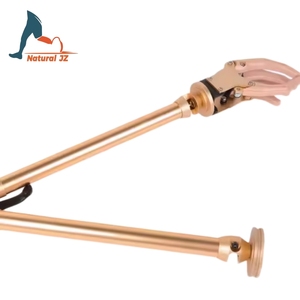
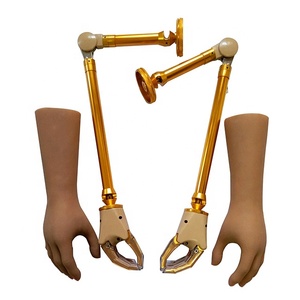
Beyond structural joint replacement, cosmetic hand and arm orthotics are expanding into custom high-definition silicone shells. Combining dynamic functional brackets with lifelike aesthetics drastically improves post-amputation psychological compliance and rehabilitation velocity.
With the transition to EU MDR, procurement departments prioritize suppliers holding verified CE mark technical documentation, clean clinical evaluation reports (CER), and traceable lot-by-lot metallurgical testing certificates.
Engineered shoulder prostheses have advanced beyond basic ball-and-socket mechanical replicates. Modern implant development integrates biomechanical finite element analysis (FEA), advanced surface topography modifications, and ergonomic post-operative rehabilitation hardware.
The longevity of shoulder implants depends on preventing aseptic loosening. Titanium Alloy (Grade 5 / Ti-6Al-4V) components utilized in our manufacturing process feature porous plasma-sprayed titanium coating or hydroxyapatite (HA) layers. This porous micro-structure mimics cancellous bone architecture, encouraging rapid osteoblast migration and long-term biological fixation.
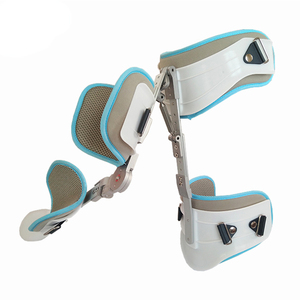
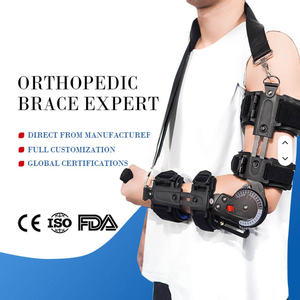
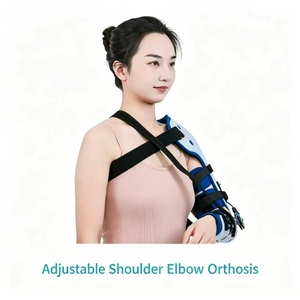
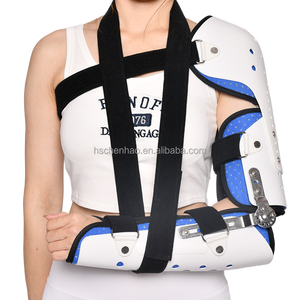
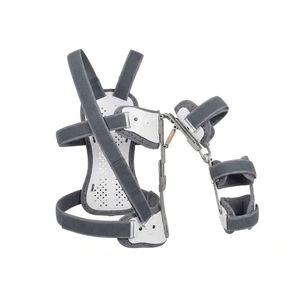
Post-surgical management relies heavily on external shoulder abduction braces equipped with Range of Motion (ROM) locking hinges. As highlighted in our dynamic product lineup, composite rehabilitation brackets feature multi-angle positioning (0° to 90° abduction) and adjustable universal joint assemblies, maintaining critical soft tissue clearance and preventing joint subluxation during early healing phases.
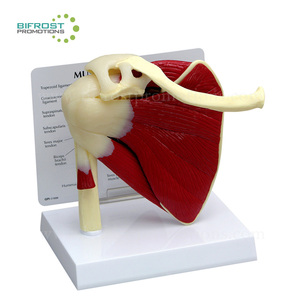
To improve surgical accuracy, life-size muscle-attached anatomical shoulder models serve as indispensable tools for pre-operative planning, patient consultation, and medical education. Understanding patient-specific glenoid vault anatomy reduces component malpositioning—the primary cause of early eccentric poly wear.
Our manufacturing ecosystem, modeled on international medical device standards, integrates raw material sourcing, multi-axis precision machining, ultra-clean surface treatment, and stringent quality assurance. Partnering with us provides B2B distributors and medical device buyers distinct competitive edges:
Equipped with automatic sliding-head lathes, multi-axis CNC milling centers, and high-precision wire-cut EDM, we manufacture complex shoulder joint geometries with sub-micron tolerances, ensuring frictionless wear couples.
Every production lot undergoes 100% CMM dimensional verification, surface roughness profiling (Ra < 0.05 µm for joint articulations), biocompatibility validation, and passivated non-corrosive cleanroom packaging.
From private-label branding and custom laser etching to full regulatory assistance for regional registration, our export team supports medical distributors in over 30 countries with rapid lead times.
Request our comprehensive product catalog, detailed engineering specifications, and competitive wholesale pricing for global tenders and distribution.
