
Discover expert surgical guides, manufacturing standards, and clinical innovations across spinal, trauma, and arthroscopy implant technologies.

Stay informed with in-depth technical analysis on titanium alloys, pedicle screws, PEEK cages, and modern orthopedic instrumentation.
Precision-engineered interbody cages, total motion disc replacement systems, laminoplasty plates, and specialized surgical kits for global orthopedic procurement.

Anterior Cervical Interbody Implant engineered with radiolucent PEEK polymer and titanium locking mechanism for ACDF procedures.
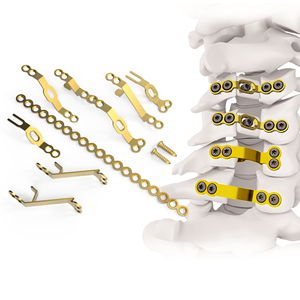
Open door spinal implant with bone screws, compliant with CE & ISO standards for posterior cervical reconstruction.
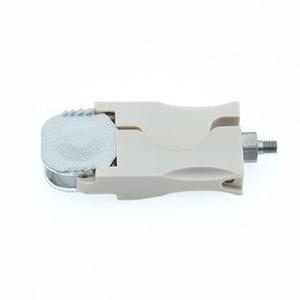
Next-generation dynamic anatomical disc prosthesis designed to restore physiological segmental motion and prevent adjacent segment degeneration.
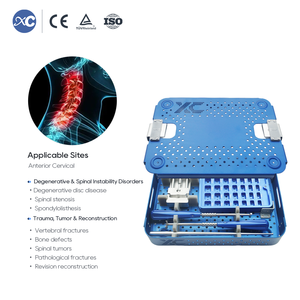
Complete orthopedic surgical tool set specifically calibrated for PEEK cage implantation and anterior cervical plating systems.
High-precision medical education and surgical simulation model demonstrating spinal cord, intervertebral discs, and carotid nerves.
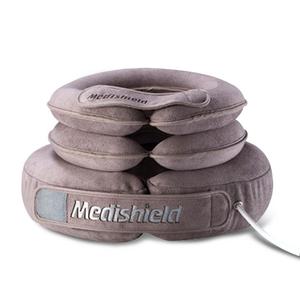
Non-invasive medical grade pneumatic decompression traction system engineered for cervical disc herniation rehabilitation.
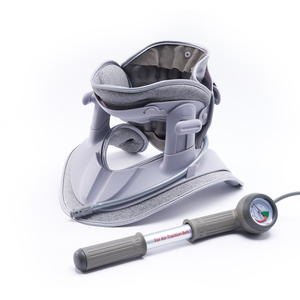
Clinical-grade therapeutic neck posture support apparatus designed for conservative cervical spine pain management.
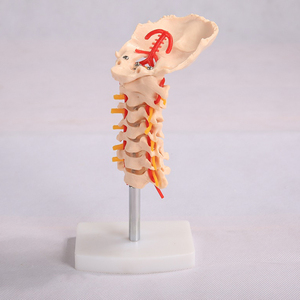
Anatomical PVC medical science model depicting occipital plate, cervical discs, nerve roots, and arterial pathways.
The global demand for spine arthroplasty devices has witnessed a paradigm shift toward Motion Preservation Technology over traditional cervical spinal fusion. As medical device procurement teams, hospital purchasing syndicates, and clinical distributors evaluate international manufacturers, China has emerged as an authoritative global hub for high-precision, bio-compatible, and regulatory-compliant artificial cervical disc implants.
This comprehensive industry white paper provides a rigorous analysis of China's artificial cervical disc manufacturing ecosystem, biomechanical engineering breakthroughs, material standards (including medical-grade Titanium Grade 5 Ti6Al4V ELI and Polyetheretherketone PEEK), and strategic procurement guidelines designed to help global B2B buyers mitigate regulatory risks and optimize supply chain economics.
Understanding the biomechanical delta between Anterior Cervical Discectomy & Fusion (ACDF) and Artificial Cervical Disc Replacement (TDR) is vital for healthcare procurement officers evaluating surgical clinical pathways.
| Biomechanical Feature | ACDF (Fusion Cages / Plates) | Artificial Cervical Disc (TDR) | Clinical & Commercial Impact |
|---|---|---|---|
| Segmental Mobility | Complete Immovability / Rigid Fusion | Controlled 6-Degree-of-Freedom Motion | TDR restores natural axial rotation, flexion, and extension. |
| Adjacent Segment Stress | High Risk (30-40% incidence over 10 yrs) | Significantly Reduced (<10% incidence) | TDR lowers long-term re-operation rates in clinical trials. |
| Primary Biomaterials | PEEK Optima / Titanium Alloys | Ti6Al4V + UHMWPE / CoCrMo Bearings | TDR requires advanced wear-resistant micro-articulation. |
| Fixation Mechanism | Integrated Screws / Endplate Teeth | Plasma Porous Titanium Coating / Keels | TDR relies on immediate secondary osseointegration. |
| Recovery Timeline | Requires Rigid Neck Collar (6-12 Weeks) | Early Postoperative Mobilization (1-2 Weeks) | TDR significantly reduces hospital stays and rehabilitation costs. |
Leading Chinese suppliers utilize state-of-the-art Japanese DMG Mori and Swiss-type automatic sliding head lathes. This guarantees dimensional tolerances within ±0.005mm, critical for ball-and-socket cervical articulating joints.
All implantable products undergo multi-stage ultrasonic washing using purified water systems, executed strictly inside ISO Class 7 (Class 10,000) cleanroom environments, followed by EO (Ethylene Oxide) or Gamma-ray sterilization.
Every disc batch is subjected to rigorous dynamic fatigue testing per ISO 18192-1 and ASTM F2346 standards, enduring over 10 million movement cycles under axial compression and shear stress to verify zero dynamic failure.
The transition from traditional subtractive machining to Selective Laser Melting (SLM) 3D printing allows manufacturers to produce biomimetic trabecular bone structures. These micro-porous endplates accelerate osteointegration and eliminate the need for mechanical keels or invasive screws.
Next-generation cervical prostheses feature Vitamin E-infused Highly Cross-linked Polyethylene (XLPE) or Ceramic-on-Ceramic (CoC) bearing surfaces, reducing particle wear rates by over 85% and virtually eliminating osteolysis risk.
Global healthcare buyers are increasingly bypassing intermediary traders by partnering directly with certified Chinese Original Equipment Manufacturers (OEM). This shift reduces total procurement costs by 40-60% while retaining full regulatory traceability.
Access competitive OEM factory pricing, ISO 13485 certified quality, and complete regulatory technical dossiers for your market.
