Discover expert surgical guides, manufacturing standards, and clinical innovations across spinal, trauma, and arthroscopy implant technologies.
Knowledge Hub
Latest Medical Device Updates
Stay informed with in-depth technical analysis on titanium alloys, pedicle screws, PEEK cages, and modern orthopedic instrumentation.
Industry Sourcing Whitepaper 2026
China Best Femoral Interlocking Nail Manufacturers & Factories
An Executive B2B Technical Blueprint & Global Procurement Guide for Medical-Grade Trauma Implants, ISO 13485 Manufacturing Standards, and Advanced Surgical Instrumentation
Precision Portfolio
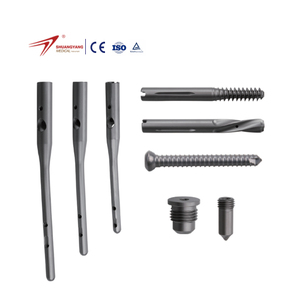
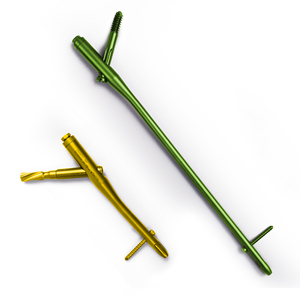
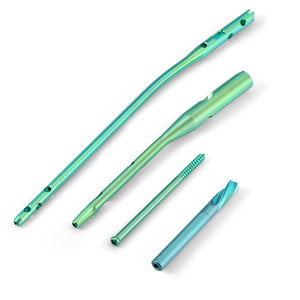
Featured Femoral Interlocking Nailing Systems
Explore top-tier anatomical intramedullary nails engineered with Titanium Alloy (Ti-6Al-4V ELI) and Stainless Steel (316L/LVM) for proximal, distal, and reconstruction diaphyseal fixation.
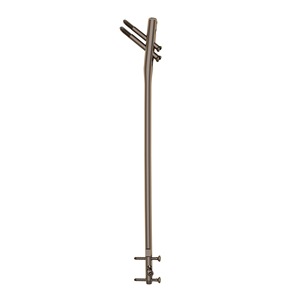
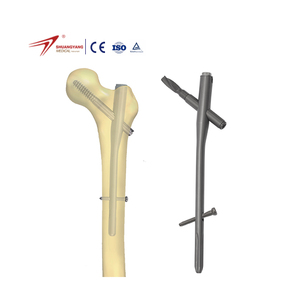
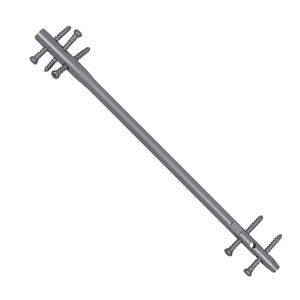
PFNA Standard
Intramedullary Nail PFNA Orthopedic Implants Proximal Femoral Nail PFNA Intramedullary Rod Nail Femur Fixation Surgery
Femoral fractures—particularly proximal trochanteric, subtrochanteric, and shaft fractures—represent one of the most critical challenges in modern orthopedic trauma surgery. Intramedullary (IM) nailing has firmly established itself as the gold standard for stabilizing diaphyseal and metaphyseal femoral fractures. By placing a load-sharing internal fixator directly within the medullary canal, femoral interlocking nails provide superior mechanical stability, preserve the surrounding periosteal blood supply, and facilitate early patient weight-bearing compared to traditional extramedullary plating systems.
China has emerged as the global epicenter for precision orthopedic implant manufacturing. Chinese medical device factories leverage state-of-the-art 5-axis Swiss-type CNC sliding head lathes, automated surface anodization, and rigorous ISO 13485 quality management systems to produce world-class intramedullary nailing systems. This technical whitepaper analyzes the mechanical evolution, metallurgical selections, clinical efficacy, and global procurement trends for hospital buyers, orthopedic distributors, and OEM medical device brand managers seeking to source high-grade femoral interlocking nails from leading Chinese manufacturers.
Key Biomechanical Principle: Load-Sharing vs. Load-Bearing
Unlike extramedullary locking plates that bear the entire bending moment across a fracture gap (creating high stress concentration at the plate-screw interface), intramedullary nails are positioned centrally along the neutral axis of the femur. This reduces the bending moment by up to 70%, allowing micro-motion that stimulates robust callus formation while reducing the incidence of implant fatigue failure.
To withstand complex torsional, axial, and bending forces during muscle contraction and gait, the material composition and geometric design of femoral interlocking nails must adhere to stringent international standards such as ASTM F136 (Ti-6Al-4V ELI) and ASTM F138 (316L Stainless Steel).
2.1 Material Science Comparison: Titanium Alloy vs. Stainless Steel
Top-tier Chinese manufacturers provide femoral nails in both Titanium Grade 5 ELI (Extra Low Interstitial) and High-Nitrogen Stainless Steel (SS 316L / LVM). Selecting the optimal raw material involves weighing modulus of elasticity, biocompatibility, and radiolucency under intraoperative C-arm fluoroscopy.
Titanium superior for delayed union or heavy body mass index (BMI) patients.
MRI & CT Artifacts
Minimal Magnetic Susceptibility / Reduced Artifacts
Moderate Artifact Distortions
Titanium enables clearer post-operative radiological imaging and assessment.
Biocompatibility & Corrosion
Passivated TiO2 Stable Oxide Layer
Passive Chromium Oxide Layer
Titanium eliminates nickel-allergy risks and offers extreme corrosion resistance.
Cost-Efficiency Ratio
Premium Tier / High Value
Economical / High Volume Standard
Stainless steel ideal for tender-driven bulk public healthcare procurement.
2.2 Geometric Features & Anatomical Alignment
Modern Chinese proximal femoral nails (PFNA) and reconstruction nails incorporate anatomical curvature engineered from large-scale 3D CT bone database scans. Key anatomical design parameters include:
Anatomical Radius of Curvature (ROC)
Standardized anteroposterior bow with a radius of curvature between 1.0m to 1.5m prevents anterior cortical impaction and perforation during insertion.
Helical Blade vs. Dual Lag Screws
PFNA systems feature compacting helical blades that compress cancellous bone during insertion, maximizing compaction and preventing cut-out in osteoporotic bone.
The global market for orthopedic trauma fixation is undergoing rapid technological evolution. Importers, OEM brands, and hospital procurement officers must align their sourcing strategies with upcoming technological paradigms driving Chinese manufacturing excellence.
3.1 Integration of Radiolucent Carbon Fiber Aiming Instrumentation
A major pain point in femoral nailing surgery is distal locking under C-arm fluoroscopy. Traditional metal targeting jigs obstruct radiation views, increasing surgeon radiation exposure and operative time. Premier factories in China are now bundling femoral interlocking nail orders with ultra-lightweight, radiolucent carbon fiber aiming arms. These instrumentation sets ensure 100% X-ray transparency, allowing rapid, precise distal screw placement with minimal intraoperative radiation.
With the rise of additive manufacturing (EBM/SLM 3D printing), leading Chinese factories are pioneering hybrid manufacturing processes. While standard nail shafts are mass-produced via high-speed 5-axis CNC machining, customized proximal femoral nails with tailored CCD angles (120° to 135°) and patient-matched trochanteric offsets are rapidly expanding in custom surgical applications.
3.3 Surface Modifications: Type II Anodization & Antibacterial Coatings
Post-processing surface integrity plays a pivotal role in implant longevity. Advanced factories utilize electrochemical Type II Anodization, which thickens the titanium oxide layer, increases surface hardness by up to 30%, reduces friction during reamed insertion, and eliminates cold-welding (galling) risks between the locking screw and nail threads. Furthermore, silver-nanoparticle and iodine-supported antibacterial surface modifications are entering clinical trials to drastically lower surgical site infection (SSI) rates in open compound fractures.
China's top orthopedic factories maintain vertical integration—managing every step from raw bar stock procurement to final gamma-sterilized packaging inside ISO Class 7 cleanrooms.
Key manufacturing infrastructure milestones at certified OEM/ODM facilities include:
5-Axis Swiss-Type CNC Machining: Utilizing Citizen and Star CNC sliding head lathes to machine cannulated nails with ultra-smooth internal bores and zero wall-thickness deviation.
Deep Hole Gun Drilling: Precise axial drilling ensuring perfect concentricity across long femoral shafts (up to 460mm length).
Surface Electropolishing & Laser Etching: High-contrast UDI (Unique Device Identification) laser marking for total supply chain traceability under US FDA 21 CFR 830 and EU MDR regulations.
Mechanical Fatigue & Torsional Testing: In-house testing labs equipped with servo-hydraulic dynamic fatigue rigs performing four-point bending and axial torsion tests up to 5 million cycles per ASTM F1264 protocols.
Why Work With Premier Chinese Manufacturers
Strategic Advantages of Direct OEM/ODM Sourcing
Empowering global medical distributors and healthcare brand owners with world-class engineering, competitive economies of scale, and seamless regulatory compliance.
01
Stringent Regulatory & Quality Approvals
Our manufacturing partner facilities hold full ISO 13485:2016 quality system certifications, CE marks under EU MDR 2017/745, and FDA 510(k) clearances. Complete Material Test Reports (MTRs) and bio-compatibility dossiers (ISO 10993) accompany every batch.
02
Micro-Precision CNC Engineering
Equipped with imported 5-axis CNC machining centers and automated sliding head machines, delivering dimensional tolerances within ±0.005mm. Cannulated channels feature mirror-like interior finishes for smooth guide-wire manipulation.
03
End-to-End OEM / ODM Customization
From initial 3D CAD modeling and finite element analysis (FEA) to rapid prototype turnarounds within 14 days. Customized laser-etched logos, color-coded anodization, and specialized surgical instrument tray layouts available.
04
Full Range Instrumentation Bundling
Complete surgical instrument sets—including carbon fiber targeting jigs, reamers, tissue protectors, tissue extractors, and depth gauges—manufactured in-house for seamless ergonomic compatibility in the operating room.
05
Robust Supply Chain & Global Delivery
Positioned within China's premier MedTech industrial clusters, offering fast raw material sourcing, standardized cleanroom packaging, and expedited global air freight delivery to over 85 countries worldwide.
06
Competitive Total Cost of Ownership (TCO)
Eliminate intermediary markups by dealing directly with accredited manufacturing plants. Enjoy up to 40-60% cost efficiencies while maintaining absolute equivalence with top Western orthopedic brand standards.
Procurement Intelligence
Frequently Asked Questions (B2B Sourcing FAQ)
Essential answers for medical device importers, hospital procurement heads, and OEM brand buyers.
What materials are used for China-manufactured femoral interlocking nails, and can we request specific alloy grades?
Leading Chinese manufacturers utilize high-purity medical-grade Titanium Alloy Ti-6Al-4V ELI (ASTM F136 / ISO 5832-3) and High-Nitrogen Stainless Steel 316L/LVM (ASTM F138 / ISO 5832-1). Raw material bars are sourced directly from certified medical titanium suppliers accompanied by full Mill Test Certificates (MTC) proving chemical composition, mechanical tensile strength, and grain structure compliance.
How do Chinese factories guarantee surgical instrument alignment with the distal locking holes of the nail?
Distal locking alignment is guaranteed through 100% pre-assembly jig testing in precision quality control labs. Carbon-fiber and stainless steel radiolucent targeting arms are calibrated using CNC-machined master gauges. Every batch of nails undergoes C-arm simulation testing to ensure zero deflection during intraoperative screw drilling.
What is the typical Minimum Order Quantity (MOQ) and production lead time for OEM/ODM orders?
For standard stocked models (such as universal PFNA proximal nails), MOQs can be as low as 10 to 20 units per size. For custom OEM branding (custom laser engraving, specialized packaging, custom dimensions), standard MOQs range from 50 to 100 units per specification. Production lead time for standard batches is 15-25 business days, while customized prototypes can be delivered in under 14 days.
Are products supplied non-sterile or pre-sterilized, and what sterilization standards apply?
Factories offer both non-sterile bulk packaging (suitable for hospital autoclave processing) and validated sterile double-blister packaging (Ethylene Oxide - EO or Gamma Ray Irradiation). Sterile products meet ISO 11135 and ISO 11137 standards, maintaining a Sterility Assurance Level (SAL) of 10^-6 with a 5-year shelf life.
What documentation support is provided for regional medical device registration (e.g., FDA, Ministry of Health tenders)?
Full regulatory dossier support is provided, including Technical Files (STED format), ISO 13485 certificates, CE Declarations of Conformity, Biocompatibility Test Reports (ISO 10993 series), Biomechanical Fatigue Test Reports (ASTM F1264), Clinical Evaluation Reports (CER), and UDI-DI identification codes.
Ready to Scale Your Orthopedic Product Line?
Connect directly with senior biomedical engineers and international sales specialists to request complete OEM product catalogs, CAD specifications, and factory-direct pricing quotes.