
Discover expert surgical guides, manufacturing standards, and clinical innovations across spinal, trauma, and arthroscopy implant technologies.

Stay informed with in-depth technical analysis on titanium alloys, pedicle screws, PEEK cages, and modern orthopedic instrumentation.
Explore our catalog of micro fragment bone plates, mini locking compression plates (LCP), and veterinary orthopedic trauma implants. Manufactured using medical-grade Titanium (Ti-6Al-4V ELI) and Stainless Steel 316L/LVM with micron-level tolerances.
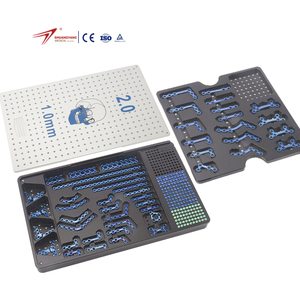
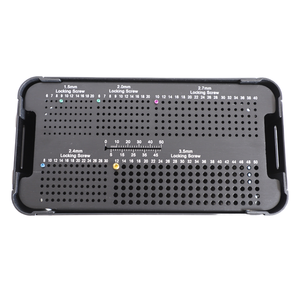
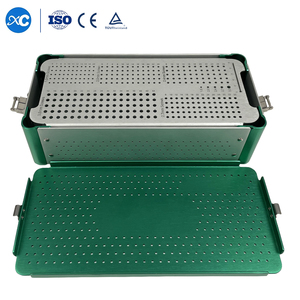
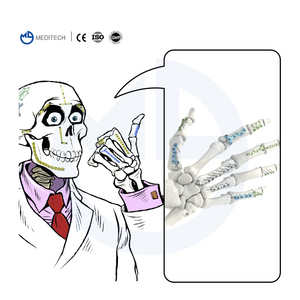
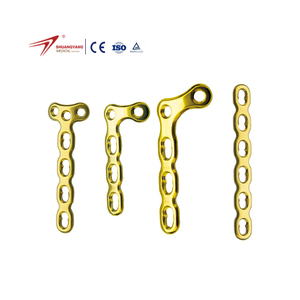
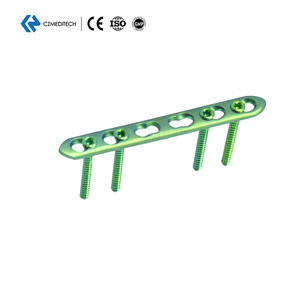
In modern orthopedic traumatology, maxillofacial reconstructive surgery, and veterinary orthopedics, the management of periarticular, phalangeal, metacarpal, and craniofacial osteotomies demands internal fixation devices of exceptional micro-mechanical integrity. Micro fragment bone plates (typically accommodating screw diameters ranging from 1.0mm to 2.7mm) represent the apex of small-bone internal fixation engineering. Designed to provide rigid stabilization without compromising delicate soft tissue envelopes, these micro-implants bridge the gap between microscopic anatomical structures and heavy biomechanical loading demands.
As a premier Chinese manufacturer and contract manufacturing facility, our production infrastructure utilizes advanced 5-axis DMG MORI CNC milling machines and Citizen Swiss-type automatic lathe systems. This ensures that every locking thread hole within a 1.5mm or 2.0mm mini locking compression plate (LCP) possesses clean mechanical alignment, preventing cross-threading during high-stakes intraoperative maneuvers.
To assist hospital procurement teams, medical device distributors, and OEM partners, the table below outlines the core material properties and testing criteria governing our micro fragment bone plate manufacturing lines:
| Parameter / Specification | Titanium Grade 5 (Ti-6Al-4V ELI) | Stainless Steel 316L / LVM | Testing Standard |
|---|---|---|---|
| Tensile Strength (Ultimate) | ≥ 860 MPa | ≥ 690 MPa | ASTM F136 / ISO 5832-3 |
| Yield Strength (0.2% Offset) | ≥ 795 MPa | ≥ 480 MPa | ASTM F138 / ISO 5832-1 |
| Modulus of Elasticity | 110 GPa (Closer to cortical bone) | 193 GPa | ASTM E111 |
| Corrosion Resistance | Superior (Spontaneous TiO2 passivated layer) | High (Passivated acid bath treated) | ASTM F1089 / ISO 10993 |
| Bending Fatigue Strength | Exceeds 1,000,000 cyclic loads | Exceeds 1,000,000 cyclic loads | ASTM F382 (Four-point bending) |
| Surface Finish (Ra) | Ra ≤ 0.4 µm (Type II Anodized optional) | Ra ≤ 0.2 µm (Electro-polished) | ISO 4287 |
The global market for micro fragment bone plates is experiencing a rapid technological evolution driven by minimally invasive surgical techniques (MIS), patient-specific anatomical matching, and additive manufacturing. Understanding these emerging trends allows procurement directors and distributor chains to future-proof their product portfolios.
Traditional flat reconstruction plates required manual intraoperative bending, which introduced stress concentration points and increased operating theatre time. Next-generation micro plates feature 3D-scanned anatomical pre-contouring designed specifically for distal radius, clavicle, metacarpal, and maxillofacial osteology. Plate thickness is tapered along periosteal contact surfaces down to 0.8mm–1.2mm, drastically mitigating soft-tissue irritation, tendon impingement, and post-operative hardware prominence.
Modern micro fragment systems integrate hybrid hole geometries. Surgeons can alternate between dynamic compression unit (DCU) slots and polyaxial locking holes allowing up to 15° angular cone deflection. This dual capability ensures construct stiffness in osteoporotic bone while permitting targeted cortical screw trajectory adjustments to avoid intra-articular screw penetration or collision with existing dental roots and hardware.
While high-strength Grade 5 Titanium remains the clinical gold standard, advanced surface modifications such as Type II Anodization (Grey Anodization) are rapidly gaining traction. Type II anodization significantly increases surface hardness, eliminates galling between titanium screw heads and plate locking threads, and enhances fatigue life under high cyclic micro-motion. Concurrently, magnesium-based bio-resorbable micro alloys are being researched for non-load bearing pediatric maxillofacial applications.
The global distribution ecosystem for medical devices is undergoing structural shifts driven by tightening regulatory frameworks (such as EU MDR 2017/745), localized healthcare budgetary pressures, and the need for agile supply chain resilience. When evaluating China-based micro fragment bone plate factories, international purchasing managers are focusing on four key strategic vectors:
Tier-1 buyers no longer accept simple ISO certificates. Modern tenders demand comprehensive Technical Files including Risk Management Reports (ISO 14971), Biocompatibility Validation (ISO 10993 series), Cleaning and Sterilization Validations (ISO 17665), and Real-Time Shelf-Life Aging Data. China's top manufacturers now maintain fully digitalized Quality Management Systems (QMS) mapping raw material heat numbers directly to individual lot-numbered implants.
Procurement officers are moving away from piecemeal sourcing of plates and screws from separate vendors. Market demand strongly favors integrated turnkey systems—comprising anatomical micro plates, color-coded locking/cortical screws, depth gauges, bending irons, drill bits, torque-limiting screwdrivers, and steam-sterilizable graphic aluminum trays. Complete kits streamline hospital inventory management and ensure total intraoperative instrument-implant compatibility.
With the expansion of specialized orthopedic brands in Europe, South America, and Southeast Asia, Chinese factories are offering white-label manufacturing, custom laser-marking, bespoke tray layout designs, and fast-track CAD/CAM prototyping. High-velocity OEMs can translate surgeon feedback into physical prototype samples within 14 business days.
As a flagship Chinese manufacturer of orthopedic trauma, spinal, and micro fragment implant systems, our factory represents the confluence of German-grade machining precision, rigorous Japanese-style quality control management, and competitive cost efficiency.
Our production floor houses over 40 high-precision CNC multi-axis machining centers, high-speed VMC milling units, and sliding-head automatic lathes. We maintain an in-house cleanroom facility (ISO Class 7) dedicated to primary ultrasonic cleaning, passivating, and medical-grade pouch packaging.
Every batch of micro fragment locking bone plates undergoes 100% automated optical coordinate measurement (CMM) inspection to verify hole pitch, counter-bore depth, and thread engagement geometry. Destructive four-point bending fatigue tests (ASTM F382) and torque-to-failure screw trials are continuously executed in our ISO 17025 accredited laboratory.
Serving over 30 countries across North America, Europe, Latin America, and Asia-Pacific, our logistics infrastructure guarantees rapid order fulfillment, buffer inventory holding for contract clients, and dedicated international sales engineers fluent in global regulatory compliance.
Clear answers to critical technical, regulatory, and commercial queries commonly raised by medical device buyers and orthopedic brand managers.
Elevate your medical device portfolio with factory-direct pricing, certified quality assurance, and dedicated OEM support. Contact our engineering sales specialists today for technical catalogs, CAD drawings, and instant price quotations.
