
Discover expert surgical guides, manufacturing standards, and clinical innovations across spinal, trauma, and arthroscopy implant technologies.

Stay informed with in-depth technical analysis on titanium alloys, pedicle screws, PEEK cages, and modern orthopedic instrumentation.
Explore our export-grade neurosurgical portfolio. Designed to comply with global surgical standards, our products integrate bio-compatible Grade 5 Titanium (Ti-6Al-4V ELI), Implant-Grade Stainless Steel 316L, and radiolucent carbon fiber engineering for optimal surgical outcomes.
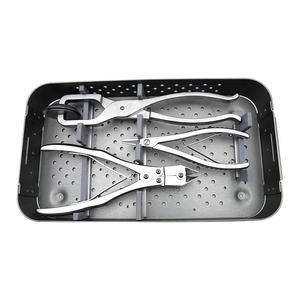
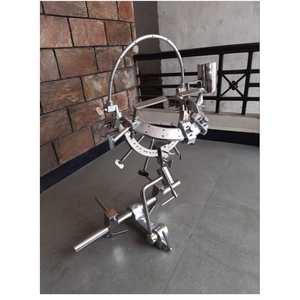
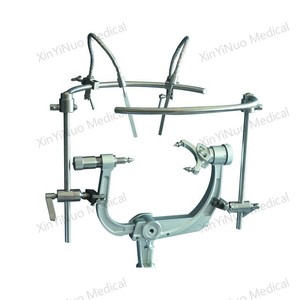
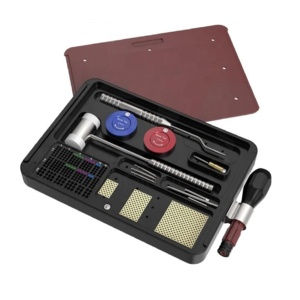
Neurosurgical cranioplasty and cranial trauma reconstruction require an uncompromising balance between bio-mechanical stability, anatomical contourability, radiolucency, and long-term tissue compatibility. As surgical techniques evolve toward minimally invasive approaches and intraoperative real-time imaging (iMRI/iCT), global demand for advanced Cranial Mesh Fixation Systems has undergone a profound transformation.
China has established itself as the world’s primary manufacturing hub for orthopedic and neurosurgical implants. Leveraging advanced precision multi-axis CNC machining, Swiss-type automatic sliding head lathes, and cleanroom packaging certified under ISO 13485 and GMP standards, Chinese manufacturers supply hospital networks, medical distributors, and OEM brands across Europe, Latin America, Southeast Asia, and the Middle East.
When selecting a cranial mesh fixation manufacturer, biomedical engineers and hospital procurement directors must evaluate critical material parameters:
| System Type | Material Composition | Primary Clinical Indication | Imaging Artifact Level | Contourability & Handling |
|---|---|---|---|---|
| Standard Titanium Mesh | Pure Titanium (Grade 2 / Grade 4) | Trauma Cranioplasty, Calvarial Defects | Low (CT/MRI Compatible) | High (Hand or Pliers Contouring) |
| Stainless Steel Mesh System | Implant-Grade SS316L / LVM | Cost-Effective Reconstruction, GBR | Moderate CT/MRI Artifacts | Moderate Rigid Structure |
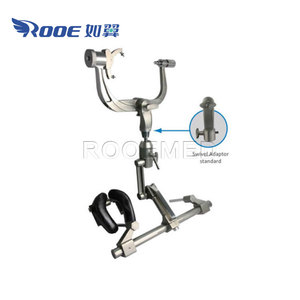
| Radiolucent Head Clamps | Carbon Fiber Composite & Aluminum | Intraoperative MRI/CT Head Fixation | Zero (Artifact-Free Imaging) | Rigid 3-Point / 4-Pin Stabilization |
| 3D PSI Custom Implants | Ti-6Al-4V or PEEK Polymer | Patient-Specific Complex Reconstruction | Ultra-Low to Zero | Pre-Contoured (Zero Manual Bending) |
Our state-of-the-art manufacturing infrastructure is designed to fulfill strict OEM, ODM, and B2B wholesale requirements. By combining automated production lines with rigorous metallurgical testing, we ensure that every skull clamp, titanium mesh plate, and micro screw fulfills exact surgical specifications.
Our quality management systems are independently audited to satisfy ISO 13485 medical device benchmarks. Every cranial fixation batch undergoes 100% optical dimensional inspection and torque-to-failure testing.
Equipped with ultra-precise DMG MORI 5-axis CNC machining centers and Japanese Citizen sliding-head lathes, maintaining machine tolerances within ≤ 0.005mm for complex thread profiles and ultra-thin mesh borders.
We provide full-spectrum OEM and ODM services—from custom mesh thickness (0.4mm to 1.0mm) and custom screw head geometries to private labeling, custom instrument tray layout, and specialized sterile blister packaging.
Hospital purchasing committees, healthcare distributors, and importers must align their sourcing strategies with emerging surgical trends. As neurosurgery shifts toward digital workflows and patient-specific treatments, cranial fixation procurement is being reshaped by four major technological advancements:
While standard off-the-shelf titanium mesh plates remain the workhorse of emergency trauma repair, elective cranioplasty is rapidly transitioning to 3D-printed titanium implants crafted directly from patient CT scan DICOM data. Manufacturers in China are integrating SLM 3D printers alongside traditional stamping methods, enabling distributors to offer rapid 72-hour turnaround times for custom-shaped cranial plates.
Palpability and cosmetic deformities under thin scalp tissue are major concerns for post-operative patients. Modern manufacturing standards demand low-profile mesh plates (profile height < 0.5mm) paired with countersunk screw holes. This ensures that micro screw heads sit perfectly flush within the mesh surface, eliminating scalp erosion, palpable bumps, and aesthetic dissatisfaction.
In cranial stabilization (such as skull clamps used during brain surgery), traditional heavy alloy fixtures are being superseded by radiolucent carbon fiber composite 3-pin and 4-pin head clamps (e.g., Mayfield and Sugita styles). Carbon fiber eliminates metal artifacts during intraoperative CT scan execution, allowing neurosurgeons to verify resection margins without unmounting the patient headrest system.
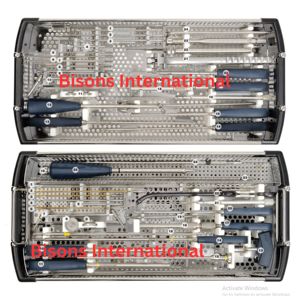
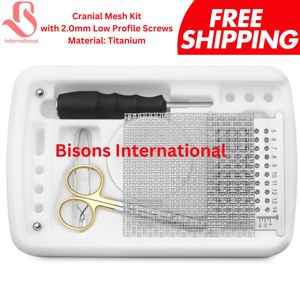
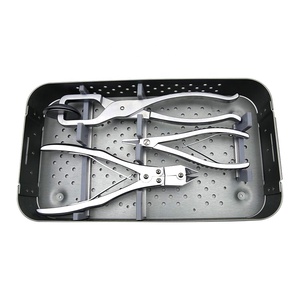
Procurement departments are reducing vendor complexity by sourcing comprehensive kit systems rather than fragmented components. Leading Chinese exporters now offer turnkey cranial reconstruction kits—combining contourable mesh sheets, micro-screws, mesh cutting clamps, benders, and sterilizable storage containers within a single validated system.
Below are technical and operational answers to common inquiries raised by medical device buyers, hospital tenders, and surgical distributors when sourcing cranial fixation systems from China.
Our cranial mesh plates are primarily manufactured from Pure Titanium Grade 2 (for maximum manual flexibility) or Titanium Grade 4. Fixation micro-screws are crafted from High-Tensile Titanium Alloy Ti-6Al-4V ELI (Grade 5, ASTM F136), providing superior thread engagement and torsional strength. For price-sensitive tenders, we also manufacture select mesh systems in medical-grade Implant Stainless Steel 316L/LVM (ASTM F138).
Yes. Our manufacturing facilities operate under a certified ISO 13485 Quality Management System. Our cranial mesh fixation kits, skull clamps, and neurosurgical instruments carry CE compliance documentation, cleanroom packaging validation reports, and complete raw material mill test certificates (MTC) required for medical device registration in overseas health ministries.
For standard catalog inventory (including standard titanium meshes, cutting clamps, and Mayfield-style head clamps), the MOQ starts as low as 10 to 50 units per item. For OEM/ODM custom branding, customized mesh dimensions, or private-label instrument boxes, typical MOQs are 100 units. Standard production lead times range from 15 to 25 business days depending on order volume and packaging specifications.
Self-drilling screws feature an engineered tip cut that allows direct insertion through bone without prior pilot hole drilling, significantly reducing surgical procedure time. Self-tapping screws require a pilot hole drilled with a 1.1mm or 1.2mm drill bit first, but offer enhanced tactile feedback in thinner cranial bones. We supply both configurations in 1.5mm, 1.6mm, and 2.0mm diameters.
Yes, our aluminum alloy and carbon fiber 3-pin and 4-pin cranial stabilization clamps feature standardized quick-connect adapter bars and base unit couplers compatible with major international operating room tables (including Maquet, Trumpf, Steris, and Eschmann mounts).
Absolutely. We offer electrochemical titanium anodization in color-coded schemes (Gold, Blue, Magenta, Green) to assist operating room nurses in quickly identifying screw diameters and plate thickness during surgical procedures.
All non-sterile titanium and stainless steel implants and surgical instruments are fully autoclavable and rated for standard steam autoclave sterilization (134°C / 273°F for 18 minutes). Pre-sterilized blister pack options (Gamma Radiation or Ethylene Oxide EO gas sterilization) are also available upon request.
