Featured Thoracolumbar Fixation Systems & Instruments
Explore our ISO 13485 & CE certified posterior thoracic pedicle screw systems, MIS spinal implants, thoracolumbar plates, and post-operative LSO rehabilitation braces directly engineered by verified Chinese manufacturing facilities.
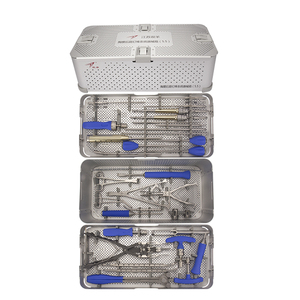
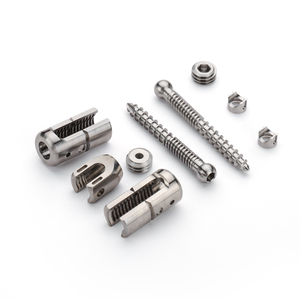
Thoracolumbar Plate System High Quality Orthopedic Surgical Instruments Spinal Posterior Thoracic Pedicle Screw System
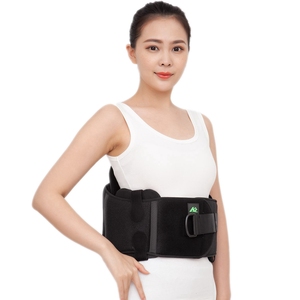
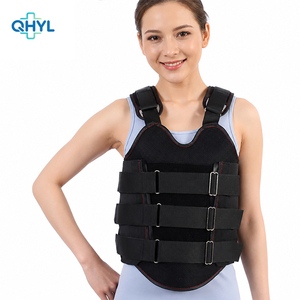
Hot Selling Thoracolumbar LSO Brace CE Certified Rigid Panel Lumbar Support For Post-Operative Immobilization
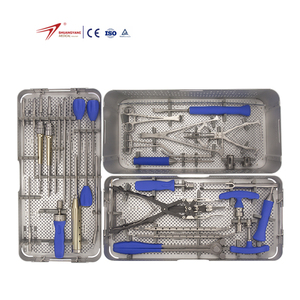
Shuangyang Thoracolumbar Plate System High Quality Orthopedic Surgical Instrument Spinal Posterior Thoracic Pedicle Screw System
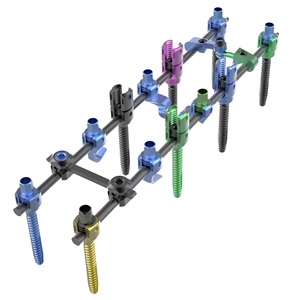
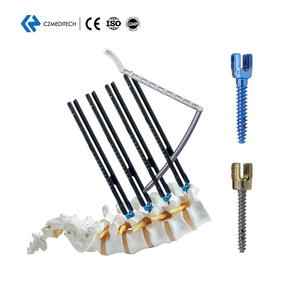
CANWELL Polyaxial Pedicle Screws And Rods Thoracolumbar Surgery CE Certified Titanium MIS Spine Fixation System
JZC High-quality Orthopedic Spinal Implant Posterior Thoracolumbar Nailing and Rod Fixation System Titanium Alloy
Adjustable Rehabilitation Support Device Physical Therapy Lumbar Spine Fracture Fixation Brace Thoracolumbar Fixed Brace
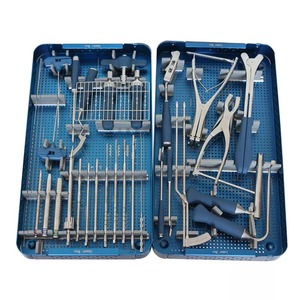
Orthopedic Surgical Instruments Spinal Posterior Thoracic Pedicle Screw System Thoracolumbar Plate System Spine Instrument Set
Minimally Invasive Spinal System 5.5mm, Thoracolumbar Fracture Fixation, with Rods and Screws,Polyaxial,Thoracolumbar Fracture
Direct-from-Factory Manufacturing Benchmarks
As a premier Chinese orthopedic implant manufacturer and global exporter, our state-of-the-art facilities combine precision German-engineered CNC 5-axis machining with stringent quality control protocols adhering to international regulatory benchmarks.
ISO 13485
Certified Quality System
Grade 5
Medical Titanium (Ti-6Al-4V)
30+
Global Export Markets
Class 100k
Cleanroom Packaging
Thoracolumbar Fixation Systems: Biomechanical Engineering & Clinical Whitepaper
Thoracolumbar spine injuries and degenerative conditions representing the transition zone between the rigid thoracic cage and the flexible lumbar spine (T10–L2) present complex biomechanical challenges for orthopedic surgeons. The primary objective of posterior thoracolumbar fixation is to achieve immediate three-column mechanical stabilization, restore sagittal alignment, prevent progressive kyphotic deformity, and facilitate solid interbody fusion.
Modern Chinese manufacturing facilities have evolved from high-volume OEM providers into advanced biomechanical engineering centers. Utilizing medical-grade Titanium Alloy (Ti-6Al-4V ELI conforming to ASTM F136 / ISO 5832-3) and Ultra-High Molecular Weight Polyethylene (UHMWPE) or PEEK polymers, leading China factories produce pedicle screw and rod construct systems that match or exceed Western European and North American performance thresholds at optimized cost-efficiency ratios.
Core Biomechanical Principles of Modern Thoracolumbar Screw Constructs:
- Pull-Out Strength Optimization: Featuring dual-lead cylindrical-to-conical thread profiles that increase bone-implant interface friction and cortical purchase by up to 35% in osteoporotic bone tissue.
- Polyaxial Angular Range: Spherical head designs offering ±25° to ±30° multi-directional angulation, minimizing the need for aggressive rod contouring and reducing intraoperative stress on adjacent neural structures.
- Low-Profile Top-Loading Mechanism: Micro-threaded locking set screws engineered with reverse angle threads to eliminate cross-threading and prevent sleeve splaying during final tightening torque application (typically calibrated at 5.0 to 7.0 Nm).
Biomechanical & Metallurgical Performance Specifications
When sourcing thoracolumbar fixation systems from Chinese B2B suppliers, procurement teams must evaluate key mechanical metrics validated by ASTM F1717 and ISO 12189 static and dynamic fatigue standards. Below is a standardized technical specification baseline for high-grade pediatric and adult posterior spine constructs:
| Parameter |
Polyaxial Pedicle Screw System |
Monoaxial Pedicle Screw System |
MIS Cannulated Screw System |
| Material Grade |
Titanium Grade 5 (Ti-6Al-4V ELI) |
Titanium Grade 5 (Ti-6Al-4V ELI) |
Titanium Grade 5 / SS 316LVM |
| Screw Diameters |
4.5mm, 5.5mm, 6.5mm, 7.5mm |
5.0mm, 6.0mm, 7.0mm, 8.0mm |
5.5mm, 6.5mm, 7.5mm |
| Screw Lengths |
25mm – 55mm (5mm increments) |
30mm – 60mm (5mm increments) |
30mm – 55mm (5mm increments) |
| Rod Compatibility |
Ø 5.5mm / Ø 6.0mm Titanium Rods |
Ø 5.5mm / Ø 6.0mm Titanium Rods |
Ø 5.5mm Pre-curved Rods |
| Static Torsional Strength |
> 6.5 Nm |
> 8.2 Nm |
> 7.0 Nm |
| Dynamic Fatigue Limit |
5.0 Million Cycles @ 220N |
5.0 Million Cycles @ 260N |
5.0 Million Cycles @ 240N |
| Surface Finishing |
Type II Anodization (Color-Coded) |
Type II Anodization (Color-Coded) |
Micro-Arc Oxidation / Anodization |
Global Sourcing Trends: Thoracolumbar Implants (2026–2030)
The global spinal implants market is undergoing a paradigm shift driven by minimally invasive surgical techniques, digital supply chain traceability, and stringent international medical device regulations. Wholesale buyers must align with forward-thinking factories.
1. Transition to Percutaneous MIS Systems
Surgeons increasingly favor Minimally Invasive Spine (MIS) systems utilizing extended tower cannulated polyaxial screws. This reduces tissue trauma, blood loss, and recovery times. Chinese suppliers now offer complete MIS sets including rod passers, dilators, and navigation-ready guide wires.
2. Mandatory UDI & Traceability Compliance
Global regulatory bodies (US FDA 21 CFR 830, EU MDR 2017/745) demand Unique Device Identification (UDI) laser-etched onto every individual pedicle screw and plate. Leading China factories integrate automated fiber laser marking and matrix scanning directly into production lines.
3. Modular Instrument Set Customization
Hospitals and regional distributors are migrating from fixed implant kits to customized modular trays. Suppliers now provide OEM laser-etched branding, color-coded anodized screw sizing, and ergonomic silicone-wrapped quick-coupling handles for surgical sets.
Why Partner with Verified China Thoracolumbar Suppliers
Navigating global B2B medical supply chains requires balancing cost optimization with absolute biological safety and mechanical reliability. Partnering with certified Chinese manufacturers offers distinct competitive advantages:
Ultra-Precision Manufacturing Infrastructure
Utilizing imported 5-axis DMG MORI CNC milling machines and Citizen Swiss-type automatic lathes, factory tolerances are strictly maintained within ±0.005mm, ensuring perfect thread pitch continuity and set screw engagement.
End-to-End Quality Assurance Protocols
Every production batch undergoes 100% optical CMM dimensional verification, spectrographic raw material validation, torque breakdown testing, and ultrasonic cleaning in Class 100,000 cleanroom environments prior to sterile packaging.
Comprehensive Regulatory Dossier Support
To facilitate rapid international registration, accredited suppliers provide full technical documentation including ISO 13485 certification, CE Declaration of Conformity, biocompatibility test reports (ISO 10993), and STED files.
Frequently Asked Questions (FAQ) for B2B Procurement
What raw material standards are used in your thoracolumbar pedicle screws and rods?
Our premium thoracolumbar fixation components are manufactured using high-strength Titanium Alloy Ti-6Al-4V ELI (Extra Low Interstitial), strictly conforming to ASTM F136 and ISO 5832-3 medical implant standards. Select systems and surgical instruments are also produced using Stainless Steel 316LVM (ASTM F138) or PEEK (Polyetheretherketone) for radio-translucent interbody requirements.
Do your factories support OEM/ODM customized logo etching and private label packaging?
Yes, full OEM and ODM solutions are available for international medical device brand owners and regional distributors. We offer fiber laser marking for your brand logo, specific part numbering, UDI barcodes, custom color-coded anodization, and tailored sterilization pouch or blister box packaging designed to your market specifications.
What is the Minimum Order Quantity (MOQ) for wholesale thoracolumbar fixation sets?
For standard inventory items, the flexible B2B MOQ starts at 10 to 20 complete screw-rod sets or surgical instrument kits. For customized OEM production runs requiring custom tooling or specialized anodization, the MOQ typically ranges between 50 to 100 units per spec size.
Are the thoracolumbar systems supplied pre-sterilized or non-sterile?
We supply both options depending on your supply chain requirements. Standard shipments are delivered non-sterile in protective double-layer anti-static packaging, formatted for hospital autoclave sterilization. Pre-sterilized EO (Ethylene Oxide) or Gamma-irradiated sterile blister packaging in cleanroom Class 100,000 conditions can be provided upon request.
How do you ensure biomechanical safety and dynamic fatigue compliance?
Each spinal fixation design undergoes extensive mechanical validation according to ASTM F1717 (Standard Test Methods for Spinal Implant Constructs in a Vertebrectomy Model) and ISO 12189. Tests include static compression bending, static torsion, and dynamic fatigue testing up to 5,000,000 cycles without structural failure or fretting wear.
Can you assist with country-specific medical device registration and regulatory dossiers?
Absolutly. We support global distributors by providing technical dossiers formatted to STED (Summary Technical Documentation) guidelines, including ISO 13485 certificates, CE certificates, material test certificates (MTC), ISO 10993 cytotoxicity and biocompatibility reports, cleanroom validation, and shelf-life stability data.
What is the difference between Monoaxial, Polyaxial, and Reduction Pedicle Screws in your system?
Monoaxial screws feature a rigid head-to-shaft coupling for maximum sagittal plane leverage in deformity correction; Polyaxial screws allow a ±30° head swivel for easy rod seating across complex anatomies; Reduction screws feature extended breakaway threads designed to pull spondylolisthesis vertebrae back toward the anatomical rod alignment line intraoperatively.
What rod diameters are supported by your posterior thoracic pedicle screw systems?
Our standard thoracolumbar systems are engineered around Ø 5.5mm and Ø 6.0mm titanium connecting rods, which represent the global clinical standard for adult spinal reconstruction. We also manufacture pediatric Ø 4.5mm systems and heavy-duty Ø 6.35mm constructs for severe scoliosis correction.
What is the typical production lead time for B2B wholesale export orders?
Standard non-customized product inventory can be dispatched within 7 to 10 business days. Bulk OEM manufacturing orders or customized instrument tray kits typically require 30 to 45 calendar days for precision CNC machining, surface treatment, quality inspection, and packaging.
How can I request a sample kit or obtain a formal factory quotation?
You can directly contact our B2B export engineering department by clicking the live inquiry buttons on this page. Please provide your required technical specifications, target quantity, packaging preferences, and destination country for a complete factory-direct quotation within 24 hours.
Request Direct Factory Quotations & Technical Data Sheets
Connect directly with our orthopedic implant engineering team to receive complete product catalogs, factory-direct wholesale price lists, and OEM customization feasibility assessments.