


Biomechanical Fundamentals & Information Gain in Bone Cement Injection Systems
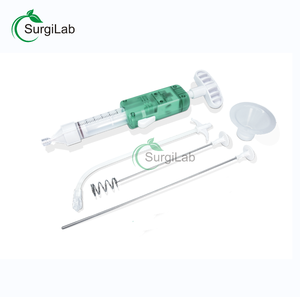
Percutaneous Vertebroplasty (PVP) and Percutaneous Kyphoplasty (PKP) have emerged as gold-standard minimally invasive interventions for pathological vertebral compression fractures (VCFs) resulting from osteoporosis, hemangiomas, and metastatic bone disease. Central to the clinical outcome of these procedures is the precise, controlled delivery of Poly(methyl methacrylate) (PMMA) bone cement into the compromised trabecular space.
When selecting a custom OEM manufacturing partner for bone cement injection systems, global procurement teams must evaluate fluid dynamics under variable viscosity states. PMMA transitions rapidly through four distinct phases: liquid mixing phase, sticky phase, doughy therapeutic phase, and exothermic polymerization setting phase. A superior delivery system must accommodate both medium and high-viscosity formulations without inducing shear stress degradation or manual hand fatigue for the operating surgeon.
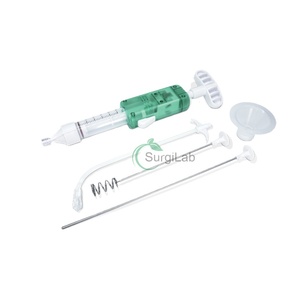
Hydraulic Pressure Control
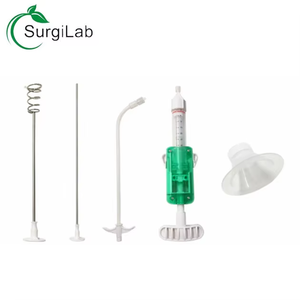
Integrated screw-driven piston assemblies transform rotational torque into smooth axial force, generating continuous extrusion pressures up to 150 bar without sudden bolus discharge.
Zero-Leakage Luer Lock
Precision molded high-density polycarbonate (PC) and medical-grade stainless steel interfaces eliminate monomer reflux and pressure degradation at connection junctions.
Radiopaque Calibration
Laser-etched volumetric indicators and radiopaque markers allow real-time fluoroscopic tracking of cement displacement per stroke cycle (0.1 ml incremental precision).
Technological Trends & Next-Generation Product Evolution (2025–2030)
The global spinal intervention market is experiencing a structural transition toward procedural automation, radiation exposure reduction, and biomaterial innovation. Modern OEM factories must align their engineering capabilities with these key technological vectors:
- Distance-Extended Hydraulic Delivery: Radiation exposure to the surgeon's hands during active fluoroscopy remains a major occupational concern. Emerging bone cement delivery systems incorporate flexible high-pressure extension lines (rated to >200 psi) allowing clinicians to operate the drive mechanism outside the direct X-ray beam field.
- Closed-System Vacuum Mixing Integration: Dual-chamber systems that combine vacuum monomer mixing with immediate, bubble-free transfer into the injection syringe are replacing open-bowl preparation. This reduces monomer vapor inhalation and prevents structural micro-voids in the set PMMA matrix.
- Compatibility with Robotic and Navigated Spinal Platforms: As image-guided robotic spinal surgery expands, injection needles and drive systems are being redesigned with tracking arrays and standardized mechanical interfaces for robotic arm mounting.
- High-Viscosity & Temperature-Regulated Systems: Delayed-setting and temperature-stable delivery mechanisms allow longer working windows (up to 18 minutes) for complex multi-level vertebroplasty without risk of syringe clogging or premature viscosity spike.
Technical Comparison Matrix: Injection Technologies
To assist global buyers and regulatory managers in selecting the correct system architecture, the matrix below details performance parameters across primary delivery methodologies:
| Performance Metric | Threaded Screw Injector | Hydraulic Gun System | Manual Push-Rod Syringe |
|---|---|---|---|
| Pressure Capacity (Bar) | 120 – 160 Bar | 80 – 120 Bar | 20 – 40 Bar |
| Viscosity Handling | High & Ultra-High Viscosity | Medium to High Viscosity | Low to Medium Viscosity |
| Volumetric Control | 0.1 ml per fraction rotation | 0.2 ml per ratchet click | Operator dependent (High variance) |
| Surgeon Hand Fatigue | Minimal (Torque mechanical advantage) | Very Low (Trigger lever ratio) | High (Requires direct manual force) |
| Leakage Risk Control | Superior (Instant pressure dump mechanism) | Moderate to High | Low Control (Slow response time) |
| OEM Customization Level | High (Barrel volume, thread pitch) | Medium (Standardized handle molds) | High (Low tooling cost) |
Future Sourcing & Procurement Trends for Importers & Distributors
Global procurement dynamics for orthopedic consumables have shifted significantly due to revised regulatory frameworks such as the EU Medical Device Regulation (MDR 2017/745) and US FDA 21 CFR Part 820 quality system regulations. Sourcing directors are moving away from spot-market suppliers toward integrated OEM/ODM contract manufacturers offering end-to-end device master files (DMF).
1. Modular OEM Platform Kit Assembly
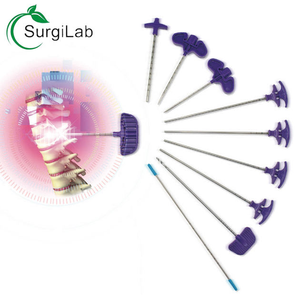
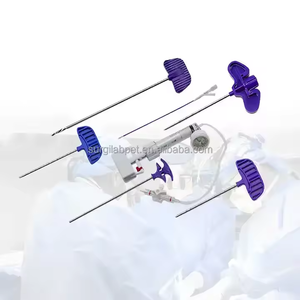
Distributors are increasingly demanding custom-packed procedural trays containing bone cement mixers, injection guns, access cannulas, bone biopsy needles, and balloon catheters under a single private-label SKU to streamline hospital inventory management.
2. Risk Mitigation via Dual-Sourcing Certified Hubs
To guard against geopolitical supply chain shocks, major medical device brand owners are establishing contract manufacturing hubs in ISO 13485 certified facilities in India that offer full biocompatibility validation (ISO 10993) and EtO/Gamma sterilization protocol execution.
Frequently Asked Questions (FAQ) for Global Sourcing & Procurement
Enterprise Advantage: Remak Ortho Manufacturing Excellence
Remak Ortho Pvt Ltd stands as a premier global OEM contract manufacturer and exporter of precision orthopedic implants, spinal fixation systems, and specialized interventional surgical tools. Operating from state-of-the-art facilities engineered to strict international medical device standards, we bridge advanced bio-engineering capabilities with cost-efficient manufacturing excellence.
Advanced Infrastructure
Equipped with multi-axis CNC sliding head machines, VMC equipment, automatic high-precision lathes, and optical laser inspection equipment for micron-level production accuracy.
Medical-Grade Alloys & Polymers
We process exclusively certified biocompatible raw materials: SS316L, SS LVM, Titanium Grade 5 (Ti-6Al-4V ELI), PEEK, and implantable grade polycarbonates sourced from traceable mills.
Global Regulatory Compliance
ISO 13485, GMP, CE, and Indian FDA approved operations ensuring seamless market approval and post-market safety tracking across 30+ international destination ports.
Our dedicated R&D engineering division collaborates directly with practicing orthopedic surgeons, interventional radiologist groups, and medical device brands globally to transform biomechanical concepts into commercially viable, regulatory-compliant medical devices. From initial CAD modeling and finite element analysis (FEA) to rapid prototyping, cleanroom assembly, and sterile packaging, Remak Ortho provides a total turnkey solution for custom bone cement injection systems.