
Discover expert surgical guides, manufacturing standards, and clinical innovations across spinal, trauma, and arthroscopy implant technologies.

Stay informed with in-depth technical analysis on titanium alloys, pedicle screws, PEEK cages, and modern orthopedic instrumentation.
Engineered with advanced polymer science, optimal thread geometry, and biocompatible degradation profiles to enable rigid graft stability and accelerated osseointegration.
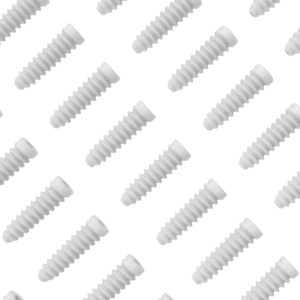
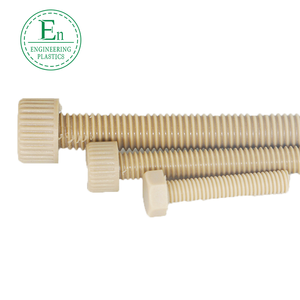
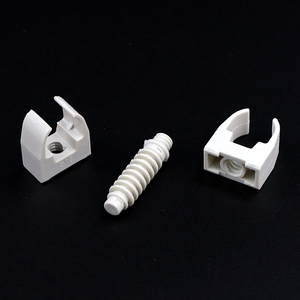
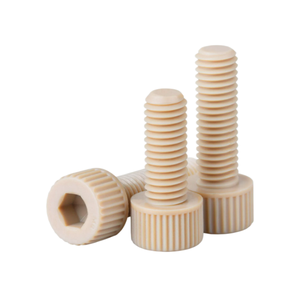
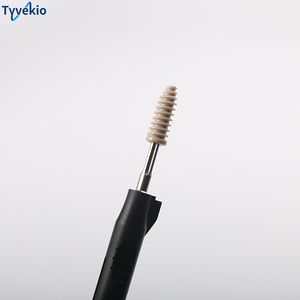
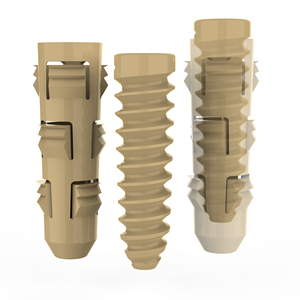
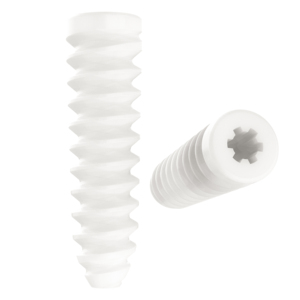
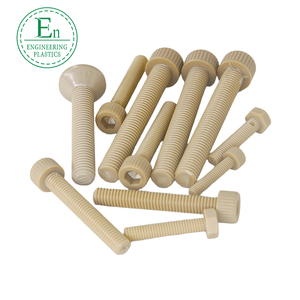
In modern sports medicine and orthopedic reconstructive surgery, anterior cruciate ligament (ACL) and posterior cruciate ligament (PCL) reconstructions require uncompromising mechanical stability during the early postoperative healing phase. The primary objective of an interference screw is to achieve rigid anatomical compression of either a soft tissue graft (e.g., quadrupled hamstring autograft, bone-patellar tendon-bone (BTB) graft, or quadriceps tendon) against the bony walls of the femoral and tibial tunnels.
Historically, orthopedic surgeons relied predominantly on metallic implants fabricated from Titanium Grade 5 (Ti-6Al-4V) or SS316L stainless steel. While metal screws provided high initial torsional strength and pull-out resistance, their long-term clinical limitations led to a major paradigm shift in sports medicine:
To eliminate secondary removal surgeries and optimize physiological load sharing, bioabsorbable interference screws manufactured from Polylactic-co-Glycolic Acid (PLGA), Poly-L-Lactic Acid (PLLA), and β-Tricalcium Phosphate (β-TCP) composites have emerged as the global clinical gold standard. These biomaterials degrade predictably via ester bond hydrolysis, gradually transferring mechanical load to the healing graft while facilitating progressive native bone substitution.
The in-vivo degradation of bioabsorbable polymeric interference screws proceeds through a controlled four-phase bio-resorption sequence:
Selecting the optimal polymer formulation depends on patient profile, surgical graft selection, tunnel diameter, and desired degradation kinetics. The matrix below outlines key engineering metrics across primary orthopedic materials.
| Biomaterial Polymer | Tensile Strength (MPa) | Modulus of Elasticity (GPa) | Degradation Horizon | Osseointegration Capacity | Primary Clinical Indication |
|---|---|---|---|---|---|
| PLGA (85/15 Blend) | 65 - 80 MPa | 2.8 - 3.5 GPa | 12 - 18 Months | Moderate (Hydrolytic) | Standard ACL/PCL Soft Tissue Fixation |
| PLLA / β-TCP Composite (70/30) | 55 - 75 MPa | 4.0 - 5.5 GPa | 24 - 36 Months | High (Bioactive Bony Ingrowth) | High-Risk Soft Tissue & BTB Grafts |
| Medical-Grade PEEK (PEEK-OPTIMA) | 95 - 110 MPa | 3.6 - 4.0 GPa | Non-Absorbable (Permanent) | Biologically Inert / Non-Reactive | Revision ACL, Heavy Torsional Demands |
| PLLA (100% Poly-L-Lactic Acid) | 70 - 85 MPa | 3.2 - 4.0 GPa | 36 - 60 Months | Slow Resorption Profile | High-load tibial fixation |
| Titanium Grade 5 (Ti-6Al-4V) | 860 - 930 MPa | 110 - 114 GPa | Non-Absorbable (Metal) | Fibrous Encapsulation | Legacy Traumatic Bone Reconstruction |
Global procurement data reveals an accelerating shift toward PLLA/β-TCP Biphasic Bioactive Composites and Custom Machined PEEK Screws. While PLGA remains cost-effective for high-volume tenders, premium hospital purchasing buyers increasingly specify osteoconductive ceramics (β-TCP/HA) integrated into bioabsorbable polymer backbones to minimize aseptic tunnel widening risks.
With outpatient knee reconstruction procedures escalating by 14% year-over-year worldwide, hospitals require reliable, cannulated self-tapping interference screws that streamline intraoperative step counts and reduce total surgical room times.
Legacy sharp thread profiles frequently lacerated soft tissue hamstring autografts during insertion. Modern OEM contracts mandate rounded, blunt-threaded, or progressive tapered pitch designs that maximize compression without damaging soft tissue collagen fibers.
Global regulatory tightening—specifically the European Union Medical Device Regulation (EU MDR 2017/745)—demands extensive biomaterial batch traceability, biocompatibility testing (ISO 10993), and verified cleanroom manufacturing certifications from medical implant exporters.
As a leading ISO 13485 certified orthopedic implant manufacturer, Remak Ortho provides full-cycle Original Equipment Manufacturing (OEM) and Original Design Manufacturing (ODM) services. From polymer resin selection to finished, pre-sterilized, private-label packaging, our infrastructure is optimized for micro-precision medical devices.
Equipped with state-of-the-art multi-axis CNC sliding head machines and precision VMC units, we achieve micro-tolerances within ±0.01mm on complex cannulated PEEK and metal screws.
Bioabsorbable polymers (PLGA/PLLA) are thermal-sensitive. Our automated injection molding and secondary machining operate in certified ISO Class 7 cleanrooms to prevent polymer thermal degradation and moisture degradation.
We manufacture custom screw heads compatible with Star/Torx drive, Trilobe, Hexagonal, and dual-slot driver systems to maximize intraoperative torque transmission without stripping.
Providing custom medical-grade blister packaging, double-sterile Tyvec pouches, validated Ethylene Oxide (EO) or Gamma irradiation sterilization options adhering to ISO 11135 standards.
We provide full technical documentation, raw material mill test certificates (MTC), master batch records, gel permeation chromatography (GPC) molecular reports, and clinical evaluation files for fast-track product registration in your target market.
Accelerate your time-to-market with 3D CAD biomechanical simulation, rapid prototype sampling in 7 to 14 days, and scalable production tooling tailored for private-label orthopedic brands.
Remak Ortho Pvt Ltd is an Indian FDA-approved, GMP-compliant, CE, and ISO 13485:2016 certified leader in orthopedic manufacturing. Operating from our advanced industrial hub in Ahmedabad, India, we combine cost-competitive manufacturing advantages with international quality standards.
Only importing certified bioabsorbable polymers, medical-grade PEEK-OPTIMA, SS316L, SS LVM, and Titanium Grade 5 from global accredited suppliers.
Comprehensive in-house metallography, static/dynamic shear testing, torsional failure testing, and dimensional optical measurement systems.
Trusted by surgeons, hospital networks, and medical device distributors across more than 30 countries worldwide.
Accommodating both high-volume standardized procurement tenders and specialized low-volume custom medical device contracts.
PLGA (Polylactic-co-Glycolic Acid) is a bioabsorbable polymer that gradually degrades in vivo over 12 to 18 months, being replaced by natural bone. PEEK (Polyether ether ketone) is a non-absorbable, radiolucent polymer with high mechanical strength close to cortical bone. PLGA is selected to eliminate secondary hardware removal, while PEEK is favored in revision ACL surgeries where high torsional resistance is required without metal artifacts.
Rounded, blunt-pitch thread geometries prevent tissue laceration during insertion while maximizing soft tissue compression against the tunnel wall. Tapered pitch and cannulated designs facilitate smooth tracking over guide wires (e.g., 1.5mm / 2.0mm K-wires), distributing stress evenly and raising pull-out strength above 700 N, well exceeding normal physiological knee forces.
Global regulatory bodies require ISO 13485:2016 Quality Management Certification, CE certification under EU MDR (for European distribution), Indian FDA registration, cleanroom particle validation reports, and biocompatibility testing per ISO 10993 guidelines (cytotoxicity, systemic toxicity, and sensitization).
Yes. Our OEM/ODM capabilities include customized screw diameters (ranging from 6mm to 12mm), lengths (20mm to 35mm), specialized thread pitches, and bespoke driver head patterns (Torx, Hex, Trilobe) manufactured according to your exact CAD specifications and private-label branding.
Pure polymer (PLLA/PGA) degradation generates acidic monomer byproducts that can lower local tissue pH, occasionally causing aseptic inflammatory responses. Incorporating β-TCP or Hydroxyapatite acts as an alkaline buffer, neutralizing local acidity while releasing calcium and phosphate ions that actively stimulate osteoblastic bone regeneration.
Standard OEM product shipments are dispatched within 2 to 4 weeks depending on batch volume. Custom mold creation and new design prototyping generally require 14 to 21 working days, supported by fast-track air freight export to over 30 countries.
Whether you are seeking private-label OEM manufacturing, custom bio-composite molding, or high-volume distribution rights in your region, Remak Ortho provides certified clinical reliability, competitive pricing, and comprehensive technical documentation.
