
Discover expert surgical guides, manufacturing standards, and clinical innovations across spinal, trauma, and arthroscopy implant technologies.

Stay informed with in-depth technical analysis on titanium alloys, pedicle screws, PEEK cages, and modern orthopedic instrumentation.
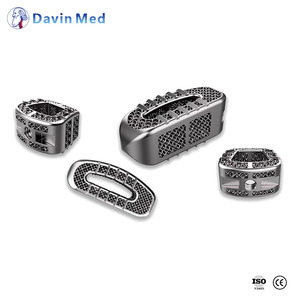
Engineered with biomimetic porous trabecular structures to accelerate osseointegration while maintaining anatomical load distribution.
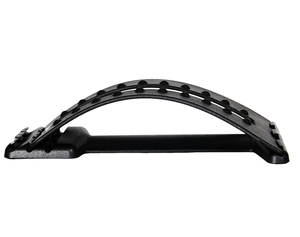
High-fatigue-strength titanium alloy pedicle screws and rods certified to international surgical safety and quality benchmarks.
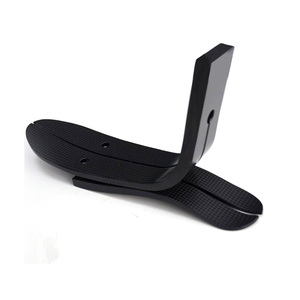
Precision-molded ultra-lightweight carbon composite components designed for high structural rigidity and biocompatible endurance.
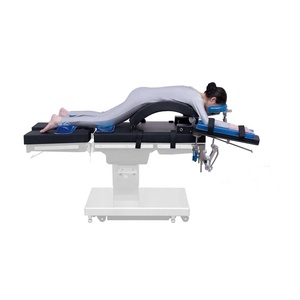
Radiolucent surgical positioning frame offering 360° intraoperative C-arm fluoroscopy visibility without shadow interference.
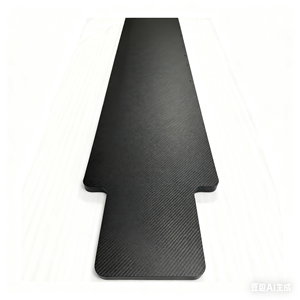
Custom-contoured radiolucent bone plates designed to match cortical bone elasticity, eliminating stress shielding risks.
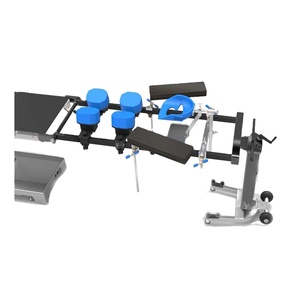
Ergonomic spine surgery traction table extension built with high-tensile continuous carbon fibers for heavy-duty stability.
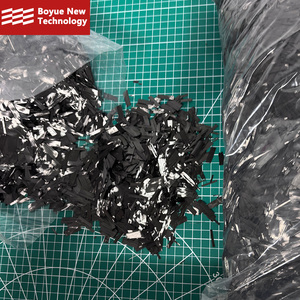
Industrial-grade and implant-grade chopped 12K carbon fiber tow optimized for high-temperature PEEK compression molding.
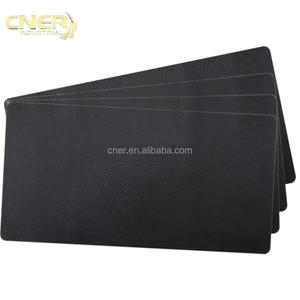
Ultra-flat radiolucent carbon fiber laminate panels with minimal X-ray aluminum equivalence for imaging diagnostic systems.
Modern spinal fusion surgery is experiencing a fundamental technological transition from traditional metallic biomaterials (such as Titanium Grade 5 and Stainless Steel 316L) toward advanced polymeric composites, specifically Carbon Fiber-Reinforced Polyetheretherketone (CFR-PEEK). As a premier global OEM/ODM Carbon Fiber Spinal Implants Supplier, our engineering matrix addresses the two inherent clinical limitations of metallic implants: elastic modulus mismatch (stress shielding) and radiographic opacity (imaging artifacts).
Cortical bone exhibits a Young's modulus of elasticity between 10 to 30 GPa. Conventional titanium implants possess a modulus of approximately 110 GPa. This massive stiffness disparity causes titanium hardware to absorb the majority of anatomical loads, shielding the adjacent bone graft from physiological stress. According to Wolff's Law, un-stressed bone undergoes resorption, leading to pseudoarthrosis, cage subsidence, and hardware loosening. CFR-PEEK matrix materials can be tailored by adjusting carbon fiber fiber orientation and volumetric ratio (typically 30% continuous or short carbon fibers) to achieve an elastic modulus between 12 and 18 GPa—perfectly duplicating human cortical bone mechanics.
Furthermore, in spinal oncology and complex deformity reconstruction, postoperative surveillance using Computed Tomography (CT) and Magnetic Resonance Imaging (MRI) is paramount. Metallic implants induce severe scatter artifacts, masking tumor recurrence, spinal cord compression, and early bone bridge formation. Carbon fiber composite implants are completely radiolucent, enabling clear artifact-free visualization of adjacent neural structures and precise radiation therapy dose planning.
| Performance Property | CFR-PEEK Composite Implants | Titanium Alloy (Ti-6Al-4V ELI) | Unfilled PEEK Polymer |
|---|---|---|---|
| Elastic Modulus (GPa) | 12 - 18 GPa (Bone-Matched) | 110 GPa (High Stiffness) | 3.5 GPa (Under-rigid) |
| CT & MRI Artifacts | Zero Scatter / Radiolucent | Severe Metallic Distortion | Zero Scatter / Radiolucent |
| Fatigue Resistance | Ultra-High (>10^7 Cycles) | Moderate to High | Moderate (Risk of Creep) |
| Radiation Therapy Compatibility | Optimal (No Dose Perturbation) | Poor (Dose Backscatter) | Optimal |
| Osseointegration Potential | Enhanced with 3D Micro-Texturing | Excellent (Porous Structures) | Bio-inert (Requires Coating) |
| Subsidence Prevention Rate | Superior (Wolff's Law Optimized) | Elevated Subsidence Risk | Moderate Risk |
Historically, PEEK and carbon-PEEK surfaces were considered bio-inert, occasionally leading to fibrous tissue encapsulation rather than direct bone-to-implant contact. The latest 2025-2030 product development trend in carbon fiber spinal devices involves Bioactive Surface Enhancement.
Our OEM/ODM manufacturing facility integrates proprietary porous Titanium Plasma Spray (TPS), Hydroxyapatite (HA) coatings, and 3D laser micro-textured surfaces directly onto the carbon fiber composite core. This hybrid approach combines the fatigue-resistant structural core of continuous carbon fiber weaves with an osteoconductive outer topography, accelerating early spinal fusion within 6 to 12 weeks post-op.
Standard off-the-shelf spinal implants often fail to accommodate complex anatomical deformities, revision surgeries, or severe vertebral body oncological resections. Sourcing trends indicate a rapid surge in demand for patient-matched customized carbon fiber spinal systems.
By leveraging multi-axis robotic carbon fiber placement and ultra-precision 5-axis CNC machining of CFR-PEEK blocks, our contract manufacturing operations produce patient-specific cervical plates, pedicle screw rods, and anterior lumbar interbody fusion (ALIF/TLIF) implants engineered directly from patient DICOM CT datasets.
Sourcing orthopedic devices requires rigorous supplier evaluation spanning regulatory compliance, material traceability, and manufacturing precision. As medical device brands expand into North American, European, and Asia-Pacific markets, procurement directors must evaluate carbon fiber spinal implant suppliers based on four core operational pillars:
Manufacturing implantable composite devices requires strict particle contamination management. Injection molding, composite layup, and final machining must occur within ISO Class 7 and Class 8 cleanrooms to prevent micro-particulate inclusion and pyrogen contamination.
Every batch of Carbon Fiber Reinforced PEEK must utilize certified medical-grade polymers (e.g., PEEK-OPTIMA) accompanied by complete ISO 10993 biocompatibility testing, cytotoxicity reports, and lot-specific certificate of analysis (CoA).
Implant designs must undergo rigorous static and dynamic mechanical validation according to ASTM F2077 (Spinal Interbody Fusion Devices), ASTM F1717 (Spinal Implant Constructs in a Lumbrectomy Model), and ASTM F2193.
Global medical distributors require OEM partners capable of transitioning seamlessly from initial 3D CAD modeling and Finite Element Analysis (FEA) to pilot runs and full-scale commercial manufacturing within compressed lead times.
Equipped with Swiss-type automatic sliding head lathes, 5-axis high-speed CNC milling centers, and ultra-precise composite machining hubs, we maintain manufacturing tolerances within ±0.005mm for complex pedicle screws and cervical plates.
Operating under ISO 13485, CE, and FDA compliance protocols, every implant undergoes 100% CMM dimensional verification, non-destructive X-ray flaw detection, and surface roughness analysis (Ra) prior to sterile packaging.
With an established logistics network supplying hospital groups, OEM brands, and orthopedic distributors across Europe, the Americas, Middle East, and Asia, we offer complete regulatory technical dossier support (DHF/STED).
CFR-PEEK provides a Young's modulus (12–18 GPa) that closely matches human cortical bone, significantly reducing stress shielding and fusion cage subsidence compared to rigid Titanium implants (110 GPa). Additionally, carbon fiber composites are 100% radiolucent, allowing surgeons to monitor bone growth via X-ray and CT/MRI without artifacts.
We offer end-to-end contract manufacturing including custom anatomical geometry contouring, tailored carbon fiber volumetric ratio (short fiber vs continuous fiber weaving), integration of radiopaque markers (Tantalum or Titanium pins), custom pore size texturing, bio-active hydroxyapatite coatings, and private label sterile packaging.
Unlike metallic titanium implants which scatter and absorb radiation beams (causing dose distortion and shadow effects on tumor margins), carbon fiber composite implants exhibit minimal radiation attenuation. Radiation oncologists can deliver precise, target-focused radiation doses without backscatter risks.
Our production facilities are certified under ISO 13485:2016 quality management systems. All implantable raw materials comply with ISO 10993 standards for biological evaluation of medical devices, ASTM F2026 for PEEK polymers, and ASTM F2077 biomechanical fatigue performance criteria.
Standard prototype samples (utilizing initial CAD and FEA analysis) are typically delivered within 3 to 4 weeks. Following customer validation and mechanical fatigue testing approval, full commercial batch manufacturing cycles average 6 to 8 weeks depending on custom tooling and cleanroom sterilization requirements.
We utilize precision high-pressure vacuum compression molding alongside multi-axial continuous carbon fiber filament weaving. This ensures uniform resin matrix impregnation, eliminating micro-voids and preventing inter-laminar shear fatigue under cyclic spinal loading conditions exceeding 10 million cycles.
Accelerate your medical device line with custom biomechanical engineering, ISO 13485 certified quality control, and competitive OEM contract manufacturing pricing.
