
Discover expert surgical guides, manufacturing standards, and clinical innovations across spinal, trauma, and arthroscopy implant technologies.

Stay informed with in-depth technical analysis on titanium alloys, pedicle screws, PEEK cages, and modern orthopedic instrumentation.
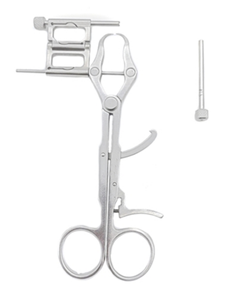
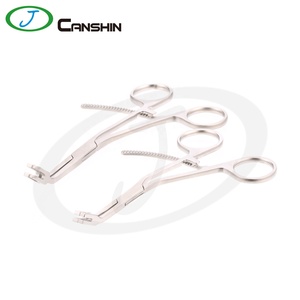
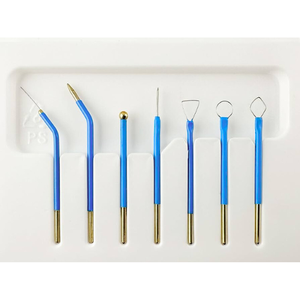
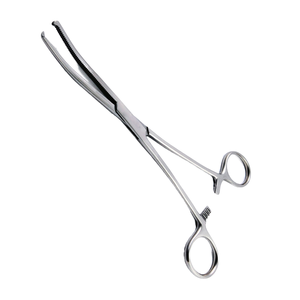
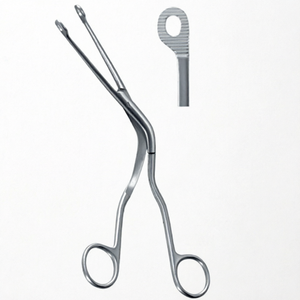
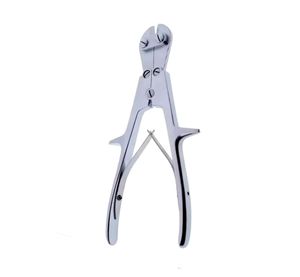
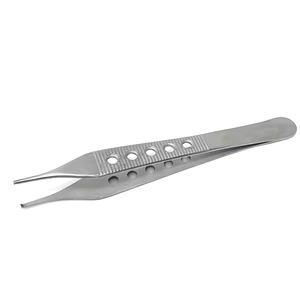
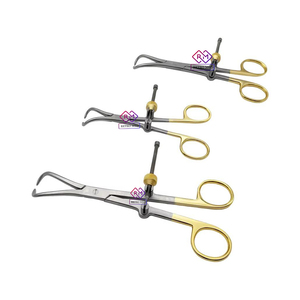
In open reduction and internal fixation (ORIF) procedures, the mechanical integrity and ergonomic responsiveness of orthopedic bone reduction forceps directly dictate surgical outcome precision. Bone reduction clamps serve as the primary biomechanical link between surgeon force input and fracture segment anatomical repositioning. Whether stabilizing complex diaphyseal femoral fractures or restoring pelvic ring congruity, medical-grade forceps must deliver precise clamping vectors without inducing localized cortical necrosis or structural fatigue failure.
As a leading OEM/ODM orthopedic instrument manufacturer, Remak Ortho integrates bio-mechanic research with state-of-the-art metallurgy to produce forceps optimized for torsional stiffness, minimal soft tissue disruption, and tactile force transmission.
Orthopedic reduction forceps are engineered into distinct mechanical classifications based on force distribution dynamics, ratchet lock mechanisms, and anatomical site specifications:
Over-clamping during fracture reduction can crush periosteal micro-vessels, leading to delayed bone union or avascular necrosis. Remak Ortho’s engineered ratchet mechanisms utilize calibrated pitch-step locking teeth, enabling surgeons to incrementally adjust clamping pressure by forces as low as 4.5 N·m per notch click.
The selection of raw materials dictates instrument longevity, corrosion resistance under repeated autoclave steam sterilization cycles, and structural deformation resistance under high leverage loads.
| Material Alloy | Tensile Strength (MPa) | Corrosion Resistance | Primary Application | OEM Customization Grade |
|---|---|---|---|---|
| AISI 316L (Medical Grade SS) | 620 - 750 | Ultra-High (PREN > 25) | Standard Reduction Forceps, Veterinary Clamps | High Ductility, Custom Laser Marking |
| 17-4PH Precipitation Hardened SS | 1,100 - 1,350 | High (Passivated) | Heavy-Duty 16" Curved Pelvic & Femoral Forceps | Extreme Torque Resistance, Long Leverage Arms |
| AISI 420J2 Martensitic SS | 850 - 1,000 | Moderate-High | Micro-Serrated Jaw Inserts & Ratchet Teeth | High Hardness (50-54 HRC), Wear Resistance |
| Ti-6Al-4V ELI (Grade 5 Titanium) | 900 - 1,050 | Immune to Passivation Loss | Lightweight MIS Surgical Instruments | 40% Weight Reduction, MRI Safe |
Our manufacturing facility utilizes high-precision 5-axis CNC milling centers and Swiss-type automatic sliding head lathes to machine intricate box joints, curved jaws, and speed-lock ratchets with tolerances down to ±0.005mm.
Every reduction forceps undergoes rigorous chemical passivation according to ASTM A967 standards, removing free iron from surfaces to form an impenetrable Chromium Oxide ($Cr_2O_3$) passive layer resistant to saline corrosion.
Certified under ISO 13485:2016 and US FDA regulatory standards. Batch-level traceable inspections include hardness testing, torque fatigue loading, bio-burden testing, and 100% optical dimension verification.
Remak Ortho partners with global medical device distributors, brand owners, and hospital networks to provide tailored contract manufacturing solutions:
The global market for orthopedic surgical instruments is undergoing a paradigm shift driven by technological advances in minimally invasive surgery (MIS), veterinary specialty growth, and supply chain localization demands. Healthcare procurement officers and OEM sourcing directors must align with key industry shifts to maintain procurement resilience and clinical superiority.
Surgeon fatigue during multi-hour complex pelvic ring reconstructions has catalyzed demand for lightweight instruments. The industry is transitioning from traditional heavy solid stainless steel handles toward high-strength hollow-core construction and Titanium-Aluminum-Vanadium hybrid designs. OEM factories capable of micro-wall precision forging are leading this dynamic shift.
The rapid rise of companion animal health expenditures worldwide has expanded demand for specialized veterinary reduction clamps. Modern veterinary orthopedic surgeons require instruments designed specifically for small animals (toy breeds, felines) and exotic pets, demanding micro-adjusting speed-locks and specialized jaw radii that traditional human instruments cannot provide.
With hospital-acquired infection (HAI) prevention taking center stage in hospital audit guidelines (such as ISO 17664), traditional fixed-box joint forceps are facing scrutiny due to bio-burden entrapment in tight hinge pivot points. Future procurement contracts overwhelmingly favor quick-disassembly reduction forceps that allow CSSD (Central Sterile Supply Department) staff to decouple joint hinges for complete enzymatic wash access.
Regulatory authorities including the US FDA (GUDID) and EU MDR strictly enforce full traceability for reusable surgical instruments. Modern procurement strategies mandate factory-level integration of ultra-durable laser-etched UDI codes capable of enduring over 1,000 autoclave steam cycles without degradation in scanner readability.
Trusted supply partner to orthopedic distributors, hospital groups, and OEM brand holders across Europe, North America, Latin America, and Asia-Pacific.
Equipped with a dedicated R&D engineering team, CAD/CAM prototyping lab, and custom mold manufacturing, drastically reducing time-to-market for custom OEM concepts.
Leveraging Indian precision manufacturing infrastructure to offer tier-1 medical quality at highly competitive global price points, optimizing distributor margins.
Connect directly with our senior orthopedic instrument engineers. Receive technical drawings, metallurgical certifications, and B2B wholesale pricing within 24 hours.
Get Catalog