
Discover expert surgical guides, manufacturing standards, and clinical innovations across spinal, trauma, and arthroscopy implant technologies.

Stay informed with in-depth technical analysis on titanium alloys, pedicle screws, PEEK cages, and modern orthopedic instrumentation.
Explore certified expandable and static lumbar interbody cages, precision manual/power instrumentation sets, and veterinary spinal solutions engineered for global medical distributors and OEM partners.
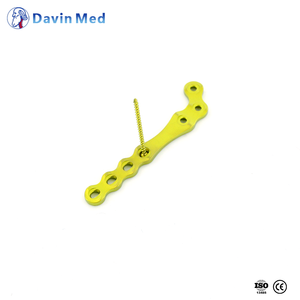
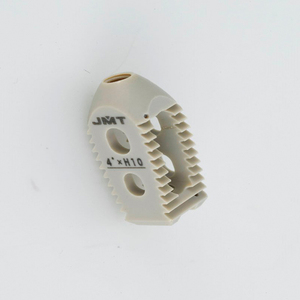
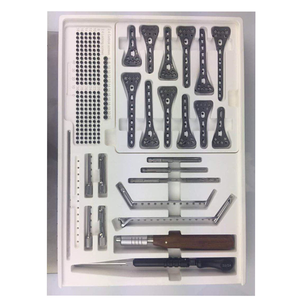
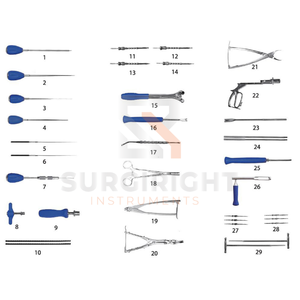
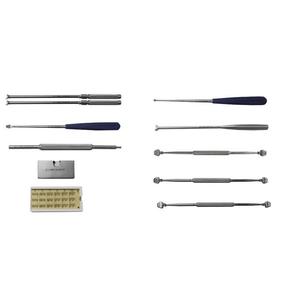
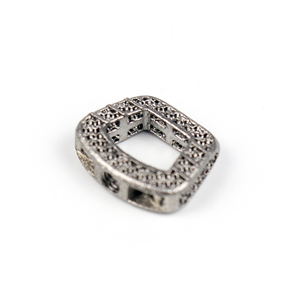
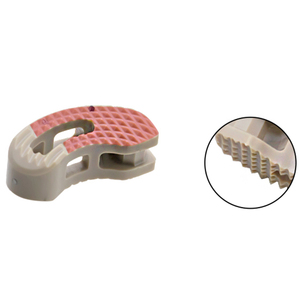
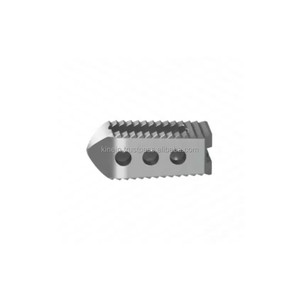
Over the past decade, spinal fusion surgery has undergone a profound paradigm shift toward Minimally Invasive Surgical (MIS) techniques. Within lumbar spine reconstruction—specifically TLIF (Transforaminal Lumbar Interbody Fusion), PLIF (Posterior Lumbar Interbody Fusion), and LLIF (Lateral Lumbar Interbody Fusion)—the transition from static interbody spacers to expandable lumbar cages represents one of the most critical biomechanical advancements in modern orthopedics.
Static PEEK (Polyetheretherketone) or titanium cages require significant neural retraction and impaction during insertion. This impaction risks endplate damage, intraoperative nerve root injury, and post-operative implant subsidence. In contrast, expandable lumbar interbody cages are inserted in a collapsed profile through a smaller surgical corridor and expanded in situ to restore disc height, re-establish segmental lordosis, and decompress neural foramina without aggressive endplate rasping.
For medical device procurement officers, hospital purchasing boards, and orthopedic importers, evaluating the functional superiority of expandable lumbar devices requires rigorous comparative analysis. Below is a structured benchmark derived from clinical fatigue testing (ASTM F2077 / F2267) and surgical outcomes data:
| Evaluation Parameter | Static Lumbar Cages (PEEK / Ti) | Expandable Lumbar Cages | Clinical & Procurement Impact |
|---|---|---|---|
| Insertion Profile Height | 10mm – 14mm (Fixed) | 7mm – 9mm (Collapsed) | Reduces intraoperative nerve root retraction by ~40%. |
| Endplate Impaction Force | High (Requires heavy malleting) | Negligible (Smooth insertion) | Eliminates micro-fractures in osteoporotic endplates. |
| Lordosis Restoration | Fixed angle (0°, 4°, 8°) | Dynamic stepless adjustment (0°–15°) | Achieves customized sagittal balance restoration. |
| Graft Packing Efficiency | Pre-packed prior to insertion | Post-expansion in-situ graft delivery | Ensures continuous contact between bone graft and endplates. |
| Subsidence Rates (12-Mo) | 14.2% – 22.8% reported | 4.1% – 7.5% reported | Reduces secondary surgical intervention costs significantly. |
| Manufacturing Complexity | Monolithic machining / 3D printing | Multi-component precision assembly | Requires ISO 13485 certified Swiss-lathe micromachining. |
Traditional solid titanium cages presented stress shielding concerns due to their high elastic modulus compared to cancellous bone. The future of expandable implants lies in 3D-printed porous titanium lattice structures (such as CANWELL CV-I series). These biomimetic structures feature interconnecting pore sizes ranging from 400µm to 700µm with 60%–70% porosity, mimicking trabecular bone mechanics and accelerating vascularization and osseointegration directly through the expanding plates.
While PEEK remains favored for its radiolucency under intraoperative fluoroscopy (allowing clear visual confirmation of bone bridging), pure PEEK lacks intrinsic bioactivity. Top-tier manufacturers are now combining PEEK radiolucent frames with plasma-sprayed titanium coatings or 3D-printed titanium endplate contact surfaces, giving surgeons the dual benefit of artifacts-free radiographical imaging and direct bone-on-growth.
Hospital procurement committees are increasingly prioritizing single-pass insertion systems. Modern expandable cage sets come paired with ergonomic manual driver sets (such as the Surgi Right SR#15343 series) that combine holding, height deployment, lordosis tilting, and graft delivery into a unified surgical workflow. Buying departments look for supplier systems that minimize instrument tray count, reducing hospital sterilization processing fees per procedure.
Remak Ortho Pvt Ltd is a premier Indian FDA-approved, GMP, CE, and ISO 13485 certified global manufacturer of precision orthopedic implants and surgical instruments. With over a decade of specialized engineering, our manufacturing plant utilizes state-of-the-art multi-axis CNC machine centers, VMC systems, and high-precision Swiss-type automatic sliding head lathes to craft world-class spinal implants.
Our spinal portfolio spans complete pedicle screw systems, anterior cervical plates, PEEK/Titanium interbody cages, intramedullary nails, and specialty surgical instruments. All raw materials—including Titanium Grade 5 (Ti-6Al-4V ELI), SS 316L, and SS LVM—are sourced exclusively from certified medical alloy suppliers with full material traceability certificates (EN 10204 3.1).
Upgrade your medical product catalog with high-precision expandable lumbar cages, PEEK interbody systems, and ergonomic surgical instrumentation. Contact our global sales engineering team today.
