
Spinal Fixation
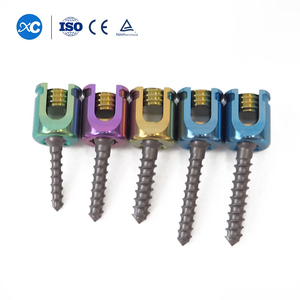
XC MEDICO Animal & Human Spinal Surgery Monoaxial Screw System
Polyaxial & Monoaxial spinal reduction fixation system for thoracic and lumbar surgery. Ultra-rigid thread engagement.

Discover expert surgical guides, manufacturing standards, and clinical innovations across spinal, trauma, and arthroscopy implant technologies.

Stay informed with in-depth technical analysis on titanium alloys, pedicle screws, PEEK cages, and modern orthopedic instrumentation.
Precision-engineered spinal fixation implants manufactured under ISO 13485 & CE standards. Select a product below to request technical documentation or direct OEM/ODM B2B pricing quotes.
Polyaxial & Monoaxial spinal reduction fixation system for thoracic and lumbar surgery. Ultra-rigid thread engagement.
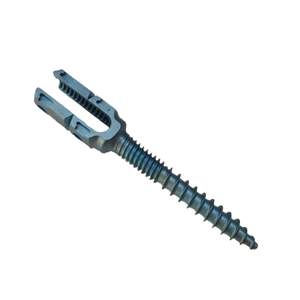
Customizable hospital-use interventional orthopedic implants with superior fatigue life and anti-strip drive mechanisms.
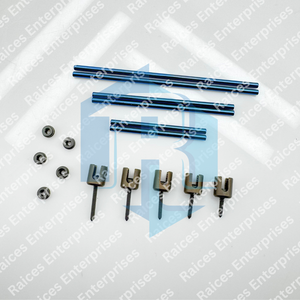
CE & ISO approved complete spinal set featuring biocompatible Ti-6Al-4V alloy for optimized osteointegration.
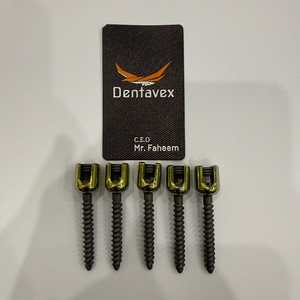
Precision self-tapping dual-lead screw geometry for rapid intraoperative placement in posterior lumbar stabilization.
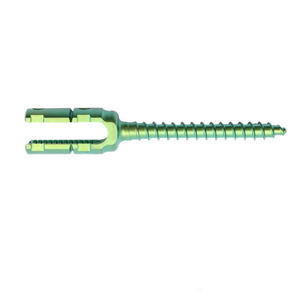
High-precision German standard design offering maximum lever-arm force for scoliosis and deformity correction.
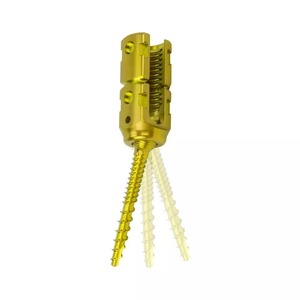
Class I CE certified spinal reconstruction screws designed for veterinary trauma and severe veterinary spinal deformities.
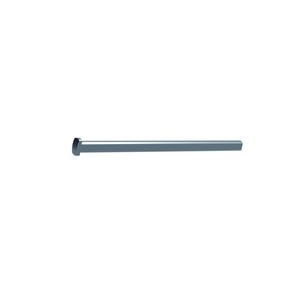
Class III high-risk certified titanium implant with rigid head construction for single-level and multi-level posterior fusion.
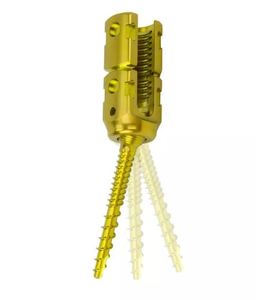
Includes German stainless steel probes, feelers, and self-locking screwdrivers for precise lumbar spine instrumentation.
In modern spinal reconstruction, posterior pedicle screw fixation represents the gold standard for stabilizing the thoracolumbar spine. While polyaxial pedicle screws have gained popularity due to their multi-directional head articulation (which simplifies rod engagement in complex anatomical variations), monoaxial pedicle screws remain unmatched in biomechanical rigidity, lever-arm force transmission, and sagittal plane deformity correction.
Monoaxial screws feature a solid, unibody head-to-shaft construction. Because there is no swivel mechanism at the head-neck junction, 100% of the derotation torque applied by the spine surgeon is transmitted directly into the vertebral body. This mechanical characteristic is vital when managing severe spinal deformities such as idiopathic scoliosis, post-traumatic kyphosis, and high-grade spondylolisthesis where rigid lever-arm correction is clinically mandatory.
Direct coupling between the screw tulip and thread shank allows maximum translational and rotational forces without risk of head slippage or ball-joint deformation.
Dual-lead and continuous V-thread pitch profiles optimize compaction of cancellous and cortical bone within the pedicle core, yielding superior pull-out strength.
Tested in strict compliance with ASTM F1717 static and dynamic fatigue protocols, ensuring resistance against fatigue fracture over 5,000,000 cyclic loads.
To assist hospital procurement directors, orthopedic tenders, and biomedical engineering departments, the table below delineates the biomechanical and clinical trade-offs between Monoaxial, Polyaxial, and Reduction Pedicle Screws.
| Design Parameters | Monoaxial Pedicle Screw | Polyaxial Pedicle Screw | Monoaxial Reduction Screw |
|---|---|---|---|
| Head Articulation Range | 0° (Fixed Unibody) | ±20° to ±30° (Spherical Joint) | 0° (Fixed with Break-off Tabs) |
| Derotation Torque Capacity | Very High (> 12.5 Nm) | Moderate (Limited by Friction Lock) | High (> 11.0 Nm) |
| Primary Clinical Indication | Deformity, Trauma, Scoliosis | Degenerative Disc Disease, MIS | Spondylolisthesis Reduction |
| Rod Contour Fitting Complexity | Demands Precise Rod Bending | Forgiving (Polyaxial Adjustment) | Intermediate (Extended Tab Reduction) |
| Material Configurations | Ti-6Al-4V ELI / SS316L | Ti-6Al-4V ELI / CoCr Head | Ti-6Al-4V ELI / SS316L |
| ASTM F1717 Fatigue Limit | > 220 N (Highest Rigidity) | ~ 160 N - 190 N | > 200 N |
Global orthopedic distributors and procurement agencies evaluating the top 10 suppliers and exporters of monoaxial pedicle screws must look beyond unit prices. Given that spinal implants are Class III / Class IIb medical devices under European MDR 2017/745 and US FDA frameworks, vendor qualification requires stringent auditing across four core domains:
Key technological advancements reshaping global procurement, manufacturing automation, and surgical integration over the next decade.
Emerging manufacturing techniques incorporate plasma-sprayed 3D porous titanium structures onto pedicle screw shanks, accelerating early bone ingrowth and reducing fusion failure rates in osteoporotic patients.
Next-generation monoaxial screws feature high-precision optical and electromagnetic navigation markers integrated into internal drive geometries (such as Torx or Hex-lobular), ensuring sub-millimeter placement under robotic guidance.
Global healthcare networks are transitioning from multi-layer trading distributors to direct partnerships with ISO 13485 certified original equipment manufacturers (OEM) capable of custom labeling and rapid turnarounds.
As an established leader in orthopedic manufacturing, Remak Ortho Pvt Ltd exemplifies the technical rigors required for international implant export. With an ISO 13485, CE, Indian FDA, and GMP compliant infrastructure, we deliver precision-engineered spinal, trauma, and arthroscopy devices across 30+ countries worldwide.
Equipped with state-of-the-art multi-axis CNC Swiss-turn lathes and VMC machining centers for sub-micron accuracy.
Exclusive use of certified Medical-Grade Titanium Alloy (Ti-6Al-4V ELI), SS316L, SS LVM, and PEEK implants.
Continuous mechanical, dynamic fatigue, and biomechanical optimization in collaboration with senior spinal surgeons.
Streamlined OEM/ODM private labeling, custom instrument tray design, and fast international export delivery timelines.
Consult with our biomedical engineering specialists today. We provide full regulatory technical dossiers, sample kits for clinical evaluation, and competitive wholesale contracts for global hospital networks.
Send an InquiryAnswers to common technical, regulatory, and supply chain queries raised by hospital purchasing authorities and orthopedic distributors.
Monoaxial screws feature a fixed, rigid head angle relative to the threaded shank, allowing maximum transmission of force for vertebral alignment and sagittal deformity correction. Polyaxial screws feature a spherical swivel head allowing multi-directional angle adjustment (typically ±20°), which simplifies rod insertion but offers less lever-arm correction strength.
Titanium Grade 5 ELI (Ti-6Al-4V) is generally preferred due to its lower modulus of elasticity (closer to natural cortical bone), superior biocompatibility, minimal MRI artifact distortion, and excellent fatigue resistance. However, Stainless Steel 316L/LVM remains a cost-effective option with high stiffness, widely utilized in specific trauma and veterinary spinal applications.
Importers must verify compliance with ISO 13485:2016 Quality Management Systems, CE certification under EU MDR 2017/745 (for European markets), and US FDA 510(k) clearance (for the United States). In addition, test documentation verifying mechanical compliance with ASTM F1717 (static bending, dynamic torsion, dynamic fatigue) is essential.
Dual-lead thread pitch doubles the linear advance per revolution compared to single-lead threads. This cuts surgical insertion time in half while maintaining high thread density inside the pedicle, optimizing mechanical anchorage and reducing thermal necrosis risks during driving.
Established OEM suppliers provide non-sterile bulk packaging or pre-sterilized double-peel pouch packaging inside cleanrooms. Options include laser-etched lot numbers, custom brand logos on screw heads/tulips, color-coded anodization by screw diameter, and custom surgical tray configurations.
Reduction monoaxial screws incorporate extended, break-off collar tabs on top of the fixed tulip. This allows the surgeon to draw a displaced vertebra backward toward the contoured spinal rod progressively. The rigid monoaxial base ensures direct force vectoring without joint deflection.