


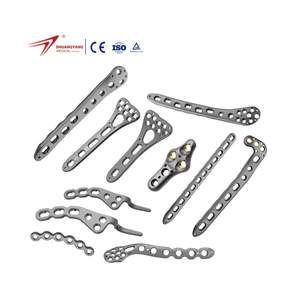
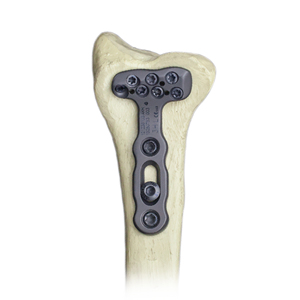
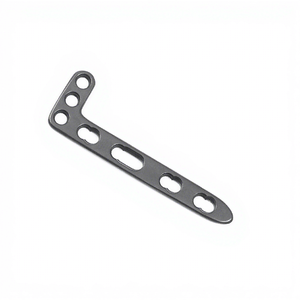
Top Trusted Distal Radius Locking Plate Manufacturers & Exporters

A Comprehensive Medical Device Procurement Guide & Clinical Engineering Insights into Next-Generation Titanium Volar & Dorsal Locking Systems

Featured Distal Radius & Trauma Locking Systems

Explore ISO 13485 & CE Class III certified anatomical bone plates, engineered with high-precision Titanium Grade 5 ELI and SS316L alloys for superior subchondral support and fatigue life.

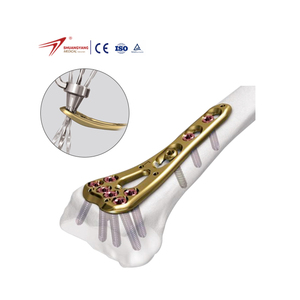
Orthopedic Titanium VA LCP Locking Plate for Distal Radius Fractures
VA-LCP System

Orthopedic Titanium Implant VA LCP Locking Plate for Distal Radius Fractures

Inquire Now
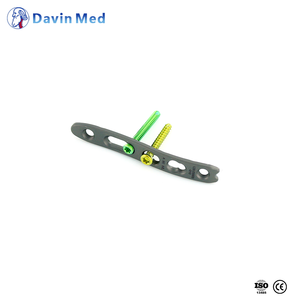
Titanium Distal Radius Dorsal Locking Plate Orthopedic Implant
Dorsal Fixation

Titanium Distal Radius Dorsal Locking Plate Orthopedic Implant CE Certified Class III

Inquire Now
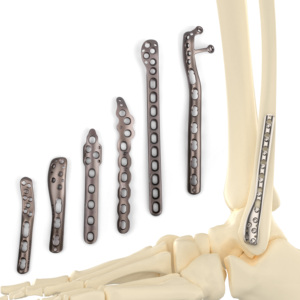
CANWELL 2.7 3.5 Distal Fibula Tibial Titanium Orthopedic Implants
Distal Trauma

CANWELL 2.7/3.5 Distal Fibula & Tibial Bone Titanium Locking Plate System

Inquire Now
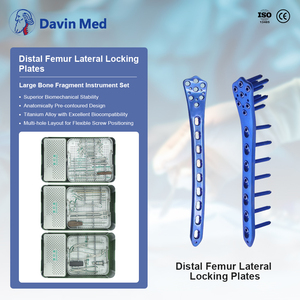
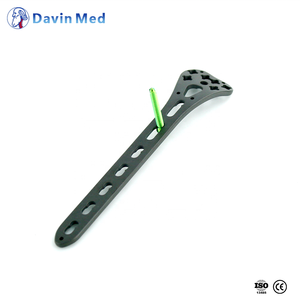
DavinMed Titanium Distal Femur Lateral Locking Plate Trauma Bone Implants
Lateral Trauma

DavinMed Titanium Distal Femur Lateral Locking Plate System CE ISO Certified

Inquire Now
Distal Volar Radius Locking Plate Multi-axial Locking System
Multi-Axial Radius

Distal Volar Radius Multi-axial Locking Plate & Screw Trauma Reconstruction Kit

Inquire Now
CANWELL Distal Radius Volar Locking Plates Titanium AO Standard
AO Standard Volar

CANWELL Anatomical Distal Radius Volar Titanium Locking Plates AO Standard

Inquire Now
Distal Posterior Radius Locking Plate Mini Plate Hand Surgery
Hand & Mini Trauma

Distal Posterior Radius Mini Locking Plate (Head 3 Holes) OEM/ODM OEM System

Inquire Now
Ready To Ship Titanium Distal Radius Locking Plate Matching Screws Kit
Stocked 2.4mm Kit

Titanium Distal Radius Locking Plate Complete Matching 2.4mm Screw Kit

Inquire Now
30+
Countries Exported
ISO 13485
Certified Facilities
< 0.01%
Clinical Defect Rate
100%
Traceability Grade 5 Ti

Manufacturing Excellence & OEM Capabilities

Our manufacturing infrastructure combines precision 5-axis CNC machining, automated sliding head lathes, and cleanroom packaging to meet international clinical expectations.

Stringent Regulatory Assurance

Full compliance with FDA, CE Class III Medical Device Directives, and ISO 13485 standards. Every batch undergoes raw material spectral analysis, fatigue testing (ASTM F382), and dimensional optical verification.

Advanced CNC/VMC Machining

Utilizing high-precision multi-axis VMC and Swiss-type sliding head lathes. We achieve anatomical micro-profiling, smooth chamfered plate edges, and zero-burr locking thread cuts to mitigate soft tissue irritation.

OEM/ODM & Global Distribution

Turnkey custom implant manufacturing for orthopedic brands worldwide. We offer custom laser marking, color anodization coding (Gold, Blue, Magenta), specialized tray configuration, and flexible MOQs for worldwide tenders.

Biomechanical Evolution of Distal Radius Fixation: From K-Wires to Variable-Angle LCP Systems

Distal radius fractures constitute approximately 18% of all adult fracture presentations in emergency orthopedic settings. Historically, management relied on closed reduction combined with percutaneous Kirschner wire (K-wire) fixation or external fixators. However, these traditional modalities often exhibited high rates of secondary displacement, pin-tract infections, and persistent radiocarpal joint incongruity.

The advent of Volar Locking Compression Plates (VLP) transformed traumatology by providing rigid internal fixation through fixed-angle construct stability. Unlike non-locking plates that depend on friction between plate and bone to maintain reduction (risking periosteal ischemia), locking plates function as internal fixators. Threaded screw heads lock directly into the threaded plate holes, creating a single biomechanical construct capable of transferring forces across fracture sites without compromising bone vascularity.

Clinical Key Takeaway: Anatomically pre-contoured volar locking plates positioned proximal to the Watershed Line reduce flexor pollicis longus (FPL) tendon irritation while delivering subchondral support to distal radiocarpal articular facets (lunate and scaphoid facets).

Structural Anatomy & Surgical Considerations: Volar vs. Dorsal Plating

Choosing between Volar and Dorsal Distal Radius Locking Plates involves critical trade-offs in soft-tissue envelope management, mechanical stability, and surgical exposure:

Evaluation Parameter Anatomical Volar Locking Plate (VLP) Dorsal Distal Radius Locking Plate
Primary Indication Dorsally displaced (Colles) & Volar displaced (Smith/Barton) fractures Dorsally comminuted intra-articular fractures, Lister's tubercle involvement
Soft Tissue Envelope Thick volar pronator quadratus muscle covers plate construct Extensor tendons run directly over dorsal bone surface (risk of attrition)
Subchondral Support Multi-directional distal pegs/screws secure subchondral bone raft Direct buttressing of dorsal articular fragments
Screw Trajectory Variable-Angle (VA) or Fixed angled distal screw cluster (2.4mm/2.7mm) Parallel or divergent low-profile 2.0mm/2.4mm screws
Complication Profile FPL tendon friction if placed distal to Watershed Line Extensor pollicis longus (EPL) tendon rupture or hardware prominence

Key Product Development Trends in Orthopedic Plating Technology

As healthcare systems prioritize post-operative rehabilitation speed and lower re-operation rates, orthopedic implant manufacturers are integrating advanced material science and biomechanical refinements into distal radius systems:

1. Polyaxial / Variable-Angle (VA) Locking Technology

First-generation locking plates utilized fixed-angle threads, restricting screw trajectories to fixed planes. Modern Variable-Angle (VA) LCP systems feature polyaxial locking mechanisms (typically allowing up to a 30° trajectory cone / ±15° off-axis deviation). Surgeons can selectively direct screws around intra-articular fragments or existing hardware without sacrificing rigid thread-locking security.

2. Low-Profile Chamfered Contours & Anatomic Pre-Shaping

Plate prominence remains a primary driver of post-operative hardware removal. State-of-the-art manufacturing leverages 3D CT scan databases of multi-ethnic distal radius geometries to engineer pre-contoured plates. Tapered distal margins and rounded screw heads minimize soft-tissue friction against flexor tendons.

3. High-Strength Titanium Alloys (Ti-6Al-4V ELI / ISO 5832-3)

While Stainless Steel (SS316L) remains cost-effective for regional tenders, Titanium Grade 5 ELI (Extra Low Interstitial) has emerged as the global standard material for distal radius plates due to its superior biocompatibility, lower elastic modulus (reducing stress shielding), and full compatibility with Magnetic Resonance Imaging (MRI) and CT diagnostics.

Global Procurement & Supply Chain Trends for Importers & Distributors

Medical procurement directors, GPOs (Group Purchasing Organizations), and distributor networks face evolving regulatory demands and cost structures in 2026 and beyond:

  • Stricter Regulatory Gatekeeping: Transitioning from MDD to EU MDR (Regulation 2017/745) in Europe and heightened CDSCO requirements in Asia mean buyers strictly require full technical documentation, ISO 13485 cleanroom validation, and biocompatibility reports (ISO 10993).
  • Demand for Complete System Kits: Procurement committees increasingly prefer turn-key system solutions—comprising low-profile plates, matching 2.4mm/2.7mm locking and cortex screws, dedicated surgical instrument trays, torque-limiting screwdrivers, and drill guides—rather than purchasing piecemeal components.
  • OEM/ODM Customization & White-Labeling: Established regional suppliers are partnering with specialized manufacturers in India and Asia to leverage cost efficiencies while maintaining high-spec CNC precision. Customized anodization colors and laser-etched SKU labeling streamline hospital inventory management.

Procurement & Clinical FAQ

Essential technical insights for hospital purchasing committees, medical distributors, and orthopedic implant importers.

What raw material grades are used in your distal radius locking plates?
Our distal radius locking plates are manufactured primarily from high-grade Titanium Alloy (Ti-6Al-4V ELI per ISO 5832-3 / ASTM F136) and Implant-Grade Stainless Steel (SS316L / ASTM F138). Titanium Grade 5 ELI offers optimized mechanical strength, lightweight bio-inertia, and reduced MRI/CT imaging artifacts.
How does Variable-Angle (VA) locking compare to standard Fixed-Angle locking plates?
Variable-Angle (VA) locking mechanisms enable surgeons to direct 2.4mm locking screws off-axis (typically within a 30° cone) before tightening the screw into the plate hole. This allows precise anatomical targeting of complex intra-articular fragments, avoiding joint penetration or collision with existing hardware, whereas Fixed-Angle plates mandate a single predetermined screw trajectory.
Are matching screws, instruments, and sterilization trays available for export orders?
Yes, we supply complete turnkey trauma surgical systems. Each distal radius plate order can be paired with matching 2.4mm/2.7mm locking and non-locking cortex screws, self-holding screwdrivers, drill bits, depth gauges, torque-limiting handles, and custom graphic aluminum sterilization caddies.
What quality certifications do your manufacturing facilities hold?
Our manufacturing partner facilities maintain ISO 13485 (Medical Devices Quality Management System), CE Certification for Class III implants, FDA registration, and Good Manufacturing Practice (GMP) compliance. Full material test certificates (MTC) and batch sterilization validation protocols are furnished with every shipment.
What is the minimum order quantity (MOQ) and lead time for OEM/ODM brand manufacturing?
Standard stock configurations are available for immediate dispatch with low MOQs (starting at 10-20 sets per specification). For custom OEM/ODM projects (including laser marking, custom color anodization, and branded packaging), lead times generally range from 2 to 4 weeks depending on production volume and regional regulatory requirements.
How do anatomical volar plates prevent tendon irritation along the Watershed Line?
Plates engineered specifically for volar distal radius placement incorporate a contoured distal margin designed to sit proximal to the anatomical Watershed Line. Combined with recessed screw holes and chamfered profile edges, this design minimizes mechanical contact with the flexor pollicis longus (FPL) and flexor digitorum profundus (FDP) tendons.

Partner with a Global Orthopedic Implant Manufacturer

Request factory-direct pricing, complete product technical dossiers, or custom OEM solution details from our engineering team today.

Inquire Now