

Discover expert surgical guides, manufacturing standards, and clinical innovations across spinal, trauma, and arthroscopy implant technologies.

Stay informed with in-depth technical analysis on titanium alloys, pedicle screws, PEEK cages, and modern orthopedic instrumentation.
Explore premier orthopedic trauma implants engineered with medical-grade Titanium Grade 5 (Ti-6Al-4V ELI) and Stainless Steel 316L. Rigorously tested under ISO 13485 quality frameworks for optimal load distribution and torsional stability.
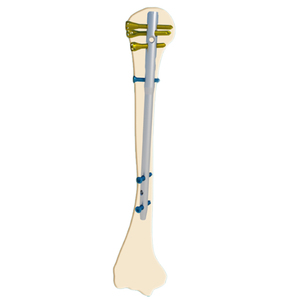
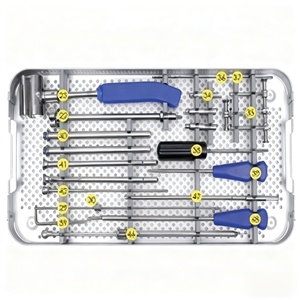
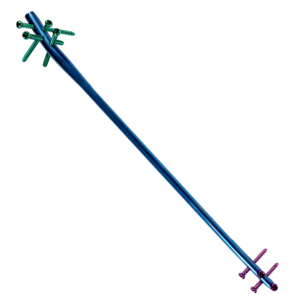
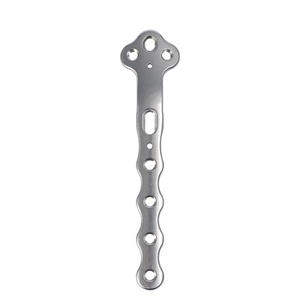
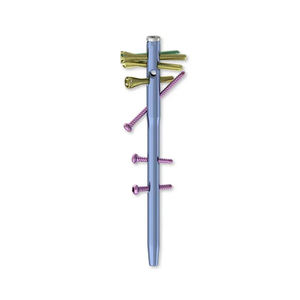
Proximal and humeral shaft fractures account for approximately 5% to 6% of all adult fractures, presenting complex therapeutic challenges in orthopedic trauma surgery. The humerus is subjected to dynamic multi-axial forces including flexoral bending, axial loading, and torsional displacement driven by powerful muscular attachments such as the deltoid, pectoralis major, and latissimus dorsi. Achieving rigid internal fixation while preserving the biological osteogenic envelope is the cornerstone of modern trauma intervention.
Historically, extra-medullary osteosynthesis utilizing Dynamic Compression Plates (DCP) or Locking Compression Plates (LCP) required extensive soft-tissue dissection, increasing the risk of radial nerve neuropraxia, periosteal devascularization, and non-union. Modern intramedullary nailing systems have revolutionized upper extremity trauma management by providing a stress-sharing internal splint positioned centrally along the mechanical axis of the humerus.
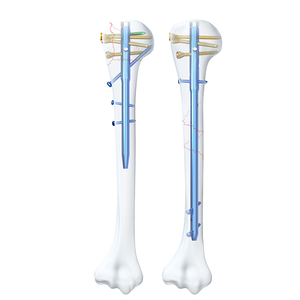
Selecting the surgical entry trajectory—anterograde through the rotator cuff or retrograde through the olecranon fossa—depends directly on fracture morphology, metaphyseal extension, and shoulder joint integrity:
| Biomechanical / Clinical Metric | Intramedullary Nailing System | Locking Compression Plate (LCP) | External Fixation System |
|---|---|---|---|
| Load Distribution Pattern | Centromedullary Load-Sharing | Eccentric Load-Bearing | Off-axis External Load Transfer |
| Torsional Rigidity | High (Multi-planar locking) | Very High (Direct cortical rigid) | Moderate to Low |
| Soft-Tissue Disruption | Minimal (MIS Portal Access) | Extensive (Open Reduction) | Minimal (Pin insertion sites) |
| Primary Healing Mechanism | Secondary Healing (Callus Formation) | Primary Healing (Direct Haversian) | Secondary Healing |
| Radial Nerve Palsy Risk | Exceptionally Low (<1.5%) | Moderate (5% - 12% in open approach) | Low to Moderate |
As a leading exporter and specialized manufacturer, adhering to rigid material standards is non-negotiable. Implants intended for long-term or temporary skeletal stabilization must withstand up to 107 load cycles without fatigue failure or biocorrosion inside the hostile physiological environment.
Compliant with ASTM F136 and ISO 5832-3. Offers superior fatigue strength, an elastic modulus (~110 GPa) closer to human cortical bone (~18 GPa) than stainless steel, drastically reducing stress shielding while maximizing radiolucency under fluoroscopy.
Manufactured according to ISO 5832-1 and ASTM F138 standards. Vacuum Melted (LVM) process eliminates non-metallic inclusions, delivering ultra-high ultimate tensile strength (>860 MPa) for cost-effective trauma fixation solutions globally.
Utmost mechanical accuracy achieved via Citizen and Star CNC sliding head lathes. Enables micro-precision threads, cannulation holes with zero axial deviation, and Type II Anodized surface passivation for optimal biocompatibility.
As hospital procurement boards and orthopedic distributors refine their vendor selection criteria, understanding future technological shifts in intramedullary nailing system manufacturing provides a substantial competitive advantage.
Standard distal and proximal locking configurations often face screw back-out or cut-out in elderly patients with compromised bone mineral density (BMD). Next-generation humeral nails feature convergent angular locking options, dynamic compression slots, and polymer-injected sleeves (e.g., PEEK washers or osteosynthesis cement integration) to drastically increase pull-out resistance.
Traditional heavy stainless-steel surgical targeting arms obscure distal interlocking holes under intraoperative fluoroscopy. Top-tier factories are rapidly transitioning to carbon-fiber reinforced polyetheretherketone (CFR-PEEK) targeting jigs, reducing surgical radiation exposure and enabling instant, ultra-precise distal targeting.
Remak Ortho Pvt Ltd stands at the forefront of international medical device manufacturing. Based in Ahmedabad, India, our state-of-the-art production complex integrates full vertical supply chain oversight—from raw bar stock processing to ISO Class 7 cleanroom packaging.
Operates strictly under ISO 13485:2016 quality management systems. Implants and instrument sets are Indian FDA approved, CE certified under MDR regulations, and fully compliant with GMP standards for international regulatory submission.
We support OEM/ODM partnerships for overseas medical brand owners. Services include custom nail curvature CAD modeling, laser etching, specialized color anodizing, customized instrument tray designs, and private label box packaging.
Equipped with axial fatigue, torsion, and static bending test benches. Every batch undergoes strict non-destructive testing (NDT), coordinate measuring machine (CMM) dimensional verification, and surface roughness analysis (Ra < 0.4 µm).
Standard humeral intramedullary nails typically range in length from 180 mm to 320 mm in 15 mm increments. Diameters range from 7.0 mm to 10.0 mm. Most modern systems feature a full central cannulation (compatible with 1.5 mm or 2.0 mm guide wires) to support reamed or unreamed minimally invasive surgical techniques.
Intramedullary nails utilize static and dynamic interlocking screw slots. Static holes prevent rotational and axial displacement, while dynamic oblong slots allow up to 5 mm of controlled axial micro-motion during post-op weight bearing to promote periosteal secondary bone healing. Specialized end caps can lock the most proximal screw to convert the construct into a rigid rigid-angle structure.
Factories supply full Technical Files (TF), Certificates of Free Sale (CFS), ISO 13485:2016 Quality System Certificates, CE Certificates, Material Mill Test Reports (3.1 certificates verifying ASTM F136 or ISO 5832 specifications), Biocompatibility Reports (ISO 10993 series), and Sterilization Validation Reports (ISO 11137 for gamma radiation or ISO 11135 for EtO).
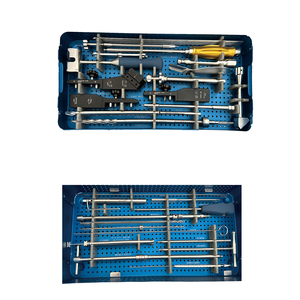
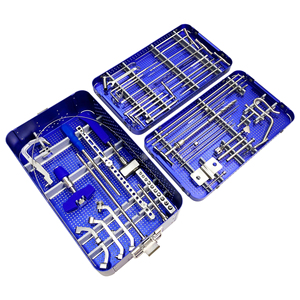
Yes. Complete Humeral Intramedullary Nailing Instrument Kits can be tailored with flexible reamers, tissue protectors, trocars, awls, depth gauges, drill bits, screw drivers, and targeting jigs housed in custom-milled aluminum or RADEL® PEEK sterilizing containers.
Standard catalog items maintain minimal MOQs (often starting at 20-50 units per size), while custom OEM/ODM brand manufacturing typically requires an initial run of 100 to 300 sets. Production lead times range between 3 to 6 weeks depending on surface treatment (anodization color coding) and packaging requirements.
Looking for high-precision, CE & ISO 13485 certified Humeral Intramedullary Nailing Systems for your distribution network or hospital network? Request a complete product catalog, factory audit documentation, and competitive wholesale pricing directly from Remak Ortho.
Get a Quote