
Discover expert surgical guides, manufacturing standards, and clinical innovations across spinal, trauma, and arthroscopy implant technologies.

Stay informed with in-depth technical analysis on titanium alloys, pedicle screws, PEEK cages, and modern orthopedic instrumentation.
Explore our flagship series of medical-grade spinal hardware engineered with upgraded Usmart 5.5/3.5 screw-rod systems, minimally invasive cannulated designs, and high-strength Grade 5 Titanium alloy construction.
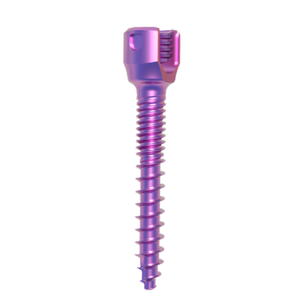
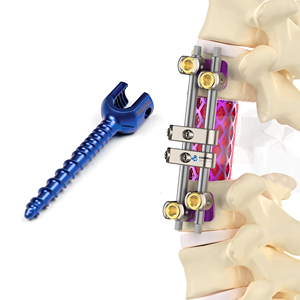
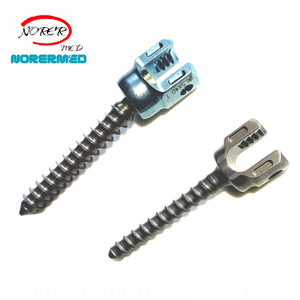
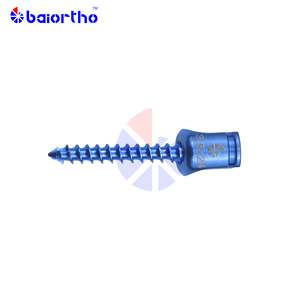
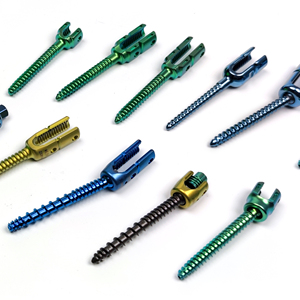
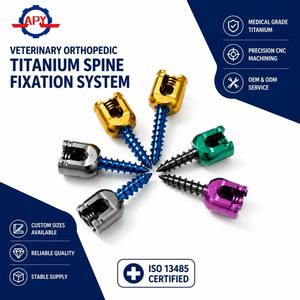
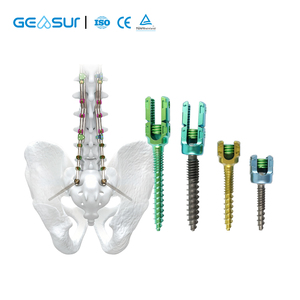

Polyaxial pedicle screws represent one of the most critical technological breakthroughs in modern posterior thoracolumbar spinal instrumentation. Unlike traditional monoaxial screws where the screw head is rigidly fixed perpendicular to the shank, a top-tier polyaxial pedicle screw incorporates a spherical head mechanism trapped within an outer tulip housing. This configuration grants surgeons multi-directional angular freedom—typically ranging from 30° to 45° of cone adjustment—allowing for seamless rod insertion even across complex, misaligned anatomical contours.
From an engineering perspective, the performance of a polyaxial pedicle screw factory rests upon two crucial factors: friction-fit locking strength and fatigue endurance under cyclical loading. When the inner set screw (locking cap) is torqued down against the longitudinal connecting rod (usually 5.5mm or 6.0mm diameter titanium alloy rods), the clamping mechanism must transmit sufficient compressive force to lock both the rod-to-tulip angle and the tulip-to-spherical head interface simultaneously without plastic deformation or micro-slippage.
Information Gain Insight: According to biomechanical fatigue testing under ASTM F1717 guidelines, premature failure in spinal construct assemblies primary originates at the screw-head neck junction due to stress concentrations during axial bending and torsional loading. Advanced manufacturing facilities utilize computer-optimized fillet radii and dual-lead thread geometries to redistribute load paths, improving pull-out strength by over 35% compared to legacy single-lead thread designs.
The choice of raw materials directly dictates the osteointegration profile, biocompatibility, and magnetic resonance imaging (MRI) artifact clearance of the spinal construct. Premier manufacturing factories utilize exclusively Extra Low Interstitial (ELI) Grade 5 Titanium Alloy (ASTM F136 / ISO 5832-3). The ELI grade is meticulously refined to restrict interstitial elements such as oxygen, nitrogen, and iron to minimal tolerances, yielding superior fracture toughness and resistance to stress corrosion cracking inside the human physiological environment.
| Material Specification | Tensile Strength (MPa) | Yield Strength (MPa) | Biocompatibility & MRI Compatibility | Primary Clinical Application |
|---|---|---|---|---|
| Titanium Grade 5 ELI (Ti-6Al-4V) | ≥ 860 | ≥ 795 | Excellent / Ultra-Low MRI Artifacts | Thoracolumbar Fixation, MISS, Pediatric & Adult Deformity |
| Stainless Steel (SS 316L / LVM) | ≥ 690 | ≥ 480 | Good / High MRI Distortions | Heavy Traumatic Fixation, Cost-Conscious Markets |
| PEEK Optima (Polyetheretherketone) | 100 - 130 | N/A (Elastic Modulus 3.6 GPa) | Radiolucent / Zero Artifacts | Interbody Fusion Cages (ALIF/PLIF/TLIF) |
The global market for spinal fixation devices is undergoing a massive structural shift driven by advancements in Minimally Invasive Spine Surgery (MISS), intraoperative 3D navigation, robotic assistance, and ambulatory surgical center (ASC) preferences. For hospital procurement committees, medical device distributors, and private label brand owners, understanding these key trends is critical when auditing potential polyaxial pedicle screw factories.
Open posterior approaches are increasingly replaced by minimally invasive percutaneous pedicle screw placement. Top manufacturing facilities have shifted production lines to produce high-precision cannulated polyaxial pedicle screws. These screws feature an ultra-smooth longitudinal central lumen (typically 1.5mm to 1.8mm diameter) engineered to glide effortlessly over K-wires (Kirschner wires) under fluoroscopic or robotic guidance. Cannulated systems reduce operative blood loss, speed up recovery times, and minimize tissue disruption.
To address adjacent segment degeneration (ASD)—a long-term drawback of rigid fusion—next-generation factories are fabricating dynamic flexible pedicle screw systems and modular extension polyaxial reduction screws. Reduction screws feature elongated, break-away tabs that allow progressive pull-in of high-degree spondylolisthesis deformities without requiring excessive manual levering forces during construct assembly.
Surface roughness plays a pivotal role in early bone-implant mechanical interlocking. Leading factories are applying micro-blasting, chemical etching, and vacuum plasma spraying (VPS) to create micro-porous textures on the screw threads, promoting faster osseointegration and lowering late screw loosening rates in osteoporotic bone tissue.
Factory production must maintain strict spherical head and thread concentricity tolerances to ensure exact spatial tracking under optical and electromagnetic surgical robots.
High demand for single-use pre-sterilized procedure kits containing pre-assembled polyaxial screws, set screws, and disposable ergonomic insertion instruments.
Transition from MDD to EU MDR (2017/745) mandates robust clinical evaluation reports (CER) and comprehensive technical dossiers for Class III implants.
As a global leader in orthopedic implant manufacturing, Remak Ortho Pvt Ltd operates at the intersection of medical engineering innovation and high-volume industrial reliability. Building upon decades of metallurgy expertise, our state-of-the-art facility is purpose-built to meet the stringent demands of international healthcare institutions, OEM partners, and orthopedic distributors.
Our manufacturing complex houses modern multi-axis CNC Swiss-type automatic lathes, high-precision VMC machining centers, and automated wire EDM machines. This advanced equipment allows us to machine intricate polyaxial spherical socket joints, friction-fit retention collars, and specialized reverse-angle thread patterns with micro-inch surface finishes and dimensional tolerances held within ±0.005mm.
Quality control is embedded into every stage of production—from spectral analysis of raw titanium bars upon arrival to automated optical CMM dimensional verification during machining. All implants undergo ultrasonic multi-stage cleaning, passivation to restore the passive titanium oxide corrosion layer, and final packaging inside Class 10,000 (ISO Class 7) cleanrooms to guarantee zero endotoxin contamination.
Fully documented Quality Management System (QMS) compliant with ISO 13485:2016, Indian FDA, and CE directives, ensuring seamless product registration across Latin America, Asia, Middle East, and Europe.
Dedicated R&D engineering team specializing in bespoke thread pitch modifications, customized tulip profiles, custom color anodization, and laser marking for global brand owners.
Complete Surgical Instrumentation
We supply complete procedural sets containing polyaxial screws, set drivers, rod benders, reduction benders, torque-limiting handles, and custom sterilization trays.
When selecting an orthopedic implant manufacturing partner for long-term contract manufacturing or private labeling, hospital procurement boards and international buyers must execute thorough technical audits. Relying solely on price per unit frequently leads to severe operational risks, including high surgical revision rates, non-conformance during regulatory inspections, or catastrophic implant breakage.
Below is the mandatory 5-point audit framework recommended by global orthopedic quality directors:
