
Discover expert surgical guides, manufacturing standards, and clinical innovations across spinal, trauma, and arthroscopy implant technologies.

Stay informed with in-depth technical analysis on titanium alloys, pedicle screws, PEEK cages, and modern orthopedic instrumentation.
Engineered for precise tendon graft fixation in knee arthroscopy. Our medical-grade Poly(L-lactide-co-glycolide) (PLGA) and Polyether Ether Ketone (PEEK) interference screws comply with EU MDR standards and are optimized for orthopedic distributors, public hospitals, and private surgical centers throughout Spain.
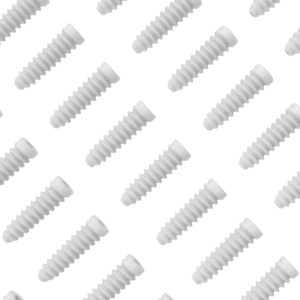
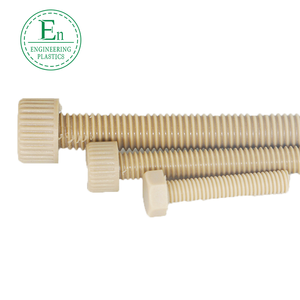
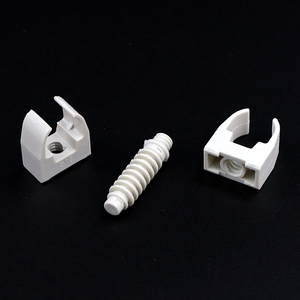
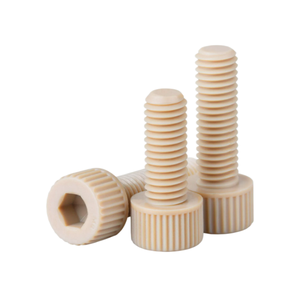
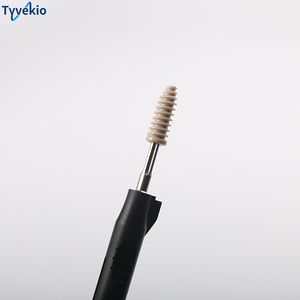
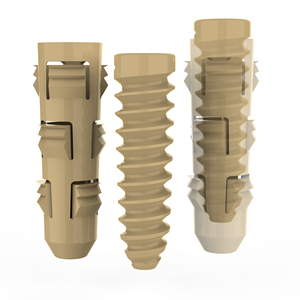
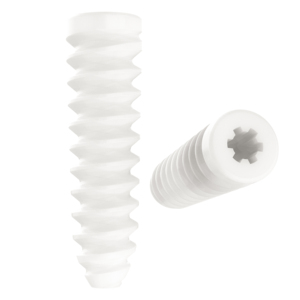
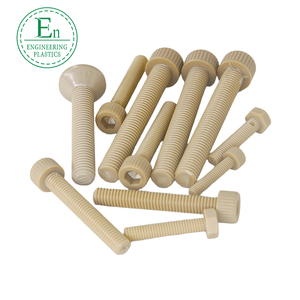
An authoritative clinical evaluation of resorbable polymer dynamics versus non-absorbable PEEK implants in modern arthroscopic knee reconstruction.
Anterior Cruciate Ligament (ACL) and Posterior Cruciate Ligament (PCL) reconstructions are among the most frequently performed orthopedic procedures in European sports medicine. Historically, metallic interference screws (composed of SS316L or Titanium Grade 5) provided robust initial mechanical fixation. However, their permanent presence introduced significant long-term drawbacks: artifact distortion during post-operative Magnetic Resonance Imaging (MRI), risk of tendon graft laceration during insertion, bone tunnel enlargement (osteolysis), and the necessity of secondary surgical procedures for implant removal in cases of revision or hardware intolerance.
To overcome these biomechanical limitations, our advanced manufacturing facility produces state-of-the-art Bioabsorbable Interference Screws manufactured from pure PLGA (Poly(L-lactide-co-glycolide)) resin blends, enriched option formulations with Beta-Tricalcium Phosphate (β-TCP) and Hydroxyapatite (HA), alongside biocompatible, non-absorbable PEEK (Polyether Ether Ketone) interference screws.
Our bioabsorbable screws undergo controlled ester bond hydrolysis in human physiological tissue. The degradation cascade is chemically engineered so that initial torsional and pull-out strength is completely maintained during the critical 0-12 week post-operative period when tendon-to-bone healing occurs. Resorption progresses predictably without localized metabolic acid overload, minimizing sterile inflammatory reactions and accelerating physiological bone ingrowth into the bone tunnel.
During the primary healing phase (weeks 1 to 12 post-surgery), the mechanical modulus of our PLGA bioabsorbable interference screw matches the natural trabecular bone rigidity (ranging between 1.5 to 3.0 GPa). This elasticity match mitigates stress-shielding phenomena, encouraging normal osteoblast activity along the femoral and tibial tunnels. As the polymer degrades into lactic acid and glycolic acid monomers, the body safely metabolizes these naturally occurring compounds via the Krebs cycle into carbon dioxide and water.
Comparative analysis of interference screw materials engineered for orthopedic surgeons and hospital procurement managers.
| Parameter | PLGA Bioabsorbable Screws | PLGA + β-TCP / HA Composite | Medical-Grade PEEK Screws |
|---|---|---|---|
| Composition | Poly(L-lactide-co-glycolide) (85:15) | PLGA + 30% β-TCP / Hydroxyapatite | 100% Radiolucent PEEK Polymer |
| Absorption Profile | Complete bio-resorption (18–24 months) | Osteoconductive substitution (24–36 months) | Non-absorbable / Permanent structural stability |
| In-Vivo Degradation Mode | Bulk Hydrolysis into Lactic/Glycolic Acid | Bony Ingrowth & Mineral Replacement | Inert (No Chemical Degradation) |
| Torsional Yield Strength | > 1.8 N·m | > 2.1 N·m | > 3.5 N·m |
| Pull-Out Force (Porcine/Human Bone) | > 480 N | > 520 N | > 650 N |
| Imaging Compatibility | Zero MRI/CT Artifacts | Zero MRI/CT Artifacts (Radio-visible trace) | Zero Artifacts / Clear Bone Tunnel Visualization |
| Primary Clinical Indication | Standard ACL/PCL Autograft/Allograft Fixation | High-Risk Osteopenic / Revision ACL Fixation | Heavy-Load Sports Trauma / High Tension Grafting |
Aligning advanced arthroscopic devices with the clinical demands of Spain's autonomous health services, private hospital networks, and elite sports trauma centers.
Spain's Sistema Nacional de Salud (SNS) across autonomous communities—such as the SERMAS in Madrid, CatSalut in Catalonia, and SAS in Andalusia—demands medical devices that satisfy strict cost-effectiveness without compromising clinical safety. Our bioabsorbable interference screws are backed by comprehensive CE MDR technical files, supporting streamlined public tender submissions (licitaciones públicas) and reducing long-term public health costs associated with revision hardware removals.
Spain is a global hub for professional sports medicine, hosting FIFA Medical Centres of Excellence in Barcelona and Madrid. Furthermore, the massive popularity of Padel tennis and professional football (La Liga) across Spain has resulted in high incidence rates of acute ACL rupture among young athletes. Surgeons in private medical groups such as Quirónsalud, Sanitas, Vithas, and HM Hospitales rely on our precision PEEK and PLGA screws to deliver immediate graft fixation stability, facilitating aggressive early rehabilitation protocols.
Specialized traumatology clinics serving ski resorts in the Pyrenees (Catalonia, Aragon) and Sierra Nevada (Granada) handle heavy volumes of complex multi-ligament knee injuries (ACL + PCL + MCL). Our cannulated blunt-thread interference screws allow rapid intraoperative insertion over guide wires under arthroscopic visualization, safeguarding soft-tissue hamstrings or bone-patellar tendon-bone (BTB) grafts against mechanical laceration.
Key clinical trends, environmental compliance standards, and regulatory mandates driving Spanish orthopedic procurement in 2026 and beyond.
The Spanish orthopedic implant market is experiencing a significant shift away from traditional titanium fasteners toward resorbable and radiolucent polymers. This evolution is governed by three major market forces:
Vertical integration, advanced CNC machining, and stringent quality control protocols built for international OEM and B2B hospital suppliers.
Equipped with state-of-the-art multi-axis CNC Swiss automatic lathes and high-speed VMC milling centers, our factory produces interference screws with sub-micron dimensional consistency. Screw threads, cannulations, and drive sockets (Hexagonal, Star/Torx, Tri-Lobe) are machined to eliminate stripping risk under high intraoperative driving torque.
All bioabsorbable and PEEK orthopedic implants undergo final ultrasonic cleaning, inspection, primary double-sterile pouch packaging, and Ethylene Oxide (EtO) or Gamma irradiation within certified Class 10,000 (ISO Class 7) cleanroom facilities, adhering fully to ISO 13485 quality systems and Indian FDA / CE export certifications.
We support medical device distributors and private label partners across Spain with custom screw geometries, tailored thread pitches, specific absorption timelines, and custom surgical instrument sets (taps, reamers, drivers, and guide wires) designed for seamless operating room efficiency.
Addressing key technical, regulatory, and commercial inquiries from Spanish orthopedic distributors and surgical departments.
Expand your orthopedic portfolio in Spain with high-margin, CE-certified bioabsorbable and PEEK interference screws. We offer flexible B2B wholesale pricing, OEM contract manufacturing, and dedicated regulatory assistance for Spanish medical tenders.
