
Discover expert surgical guides, manufacturing standards, and clinical innovations across spinal, trauma, and arthroscopy implant technologies.

Stay informed with in-depth technical analysis on titanium alloys, pedicle screws, PEEK cages, and modern orthopedic instrumentation.
Engineered specifically for ligament reconstruction procedures including anterior cruciate ligament (ACL) and posterior cruciate ligament (PCL) repairs. Designed to satisfy rigorous CE standards and Saudi Food and Drug Authority (SFDA) technical requirements.
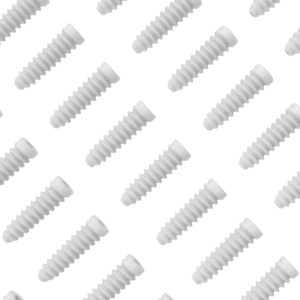
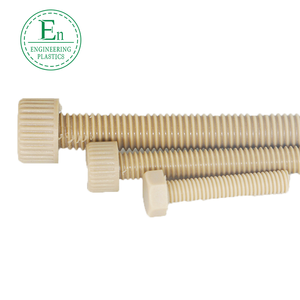
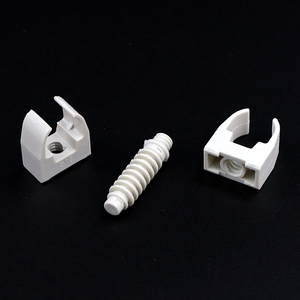
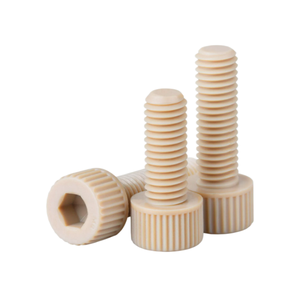
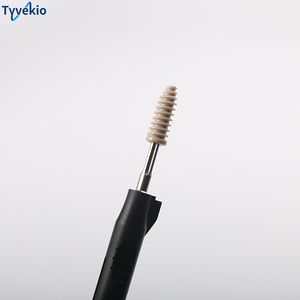
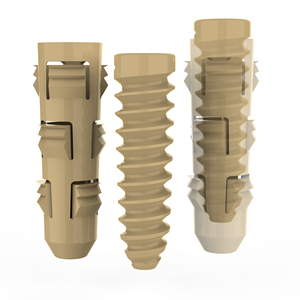
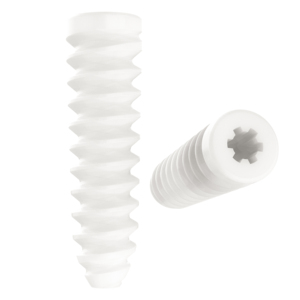
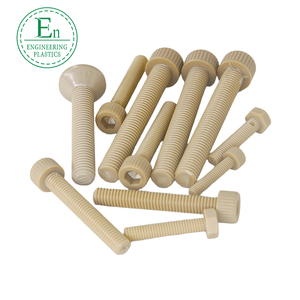
Under the umbrella of Saudi Vision 2030, the Kingdom of Saudi Arabia (KSA) is undergoing an unprecedented modernization of its healthcare sector. With massive investments via the Ministry of Health (MOH) and private health networks such as Dr. Sulaiman Al Habib Medical Group and Mouwasat Hospitals, the demand for high-tier sports medicine and arthroscopic interventions has escalated. Key factors driving this expansion include a national initiative promoting athletic participation, leading to higher surgical volumes for anterior cruciate ligament (ACL) and posterior cruciate ligament (PCL) reconstructions. For medical device distributors and hospital procurement directors, partnering with a certified bioabsorbable interference screw factory capable of meeting strict Saudi Food and Drug Authority (SFDA) requirements and CE certification standards is essential for maintaining supply chain reliability and clinical efficacy.
Interference screws serve as the mechanical anchor in arthroscopic reconstructive knee surgery, immobilizing soft tissue grafts (such as quadrupled hamstring autografts or bone-patellar tendon-bone grafts) inside bone tunnels until biological integration (creeping substitution) is accomplished. Historically, metallic implants (titanium alloys) provided adequate mechanical fixation but suffered from permanent artifacts in postoperative Magnetic Resonance Imaging (MRI), tunnel enlargement during revision procedures, and the secondary requirement for hardware removal.
Modern sports medicine has transitioned decisively toward bioabsorbable polymers, predominantly Poly(L-lactide-co-glycolide) (PLGA) blended with osteoconductive ceramics such as beta-tricalcium phosphate (β-TCP) or non-absorbable alternatives like Polyether Ether Ketone (PEEK).
Composed of 85% PLGA polymer copolymerized with 15% micro-dispersed β-TCP. The glycolic acid phase accelerates hydrolytic cleavage, while the lactic acid phase maintains structural rigidity during the initial critical 12-week postoperative graft fixation phase. As the polymer degrades, β-TCP acts as a local chemical buffer, preventing acidic localized reactions while releasing calcium and phosphate ions to stimulate osteoblast proliferation and bone growth into the tunnel void.
For cases requiring permanent, radiolucent, high-torsional fixation without resorption risk, radiolucent PEEK interference screws engineered via high-precision CNC machining offer elastic modulus parity with cortical bone (~3.6 GPa). This eliminates stress shielding at the graft interface and eliminates MRI artifact scattering during longitudinal follow-up evaluations.
Engineered with full-length buttress threads and a tapered nose tip. This geometry facilitates easy insertion through narrow arthroscopic portals, reduces insertion torque requirements, and prevents cutting or shearing of delicate graft fibers (hamstring or tendon autografts) during axial driving into the tibial or femoral tunnels.
| Specification Parameter | PLGA + β-TCP Bioabsorbable | PLLA Bioabsorbable | Medical Grade PEEK | Titanium Alloy (Ti-6Al-4V) |
|---|---|---|---|---|
| Bioabsorption Timeline | 12 – 24 Months | 24 – 36 Months | Non-Absorbable | Non-Absorbable |
| Radiolucency (MRI/CT) | Complete (No Artifacts) | Complete (No Artifacts) | 100% Radiolucent | High Distortion / Scattering |
| Pull-Out Strength (N) | 480 N – 550 N | 460 N – 520 N | > 650 N | > 700 N |
| Osteoconductivity Index | High (TCP ion release) | Neutral | Neutral / Inert | Fibrous Encapsulation |
| Postoperative Removal Needed | Never Required | Never Required | Rare (Revision Only) | Frequent in Revision Cases |
Operating in the Gulf Cooperation Council (GCC) region—specifically within the climate and regulatory environment of Saudi Arabia—demands specialized manufacturing and packaging protocols. Medical equipment destined for orthopedic centers in Riyadh, Jeddah, Dammam, and Medina must adhere to stringent quality standards designed to withstand local environmental challenges:
Bioabsorbable polymers such as PLGA are inherently sensitive to ambient thermal degradation and ambient humidity. High ambient temperatures across the Arabian Peninsula make proper packaging critical. Our manufacturing facility employs double Tyvek® sterile barrier pouch packaging with desiccants and protective outer aluminum foil barrier layers, ensuring an extended 3-year shelf life under controlled storage conditions without premature polymer hydrolytic cleavage.
Public sector procurement via the National Unified Procurement Company (NUPCO) demands meticulous technical dossiers, CE Mark documentation (under EU MDR 2017/745), ISO 13485 certification, and detailed bio-compatibility testing (ISO 10993 series). Our factories supply complete regulatory support documentation, technical files, and batch certificates of analysis (CoA) required by local Saudi authorized representatives (AR).
Orthopedic surgeons in Saudi Arabia overwhelmingly favor cannulated interference screws compatible with standard 1.5mm guide wires and Hexalobe/Torx driving mechanisms. Torx drives distribute insertion torque evenly across the screw head, virtually eliminating driver cam-out or head stripping during insertion into dense, sclerotic bone typical in young athletic cohorts.
As a leading manufacturer and exporter of spinal implants, trauma fixation systems, and arthroscopic surgical instruments, our production infrastructure combines high-precision Swiss-type automatic CNC sliding head lathes, 5-axis vertical machining centers (VMC), and dedicated Class 10,000 cleanroom assembly lines.
Tolerances maintained within ±0.005 mm ensure absolute thread pitch consistency and smooth driver fitment. Every bioabsorbable PLGA and PEEK screw undergoes optical comparator inspection and 100% dimensional testing.
We utilize medical-grade raw materials sourced exclusively from internationally accredited polymer suppliers (such as Evonik Resomer® for PLGA and Victrex® PEEK). Full traceability is provided with every production lot shipped to KSA distributors.
Operating under a complete ISO 13485 certified quality management system, our facilities are regularly audited by notified bodies, providing Saudi buyers with compliant regulatory pathways.
We offer private labeling, custom thread design modification, tailored tray layout configuration, and rapid prototype turnarounds for orthopedic brands operating in the Middle East.
Yes. All of our bioabsorbable interference screws carry valid CE certification and are manufactured under ISO 13485 certified quality systems. We provide comprehensive technical files, biocompatibility report packages (ISO 10993), and sterilization validation certificates required for SFDA registration and NUPCO tender qualification in Saudi Arabia.
Our PLGA/β-TCP matrix is engineered to maintain strong mechanical fixation throughout the crucial initial 8 to 12-week graft-to-bone healing period. Substantial hydrolytic degradation occurs progressively between 12 and 24 months, gradually transferring physiological loads to the developing bone matrix without sterile sinus formation or tissue inflammation.
To withstand high ambient temperatures during transit and warehouse storage in Saudi Arabia, all bioabsorbable products are sealed in double sterile Tyvek® pouches containing moisture-absorbing desiccants, surrounded by heavy-duty thermo-insulated export packaging. Products are verified via real-time and accelerated stability studies.
We supply cannulated interference screws in diameters ranging from 6mm to 12mm and lengths from 20mm to 35mm. Both fully threaded and smooth-head options are available in bioabsorbable PLGA/TCP and non-absorbable PEEK to accommodate varied surgical preferences and graft types (soft tissue vs. bone-block).
Standard product configurations are maintained in buffer inventory for fast dispatch within 7 to 10 working days. Custom OEM orders or branded packaging requests typically carry a manufacturing lead time of 3 to 4 weeks, delivered via direct air freight to King Khalid International Airport (Riyadh) or King Abdulaziz International Airport (Jeddah).
Yes. We manufacture matching surgical instrument sets, including cannulated nitinol guide wires, stepped bone taps, tunnel reamers, and ergonomic drivers (Hexalobe / Torx drives) designed specifically for seamless compatibility with our interference screws.
Expand your orthopedic portfolio in the Saudi Arabian market with factory-direct pricing, guaranteed international compliance, and proven clinical quality. Contact our global sales engineering team today.
