Discover expert surgical guides, manufacturing standards, and clinical innovations across spinal, trauma, and arthroscopy implant technologies.
Knowledge Hub
Latest Medical Device Updates
Stay informed with in-depth technical analysis on titanium alloys, pedicle screws, PEEK cages, and modern orthopedic instrumentation.
ISO 13485 · CE · FDA · GMP Certified Manufacturing
China Best Distal Radius Locking Plate Factories & Exporter serving Moscow
High-Precision Titanium Trauma Fixation Systems, Anatomical Volar/Dorsal Locking Plates, & OEM/ODM Supply Solutions tailored for Russian Hospitals and Orthopedic Distributors
Premium Trauma Implants Catalogue
Featured Distal Radius & Fracture Fixation Systems
Engineered with medical-grade Titanium Grade 5 ELI and SS 316L, compliant with AO/ASIF standards for clinical excellence across Moscow healthcare networks.
Variable Angle System
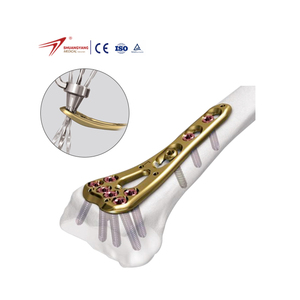
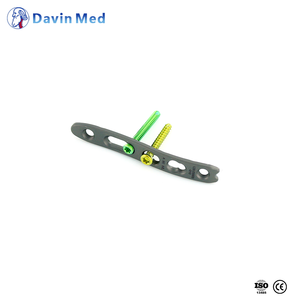
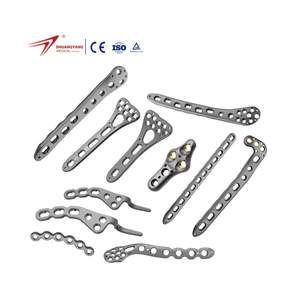
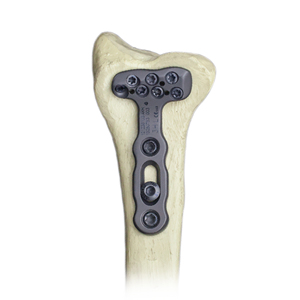
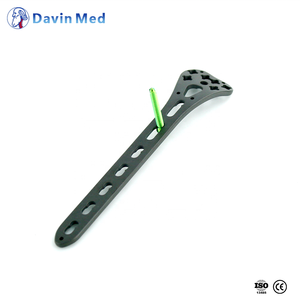
Factory Price Orthopedic Titanium Implant VA LCP Locking Plate for Distal Radius Fractures
Distal radius fractures represent approximately 18% of all adult fractures encountered in emergency trauma centers worldwide, but in Northern metropolitan regions like Moscow and the surrounding Moscow Oblast, seasonal climatic fluctuations create a profound spike in intra-articular and extra-articular wrist injuries. During the extended Russian winter (from November through March), black ice conditions lead to a dramatic influx of slip-and-fall incidents, frequently resulting in high-energy FOOSH (Fall Onto Outstretched Hand) trauma among working-age and elderly demographics.
For Russian orthopedic surgeons operating in major medical complexes—such as the N.N. Priorov National Medical Research Center of Traumatology and Orthopedics, the S.S. Yudin City Clinical Hospital, and Botkin Hospital—achieving rapid, rigid anatomical reduction with early mobilization is paramount. Traditional casting or non-locking fixation methods frequently succumb to secondary displacement under osteoporotic or comminuted bone conditions. Consequently, the adoption of Volar Locking Compression Plates (VLP) and Variable-Angle (VA) Locking Hand & Wrist Systems has become the gold standard throughout Moscow's public healthcare institutions and private orthopedic clinics.
Clinical Challenges Unique to Cold-Climate Trauma Patterns
Metaphyseal comminution, articular surface step-off, and dorsal metaphyseal defect formation require internal fixation devices that balance biomechanical rigidity with soft tissue preservation:
Anatomical Volar Watershed Line Clearance
Distal volar plates must sit proximal to the watershed line to prevent flexor pollicis longus (FPL) tendon irritation and subsequent rupture—a critical complication emphasized by modern hand surgery protocols.
Subchondral Screw Support in Osteopenic Bone
Cold-weather falls among elderly populations with decreased bone mineral density require multi-planar distal screw configurations that create a structural raft beneath the articular cartilage.
Low-Temperature Bio-Compatibility & Ductility
Implants must maintain structural integrity and ductility under extreme thermal shifts without inducing localized thermal conductivity discomfort for patients exposed to Moscow's sub-zero outdoor climate.
2. Material Science & Engineering Standards: Titanium Grade 5 ELI vs. Stainless Steel
As a leading Chinese manufacturer and exporter supplying the Russian Federation, our production processes adhere to rigorous metallurgical and mechanical engineering specifications. The selection between Ti-6Al-4V ELI (ASTM F136 / ISO 5832-3) and Medical Stainless Steel 316L (ASTM F138 / ISO 5832-1) is dictated by clinical biomechanics and patient-specific requirements.
Procuring medical devices and orthopedic trauma implants for the Russian healthcare market demands strict compliance with regulatory frameworks managed by the Federal Service for Surveillance in Healthcare (Roszdravnadzor / RZN) and Eurasian Economic Union (EAEU / EAC) technical regulations.
Over the past five years, the trade corridor between China's medical manufacturing hubs (such as Jiangsu, Zhejiang, and Guangdong) and Moscow has transformed into a resilient, high-efficiency supply ecosystem. Leading medical distributors in Moscow are increasingly bypassing expensive Western European intermediaries in favor of direct OEM/ODM strategic partnerships with top-tier Chinese factories that offer complete technical dossiers for local registration.
Regulatory Dossier Support
We provide comprehensive technical files, ISO 13485 quality management documentation, CE declaration certificates, toxicological test reports, and mechanical endurance testing data required for smooth Roszdravnadzor registration submission.
Streamlined Logistics Routes
Direct rail freight via the China-Europe Railway Express (Zabaykalsk / Manzhouli border corridor to Moscow Vorsino / Kresty cargo terminals) ensures fast 14-18 day transit times, alongside expedited air freight options to Sheremetyevo (SVO) or Domodedovo (DME).
Customs & DDP Financial Settlement
We work with specialized logistics partners capable of facilitating customs clearance under EAC guidelines, providing transparent DDP terms and direct Yuan (RMB) / Ruble (RUB) interbank cross-border settlement channels.
4. Corporate Manufacturing Competencies & Original Site Heritage
Grounded in over a decade of continuous innovation, our enterprise operates as an integrated biomedical equipment developer and exporter. Combining rigorous European standards (CE Class III) with state-of-the-art manufacturing infrastructure, we deliver exceptional cost-to-quality value to international healthcare buyers.
Integrated R&D & CAD/CAM Modeling
Our engineering team utilizes finite element analysis (FEA) to model stress distribution across distal radius metaphyseal locking plates, continuously optimizing contour geometries based on surgical feedback.
Raw Material Traceability
Every batch of Titanium Grade 5 ELI and Stainless Steel 316L is sourced exclusively from certified biomedical ingot suppliers with full chemical composition and tensile strength mill test certificates (MTC).
Complete Surgical Instrument Sets
In addition to distal radius plates, we supply dedicated 2.4mm / 2.7mm trauma instrument sets—including drill guides, depth gauges, torque-limiting screwdrivers, and bending irons—housed in autoclavable aluminum sterilization trays.
Q1:Can you assist Moscow orthopedic distributors with Roszdravnadzor (RZN) registration documentation?
Yes. We provide complete technical dossiers compliant with Russian regulatory guidelines. This includes ISO 13485 certificates, CE documentation, detailed CAD drawings, raw material certificates, mechanical fatigue test reports, and factory quality audit reports required by RZN authorities during the medical device registration process.
Q2:What is the typical shipping lead time from your factory to central distribution hubs in Moscow?
For stock items (such as standard 2.4mm volar locking plate kits), order processing takes 3-5 business days. Air freight to Moscow Sheremetyevo (SVO) or Domodedovo (DME) takes approximately 5-7 days. Direct containerized rail shipment via the Sino-Russian rail corridor to Vorsino Terminal typically arrives within 14-18 days.
Q3:What are the minimum order quantities (MOQ) for custom OEM / ODM distal radius plate production?
For standard catalog products, our MOQ starts at just 10 pieces per configuration to support initial distributor sampling. For custom OEM designs—such as specialized anatomical shapes, custom screw hole arrangements, or private laser-marking of your brand logo—our typical MOQ is 50-100 units per spec.
Q4:Are your 2.4mm / 2.7mm distal radius locking plates compatible with standard AO/ASIF instrument sets?
Yes, all of our distal radius locking plates are engineered to conform strictly to international AO/ASIF dimensional standards. The screw head threads, star-drive (T8/T10) recesses, drill bit diameters, and tap threads match standard hospital operating room instruments seamless across Russian trauma departments.
Q5:Do you supply implants in sterile packaging or non-sterile bulk packaging for hospital sterilization?
We offer both packaging modalities. Implants can be supplied clean-packaged in protective dual-tyvek pouching ready for ethylene oxide (EO) or autoclave sterilization at the local hospital, or pre-sterilized via Gamma irradiation with full 5-year shelf-life stability validation.
Q6:Why is Titanium Grade 5 ELI preferred over standard Stainless Steel for Moscow winter trauma cases?
Titanium Grade 5 ELI (Extra Low Interstitial) offers superior fatigue resistance under cyclic bending loads and a lower elastic modulus (110 GPa) compared to Stainless Steel (200 GPa). This significantly reduces stress shielding at the fracture line and improves biological healing, while offering better MRI compatibility during post-operative assessment.
Q7:What financial payment terms and currencies are accepted for orders delivered to Russia?
We accommodate direct payments in Chinese Yuan (RMB) and Russian Rubles (RUB) via compliant banking systems (such as VTB China, CIPS, and direct wire transfers), as well as standard USD/EUR telegraphic transfers (T/T) or Letters of Credit (L/C) for bulk contract procurement.
Q8:How does your quality assurance department ensure 0% defect rate for distal radius screw locking threads?
Our QC protocol enforces a 3-tier inspection standard: 1) In-process automated optical thread verification during CNC milling, 2) 100% manual go/no-go gauge pass testing for every threaded hole, and 3) Final batch torque-to-failure testing under ISO 6892 biomechanical testing protocols.
Partner with China's Premier Distal Radius Plate Factory Serving Moscow
Looking to expand your trauma product line, secure factory-direct pricing, or obtain full technical registration support for the Russian market? Connect directly with our biomedical engineering and export sales specialists today.