
Discover expert surgical guides, manufacturing standards, and clinical innovations across spinal, trauma, and arthroscopy implant technologies.

Stay informed with in-depth technical analysis on titanium alloys, pedicle screws, PEEK cages, and modern orthopedic instrumentation.
Engineered with medical-grade CFR-PEEK and ultra-high-tensile carbon composites, offering radiolucency, zero MRI artifacts, and elastic modulus matching anatomical bone structures.
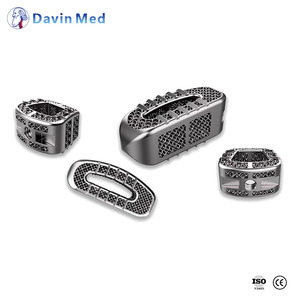
Advanced porous trabecular structure optimized for rapid osseointegration and biomechanical load sharing across PLIF, TLIF, and ALIF surgical approaches.
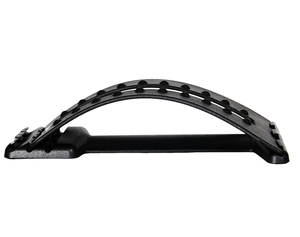
High-fatigue strength forged titanium pedicle screws and rods certified under rigorous CE standards for complex spinal stabilization and trauma repair.
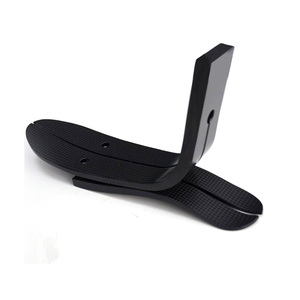
Precision-machined structural composite parts designed for medical devices, prosthetics, and orthopedic applications requiring extreme strength-to-weight ratios.
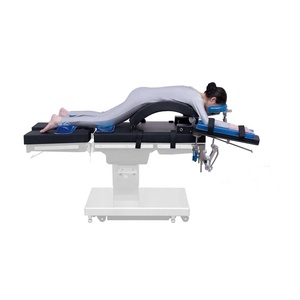
Full 360° radiolucent surgical positioning frame facilitating unimpeded C-arm intraoperative imaging during posterior lumbar spinal surgeries.
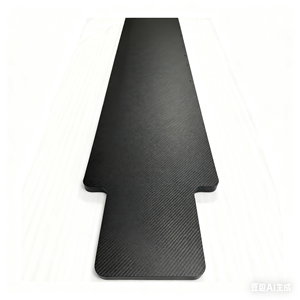
Ultra-low density, high-rigidity carbon composite trauma plates customized for artifact-free post-operative radiological fusion monitoring.
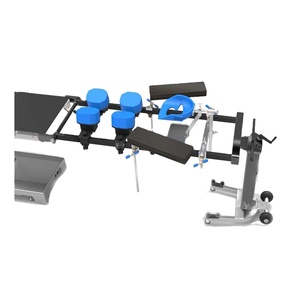
Ergonomic traction frame for cervical and lumbar disc replacement surgeries, crafted with continuous carbon fiber for complete structural stability.
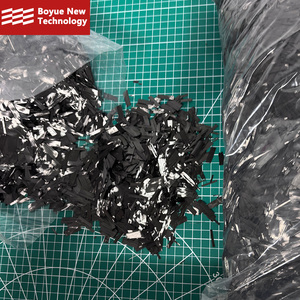
High-purity 10mm-25mm chopped 12K forged carbon fibers designed for precision molding of high-strength bio-compatible medical implants.
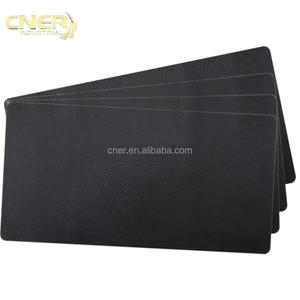
Radiolucent composite panels engineered for operating tables, orthopedic positioning boards, and oncology radiation therapy setups.
Combining advanced OEM manufacturing capacity with rigorous European regulatory compliance to deliver superior spinal fixation solutions.
Carbon fiber reinforced PEEK (CFR-PEEK) implants eliminate post-operative CT and MRI scatter, allowing neurosurgeons in Dutch academic medical centers (UMCs) to inspect fusion sites and spinal cord decompression with 100% clarity.
With an elastic modulus closely mirroring human cortical bone (18 GPa vs Titanium's 110 GPa), carbon fiber implants prevent bone resorption, cage subsidence, and adjacent segment degeneration (ASD).
Every batch of spinal implants is manufactured in ISO Class 7 cleanrooms, supported by comprehensive clinical evaluation reports (CER), ISO 10993 biocompatibility testing, and complete batch traceability for seamless Dutch customs entry.
In spinal reconstructive surgery—encompassing Anterior Cervical Discectomy and Fusion (ACDF), Posterior Lumbar Interbody Fusion (PLIF), Transforaminal Lumbar Interbody Fusion (TLIF), and total disc replacement—the mechanical behavior of the implant directly governs the speed and quality of bone fusion.
Metallic implants possess a high modulus of elasticity (titanium alloy ~110 GPa, stainless steel ~210 GPa), which significantly exceeds that of native cortical bone (15–25 GPa) and trabecular bone (1–3 GPa). This severe mechanical mismatch causes a phenomenon known as stress shielding: the rigid metallic implant bears the majority of the physiological load, depriving the surrounding bone graft of physiological mechanical stimulation. Consequently, bone resorption occurs, leading to cage subsidence, instrument loosening, and pseudoarthrosis.
Carbon Fiber Reinforced Polyetheretherketone (CFR-PEEK) and advanced continuous carbon fiber composites solve this fundamental biomechanical dilemma. By adjusting fiber orientation, fiber volume fraction, and matrix density, carbon fiber implants achieve an elastic modulus tailored precisely to 18.5 GPa. This optimal stiffness promotes load-sharing according to Wolff’s Law, stimulating rapid osteogenesis and solid osseous fusion while dramatically reducing the incidence of adjacent segment disease (ASD).
| Performance Metric | CFR-PEEK Carbon Composite | Titanium Alloy (Ti-6Al-4V) | Unreinforced Pure PEEK |
|---|---|---|---|
| Elastic Modulus (GPa) | 18 - 22 (Bone Matching) | 110 - 115 (Rigid) | 3.5 - 4.0 (Flexible) |
| Radiological Transparency | 100% Radiolucent (Artifact Free) | Opaque (Severe Scatter) | 100% Radiolucent |
| MRI / CT Post-Op Assessment | Crystal Clear Fusion Visibility | Obscured by Metallic Artifacts | Clear Visibility |
| Fatigue Resistance & Strength | Ultra-High Fatigue Limit | High Structural Strength | Moderate Strength |
| Oncology Radiation Compatibility | Zero Radiation Backscatter | Distorts Radiation Dosing | Zero Radiation Backscatter |
| Osseointegration Potential | High (with 3D Porous Coating) | High | Moderate |
The Dutch healthcare system operates under stringent efficiency mandates governed by the National Health Care Institute (Zorginstituut Nederland) and the Dutch Health and Youth Care Inspectorate (IGJ). Dutch hospitals—including renowned University Medical Centers (such as Amsterdam UMC, Erasmus MC Rotterdam, and UMC Utrecht)—prioritize surgical solutions that demonstrate lower long-term revision surgery rates and seamless integration with advanced diagnostic imaging.
Key localized drivers accelerating the adoption of Chinese carbon fiber spinal implants in the Netherlands include:
Our enterprise state-of-the-art production base leverages imported 5-axis DMG MORI CNC milling machines, Citizen Swiss-type VMC automatic sliding head lathes, and specialized composite autoclave vacuum molding units. Every spinal plate, pedicle screw, carbon fiber Wilson frame, and lumbar interbody cage undergoes comprehensive dimensional inspection on Zeiss 3D Coordinate Measuring Machines (CMM) with tolerances down to ±0.005mm.
Cleanroom operations are maintained under strict ISO 14644-1 Class 7 environmental controls. Ultrasonic multi-stage cleaning using pure deionized water ensures pyrogen-free surfaces prior to double-sterile pouch packaging under ISO 11607 validation.
Essential technical, regulatory, and logistics queries for medical device importers, hospital procurement officers, and orthopedic distributors in the Netherlands.
Yes. All our medical-grade carbon fiber and titanium spinal implant lines hold CE certification under the European Union Medical Device Regulation (EU MDR 2017/745). We provide complete Technical Documentation (STED), ISO 13485:2016 quality system verification, ISO 10993 biological evaluation reports, and full clinical evaluation datasets required by Notified Bodies and Dutch IGJ authorities.
We offer established door-to-door (DDP/DAP) logistics frameworks for Dutch buyers. Express air shipments via Amsterdam Schiphol Airport (AMS) take 3–5 business days for urgent hospital replenishment. Standard sea freight container consolidated cargo arrives at the Port of Rotterdam within 22–28 days, handled through our dedicated EU customs clearing agents.
Absolutely. We specialize in contract manufacturing and custom engineering. Utilizing CAD/CAM file transfer, 3D printing prototyping, and continuous carbon fiber lay-up, we can customize carbon fiber traction frames, surgical incision frames, radiolucent table panels, and patient-specific orthopedic implants based on your exact clinical specs.
Standard unreinforced PEEK offers good radiolucency but lower fatigue strength, limiting its application in high-load spinal areas. Adding short or continuous carbon fibers (CFR-PEEK) increases structural bending and torsional strength to match or exceed titanium while maintaining 100% radiolucency and optimal bone-like elasticity.
Every batch undergoes 100% Non-Destructive Testing (NDT), micro-CT internal void inspection, high-cycle fatigue testing, and 3D CMM dimensional verification. Raw carbon fiber materials are sourced exclusively from certified medical-grade suppliers accompanied by comprehensive material test certificates (MTC).
We accommodate both low-volume trial orders for clinical evaluation and high-volume OEM annual procurement contracts. Flexible MOQ structures are tailored based on whether the product is a standard inventory item or a custom-designed composite implant system.
Elevate your orthopedic portfolio in the Netherlands with certified radiolucent spinal fixation systems, Wilson frames, and composite plates. Contact our engineering team for instant quotes, technical white papers, and product samples.
Get Catalog