Industry Whitepaper & Clinical Insights
Clinical Adoption & Market Drivers of Expandable Lumbar Cages in Slovakia
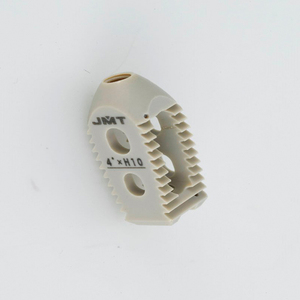
The spine surgery landscape in Central Europe, particularly within the Slovak Republic, is undergoing a pivotal transition. Modern neurosurgical and orthopedic departments—such as those at the University Hospital Bratislava (Univerzitná nemocnica Bratislava - UNB), F.D. Roosevelt Teaching Hospital in Banská Bystrica, and Louis Pasteur University Hospital in Košice—are increasingly moving away from legacy static interbody cages in favor of **expandable lumbar cage technology**. This shift is driven by the clinical urgency to restore anatomical sagittal lordosis while mitigating post-operative complications such as cage subsidence, nerve root traction injury, and endplate damage.
As an established global manufacturer and exporter of precision orthopedic implants, our organization provides Slovak healthcare providers, medical equipment tenders, and authorized distributors with high-grade, bio-compatible expandable TLIF (Transforaminal Lumbar Interbody Fusion) and PLIF (Posterior Lumbar Interbody Fusion) cage systems. Fully aligned with the strict directives of the **State Institute for Drug Control (ŠÚKL)** in Slovakia and the **European Medical Devices Regulation (EU MDR 2017/745)**, our surgical systems deliver unmatched structural stability, customized expansion profiles, and optimal conditions for bone tissue endosteal remodeling.
Biomechanical Supremacy: Static vs. Expandable Lumbar Interbody Cages
The fundamental challenge of minimally invasive spine surgery (MISS) is the trade-off between insertion footprint and final restored height. Inserting a large static PEEK or Titanium cage requires significant neural retraction and extensive endplate impaction, which frequently destroys the dense subchondral bone floor. Expandable cages resolve this dilemma by enabling collapsed insertion followed by in-situ mechanical expansion.
| Biomechanical Parameter |
Legacy Static PEEK Cages |
Legacy Static Titanium Cages |
Next-Gen Expandable Ti/PEEK Cages |
| Insertion Profile |
Large (Requires aggressive nerve pull) |
Large (High impaction shear forces) |
Low-profile collapse (Minimizes nerve retractions) |
| Endplate Disruption Risk |
High (Scraping of bony endplate) |
Very High (Risk of micro-fracture) |
Minimal (Smooth tactile insertion) |
| In-Situ Height & Lordosis Adjustment |
Fixed (No intraoperative adjustment) |
Fixed (Predetermined angle) |
Continuous expansion (0° to 15° Lordosis) |
| Bone Graft Void Volume |
Restricted internal volume |
Restricted internal volume |
Expanded cavity allows maximum graft packing |
| Subsidence Rate (% of patients) |
14.2% – 22.5% |
18.0% – 28.1% |
< 3.8% (Preserved subchondral plate) |
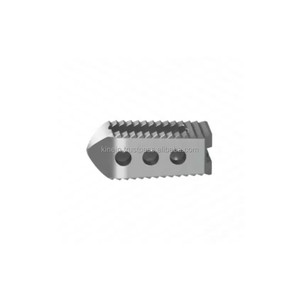
By allowing controlled vertical height restoration from 8mm up to 14mm after placement within the disc space, expandable lumbar cages establish immediate structural tension across the anterior column. This restores natural disc space height and foraminal clearance, effectively decompressing exiting nerve roots without causing iatrogenic mechanical wear to the vertebral body plates.
Slovakia Market Integration
Localized Clinical Applications & Regulatory Landscape in Slovakia
Slovakia's medical device market operates under tight scrutiny managed by the **Ministry of Health of the Slovak Republic** and **ŠÚKL**. Healthcare providers working within national health insurance schemes—such as **Všeobecná zdravotná poisťovňa (VšZP)**, **Dôvera**, and **Union**—require device suppliers to demonstrate absolute clinical efficacy, full traceability (UDI system), and complete documentation under ISO 13485.
Key Localized Surgical Applications in Slovak Spine Clinics
- Degenerative Disc Disease (DDD) & Spondylolisthesis: Restoring intervertebral disc clearance in patients presenting severe low back pain and radiculopathy across L1-S1 spinal segments.
- Minimally Invasive Transforaminal Lumbar Interbody Fusion (MIS-TLIF): Allowing spine surgeons in Bratislava and Košice to perform spinal fusions through small tubular retractors, cutting down patient recovery times and post-op hospital stays.
- Revision Spine Surgery: Providing variable expansion geometries to address previously failed static cage fusions, hardware loosening, or severe osteoporotic endplate collapse.
- Veterinary Orthopedic Trauma & Spine Surgery: Meeting the growing demand from specialized veterinary university clinics (such as UVLF in Košice) for precision animal spinal fusion implants and specialized surgical instrumentation.
Regulatory & EU Import Compliance Overview for Slovak Buyers
Importing medical devices into Slovakia from global manufacturing facilities requires seamless compliance with European single market rules. As an experienced exporter to Central and Eastern Europe, our company delivers fully compliant supply chain solutions:
EU MDR 2017/745 & CE Certification
All expandable lumbar cages, pedicle screw systems, and accompanying manual sets carry CE marking verified by accredited European Notified Bodies, ensuring frictionless customs clearance at Slovak borders.
ŠÚKL Registration Support
We supply full Technical Files, Material Test Reports (Ti-6Al-4V ELI / PEEK Optima), Biocompatibility Reports (ISO 10993), and Sterilization Validation data required for ŠÚKL database inclusion.
Are your expandable lumbar cages compliant with Slovak ŠÚKL and EU MDR standards?
Yes. All our lumbar interbody fusion cages, including expandable Titanium and PEEK models, hold comprehensive ISO 13485 certification and CE marks compliant with EU MDR 2017/745. We provide all technical dossiers required for registration with the State Institute for Drug Control (ŠÚKL) in Slovakia.
What raw materials are utilized in manufacturing your expandable cages?
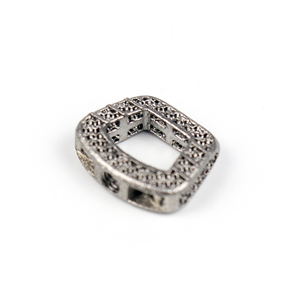
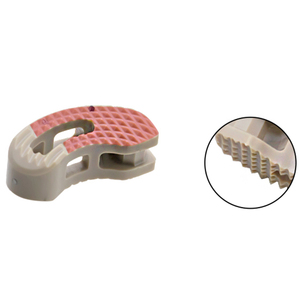
Our expandable cages are manufactured using medical-grade Titanium Alloy (Ti-6Al-4V ELI conforming to ASTM F136) and radiolucent PEEK-OPTIMA® (conforming to ASTM F2026). High-friction contact surfaces are engineered to maximize osteointegration and prevent implant migration.
Can you supply specialized ergonomic manual surgical instrument sets for cage deployment?
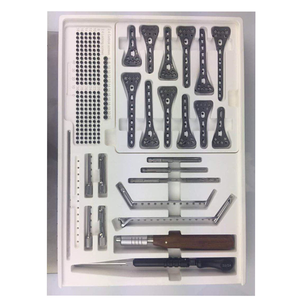
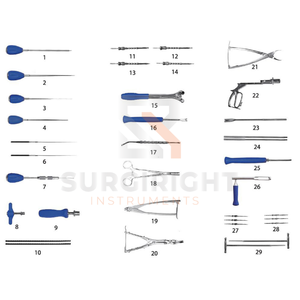
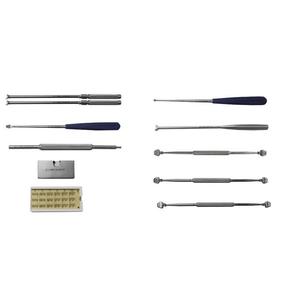
Absolutely. We supply dedicated, color-coded stainless steel surgical instrument trays featuring ergonomic handles, multi-position trial drivers, expander keys, and graft insertion funnels specifically calibrated for our expandable TLIF/PLIF cage systems.
What is the typical lead time for shipment to medical centers in Bratislava or Košice?
Standard stock orders are dispatched within 48 hours via express air freight (DHL/FedEx/TNT), reaching Slovak distribution hubs within 4 to 7 business days. Custom or bulk tender orders are produced and shipped according to agreed contractual timelines.
Do you offer OEM / White-Label manufacturing services for European orthopedic brands?
Yes. We provide complete OEM/ODM manufacturing, custom laser marking, custom packaging, and custom tray design services for medical device brands seeking reliable, high-precision contract manufacturing partners in Europe.
How does the expansion mechanism prevent over-expansion during surgery?
The manual expansion instrument features built-in tactile torque feedback and visible millimeter depth indicators. Additionally, the internal mechanical stop inside the cage prevents hyper-expansion beyond its maximum rated safety ceiling (e.g., 14mm).