


Technical Whitepaper: Evolution of Minimally Invasive Spine Surgery (MISS) Implants in Ireland's Healthcare Ecosystem
Over the past decade, Ireland’s orthopedic and neurosurgical landscape across both the Health Service Executive (HSE) public hospital networks and private healthcare institutions—such as the Blackrock Clinic, Hermitage Medical Clinic, and Beacon Hospital—has experienced a structural transition towards Minimally Invasive Spine Surgery (MISS). Driven by the clinical imperative to reduce inpatient bed days, minimize intraoperative blood loss, and mitigate surgical site infection (SSI) risks, orthopedic procurement committees increasingly prioritize advanced spinal implant systems that deliver uncompromising biomechanical stability with minimal anatomical access footprints.
Clinical Insight for Irish Procurement Directors: Minimally Invasive Spine Implants supplied by Remak Ortho are engineered to fulfill the stringent requirements of EU MDR (2017/745), ensuring seamless integration into Irish hospital sterile supply chains (CSSD) and compatibility with standard intraoperative fluoroscopy and O-arm navigation platforms.
1. Clinical Intent & Semantic Search Dynamics in Irish Spinal Procurement
Modern clinical procurement in Dublin, Cork, Galway, and Limerick extends beyond simple unit cost comparisons. Purchasing agents, clinical directors, and orthopedic consultants search for suppliers capable of providing technical transparency, structural reliability, and long-term biological survival rates. Key procurement vectors include:
- Biomechanical Modulus Alignment: Ensuring interbody cages match the elasticity of human trabecular and cortical bone to prevent stress shielding and cage subsidence.
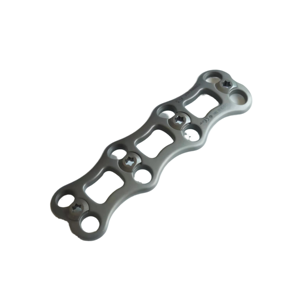
- Zero-Backout Locking Mechanisms: Anterior cervical plates equipped with tactile visual locking indicators to avoid post-operative screw backout and dysphagia.
- Fenestrated Pedicle Screw Technology: Cement-augmented systems specifically calibrated for Ireland’s aging demographic suffering from osteoporotic vertebral collapse.
- Supply Chain Traceability: Full ISO 13485 batch control, raw material certification (Ti6Al4V ELI & Polyetheretherketone PEEK-OPTIMA), and sterile barrier packaging.
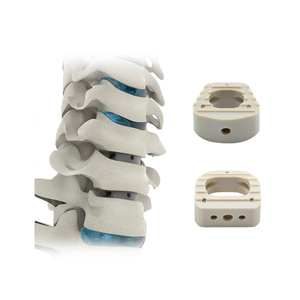
ACDF Systems
High-purity PEEK cages and dynamic low-profile cervical plates engineered for cervical radiculopathy and degenerative disc disease.
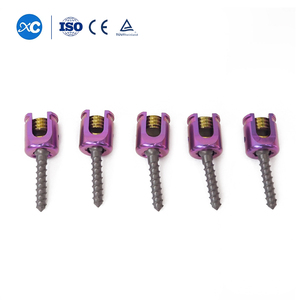
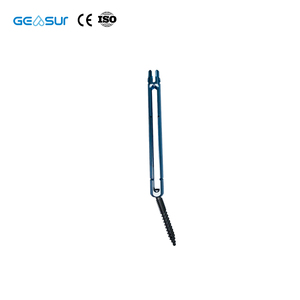
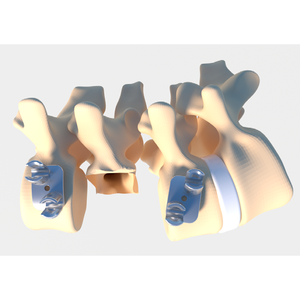
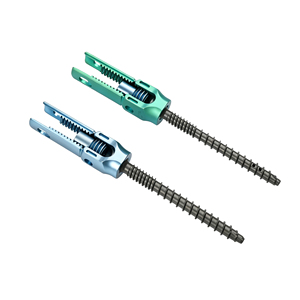
MIS Pedicle Fixation
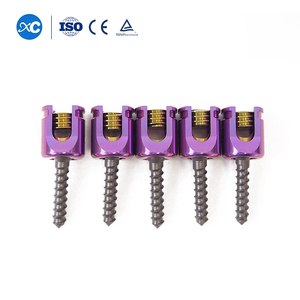
Percutaneous cannulated poly-axial screws with extended breakaway sleeves for pedicle preservation and precise rod insertion.
Cement Augmentation
Fenestrated screws designed for controlled PMMA bone cement delivery, achieving high pull-out strength in osteoporotic bone.
2. Material Science & Biomechanical Engineering Standards
The biomechanical success of a spinal fusion implant depends fundamentally on its material selection, surface topography, and fatigue limits under dynamic load-bearing conditions. Remak Ortho manufactures spinal hardware using medical-grade raw materials meeting ASTM and ISO specifications.
| Implant Material | Standard Compliance | Elastic Modulus (GPa) | Key Biomechanical Benefit |
|---|---|---|---|
| Titanium Alloy (Ti6Al4V ELI) | ASTM F136 / ISO 5832-3 | 110 GPa | Superior fatigue strength, extreme biocompatibility, rapid osseointegration. |
| PEEK-OPTIMA® | ASTM F2026 | 3.6 GPa | Matches human cancellous bone modulus; eliminates radiopaque artifact on CT/MRI. |
| Medical Stainless Steel (SS 316L / LVM) | ASTM F138 / ISO 5832-1 | 190 GPa | High tensile yield strength for rigid deformity correction and trauma constructs. |
| Tantalum Markers | ASTM F560 | 186 GPa | High-contrast radiopaque positioning indicators under intraoperative fluoroscopy. |
PEEK vs. Titanium in Lumbar Interbody Fusion (TLIF/PLIF)
In Irish clinical practice, selecting between PEEK and Titanium implants depends heavily on radiographic follow-up requirements and fusion acceleration strategies. PEEK (Polyetheretherketone) offers an elastic modulus (3.6 GPa) closely mirroring natural human cortical bone, which drastically reduces the risk of stress shielding and subsequent endplate reabsorption. Furthermore, PEEK’s inherent radiolucency allows orthopedic teams to accurately assess fusion column bridging via standard X-ray or CT scanning without metallic halo artifacts.
Conversely, our Titanium Alloy Systems utilize advanced surface texturing (Ra 1.8 – 2.2 µm), promoting direct osteoblast adhesion and immediate primary stability. For high-demand structural corrections, dynamic pedicle screws crafted from Ti6Al4V ELI provide exceptional resistance against multi-axial shear forces.
Local Ireland Clinical Application Scenarios
Our minimally invasive spinal implant systems are deployed across diverse clinical settings in Ireland:
- Elective Lumbar Decompression & Fusion (HSE Public Hospitals): Minimizing operating room duration and incision size in high-volume public surgery lists.
- Day-Case Microdiscectomy & Interbody Fusion (Private Clinics): Utilizing percutaneous titanium screw systems to allow patient discharge within 24–48 hours post-op.
- Geriatric Spinal Trauma & Fracture Stabilization: Utilizing MiSFix fenestrated cement-augmented screws for osteoporotic patients to achieve immediate fixation.
- Specialized Veterinary Orthopedic Surgery: High-precision poly-axial spinal screws for veterinary universities and specialized equine/canine trauma clinics across Ireland.
3. Enterprise Manufacturing Superiority & Quality Assurance
Remak Ortho operates a state-of-the-art manufacturing facility equipped with multi-axis CNC sliding-head lathes, 5-axis Vertical Machining Centers (VMC), and high-precision Swiss-type automatic lathes. This precision infrastructure allows us to achieve dimensional tolerances within ±0.005mm, guaranteeing flawless inter-component assembly between pedicle screws, locking caps, and extension rods.
Quality Control Protocol
Every batch of spinal implants undergoes 100% optical coordinate measurement machine (CMM) inspection, surface roughness testing, and mechanical fatigue testing in according with ISO 14830 standards before sterile barrier packaging.
Cleanroom & Sterilization
Implants are processed in Class 10,000 (ISO Class 7) cleanrooms, ultrasonic washed in purified water systems, and validated for Gamma irradiation or Ethylene Oxide (EtO) sterilization compliant with EN ISO 11137.
4. Irish B2B Procurement FAQ for Healthcare & Medical Distributors
To assist Irish hospital purchasing departments, clinical procurement specialists, and medical device distributors, we have compiled detailed responses to common technical and commercial inquiries.
Partner with a Trusted Global Exporter for Irish Spine Surgery Solutions
Contact our international B2B medical devices team today to request technical product catalogs, CE/ISO documentation, or competitive wholesale pricing for Ireland.
Get a Quote