
Discover expert surgical guides, manufacturing standards, and clinical innovations across spinal, trauma, and arthroscopy implant technologies.

Stay informed with in-depth technical analysis on titanium alloys, pedicle screws, PEEK cages, and modern orthopedic instrumentation.
Direct Factory OEM/ODM Supply Chain Solutions Compliant with EU MDR 2017/745 & ISO 13485 Standards
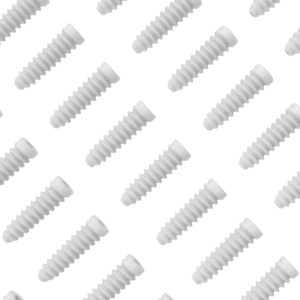
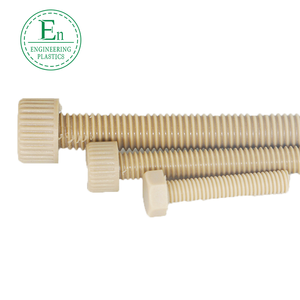
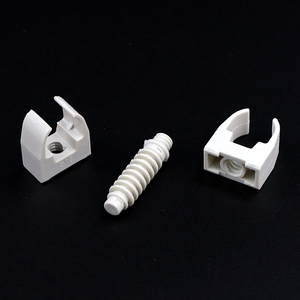
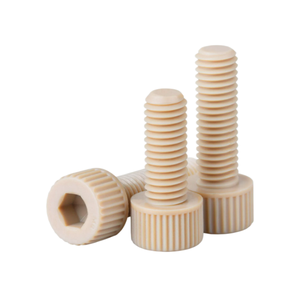
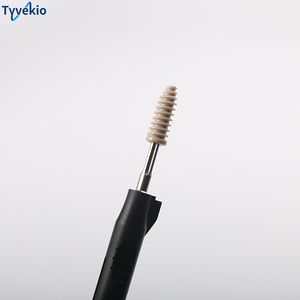
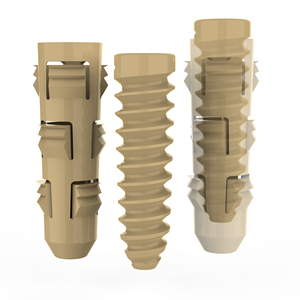
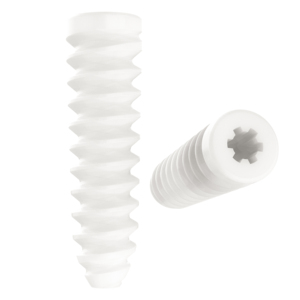
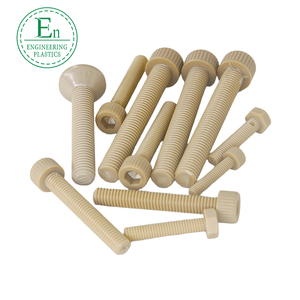
As Northern Germany's premier medical hub, the Free and Hanseatic City of Hamburg represents one of the Europe’s most technologically advanced clinical landscapes. Leading institutions such as the University Medical Center Hamburg-Eppendorf (UKE), private arthroscopy clinics in Eppendorf and Winterhude, and major hospital networks like Asklepios Klinik St. Georg demand exceptionally high biomechanical standards for sports medicine hardware. Specifically in Anterior Cruciate Ligament (ACL) and Posterior Cruciate Ligament (PCL) reconstructions, the transition from permanent metallic hardware (such as titanium alloy screws) toward advanced bioabsorbable and bio-composite interference screws has accelerated dramatically over the past five years.
Hamburg’s orthopedic surgeons increasingly prioritize implants that eliminate the need for secondary hardware removal surgeries, reduce post-operative revision complexity, and minimize artifact distortion during routine magnetic resonance imaging (MRI). However, procuring bioabsorbable interference screws within the European Union has become a multi-faceted regulatory and technical challenge due to the full enforcement of the European Medical Devices Regulation (EU MDR 2017/745). Biomedical engineers and procurement directors across Hamburg hospital buying syndicates require OEM/ODM suppliers and manufacturing partners that combine sophisticated polymer chemistry, verified degradation kinetics, robust pull-out strength metrics, and flawless technical documentation.
Clinical Insight for Hamburg Procurement Officers: Under EU MDR 2017/745 Class III guidelines for absorbable implants, technical files must demonstrate controlled hydrolysis without inducing localized osteolysis or aseptic foreign-body reactions. Certified manufacturing partners providing raw material batch traceability (e.g., medical-grade Resomer PLGA) are critical to avoiding supply chain disruption in German healthcare networks.
Understanding the material science behind interference screws is fundamental for hospital purchasing committees evaluating factory specifications. Interference screws serve to lock autografts or allografts (such as bone-patellar tendon-bone or hamstring tendons) inside femoral and tibial bone tunnels. The mechanical stress profile requires immediate, high-rigidity initial fixation, followed by progressive stress-transfer to healing native bone tissue as the polymer degrades.
Composed of an 85:15 or 75:25 copolymer ratio of L-lactide to glycolide, PLGA provides optimal initial mechanical strength during early graft healing (0–12 weeks). Hydrolytic degradation converts the polymer into lactic acid and glycolic acid, which are naturally metabolized by the Krebs cycle. Degradation typically completes within 18–24 months without long-term inflammatory residue.
Integrating Beta-Tricalcium Phosphate (β-TCP) or Hydroxyapatite (HA) into Poly-L-Lactic Acid (PLLA) creates a bioactive matrix. The calcium phosphate ceramic component buffers the acidic degradation microenvironment, maintaining local pH neutral and providing osteoconductive scaffolding that actively encourages trabecular bone ingrowth into the tunnel void.
For clinical scenarios requiring non-absorbable permanent stabilization without metal artifacts, PEEK Optima offers an elastic modulus close to cortical bone (~3.6 GPa). PEEK is completely radiolucent, bio-inert, and resistant to mechanical fatigue, making it suitable for revision ACL cases or complex multi-ligament knee reconstructions.
Biomechanical testing of interference screws manufactured by top-tier suppliers indicates that pitch design, thread depth, and driver geometry (e.g., star-drive or hexalobe cannulated drivers) are as vital as material composition. Tapered lead threads reduce insertion torque requirements, preventing intraoperative screw breakage—a crucial factor valued by German orthopedic surgeons performing tight-tunnel arthroscopic procedures.
The table below presents a comparative analysis of primary interference screw biomaterials supplied to Hamburg clinical buyers, evaluating mechanical integrity, degradation dynamics, radiolucency, and osteoconductive potential.
| Biomaterial Type | Degradation Timeline | Pull-Out Force (N) | Radiolucency (MRI/CT) | Osteoconductivity | Primary Clinical Application |
|---|---|---|---|---|---|
| PLGA (85/15 copolymer) | 14 – 24 Months | 620 N – 750 N | 100% Radiolucent | Moderate (Phase Transfer) | Standard ACL / PCL Soft Tissue Graft Fixation |
| PLLA + 30% β-TCP | 24 – 36 Months | 580 N – 710 N | Radiolucent (Opaque Trace) | High (Osteoconductive Matrix) | BTB Grafts & Revision ACL Surgery |
| Medical Grade PEEK | Non-Absorbable | 700 N – 850 N | Complete Radiolucency | Neutral (Bio-inert) | High-Tension Multi-ligament Reconstruction |
| Titanium Grade 5 (Ti6Al4V) | Non-Absorbable | >800 N | Significant Artifacts | Osseointegration (No Ingrowth) | Traditional Trauma & Heavy Bone Fixation |
When selecting an international OEM/ODM factory or overseas supplier for bioabsorbable interference screws, Hamburg-based medical device distributors and hospital purchasing syndicates must execute stringent vendor audits. The regulatory ecosystem in Germany, monitored by BfArM (Federal Institute for Drugs and Medical Devices) and regional health authorities, leaves zero margin for compromise regarding compliance and quality control.
Top-tier manufacturers such as Remak Ortho provide an integrated manufacturing model that safeguards product consistency across multi-thousand unit production runs. Key technical metrics to evaluate during factory sourcing include:
Bioabsorbable polymers are extremely sensitive to humidity and thermal degradation during injection molding or high-precision CNC machining. Factories must operate ISO Class 7 or Class 8 cleanrooms with controlled relative humidity (<30%) to prevent premature polymer hydrolysis during machining and packaging.
Unlike metallic hardware, bioabsorbable interference screws cannot undergo traditional steam autoclaving. OEM suppliers must validate Ethylene Oxide (EtO) or Gamma irradiation sterilization protocols according to ISO 11135 / ISO 11137, guaranteeing a Sterility Assurance Level (SAL) of 10⁻⁶ without altering intrinsic polymer molecular weight.
Cannulated interference screws require micron-level concentricity and smooth interior lumen walls for guide wire placement. High-speed CNC sliding head lathes ensure that driver engagement sockets (hexagonal or star-shaped) resist strip-out torque forces exceeding 2.5 Nm.
As a leading manufacturer and exporter of orthopedic solutions, Remak Ortho Pvt Ltd brings engineered excellence directly to medical device companies, private labels, and hospital importers in Hamburg. Operating in full compliance with ISO 13485, CE, and Indian FDA certifications, Remak Ortho maintains an advanced infrastructure equipped with multi-axis CNC Swiss-type sliding head lathes, vertical machining centers (VMC), and high-resolution optical inspection equipment.
Our bioabsorbable and PEEK interference screws undergo comprehensive mechanical and biological evaluation, including static shear stress testing, torsional yield limits, pull-out force benchmarking, and gel permeation chromatography (GPC) for polymer weight distribution analysis. By maintaining strict control over raw material sourcing—utilizing medical-grade polymers from certified global suppliers—we ensure that every batch exported to Northern Germany meets or exceeds international standards.
Custom OEM/ODM Private Label Services for Hamburg Buyers: We offer comprehensive customization including bespoke thread pitch engineering, customized cannulation diameters (1.5mm to 2.0mm guide wire compatibility), specialized driver tooling, double-sterile blister packaging, and full technical documentation support for fast-tracked CE marking and EU MDR registration.
Direct Answers to Common Regulatory, Logistics, and Biomechanical Inquiries
Accelerate your clinical supply chain in Hamburg with EU MDR-aligned, bioresorbable and PEEK interference screws engineered for superior arthroscopic fixation.
Get Catalog