
The Evolving Landscape of Orthopedic Joint Prosthesis Systems
An Orthopedic Joint Prosthesis represents one of the most sophisticated intersections of biomechanical engineering, material science, and clinical surgical application. Designed to substitute damaged, degenerate, or traumatized anatomical joints—most commonly the hip, knee, shoulder, and trauma-reconstructed joints—these medical devices are engineered to withstand millions of cyclical load-bearing movements over decades inside the human body.
As global life expectancy increases and joint degenerative conditions such as osteoarthritis and rheumatoid arthritis become more prevalent, the international demand for total joint arthroplasty (TJA) solutions has accelerated. Today’s global procurement officers and healthcare distributors require far more than basic hardware; they demand certified biocompatibility, sub-micron machining tolerances, superior osseointegration coatings, and total supply chain reliability.
At Remak Ortho Pvt Ltd, we combine decades of specialized manufacturing expertise with state-of-the-art multi-axis CNC and VMC machining infrastructure to produce world-class joint prostheses, trauma implants, and surgical instrumentation. Certified under ISO 13485:2016, CE standards, and Indian FDA guidelines, our facility in Ahmedabad, India, serves hospital systems and medical distributors across 30+ countries worldwide.

Recommended Orthopedic Joint Prosthesis & Surgical Implant Systems
Remak Ortho offers a robust, clinically validated portfolio of orthopedic implants designed for high primary stability, optimal stress distribution, and long-term wear resistance. Each component is manufactured using medical-grade Titanium Grade 5 (Ti-6Al-4V ELI), Stainless Steel 316L, or Stainless Steel LVM.

Total Hip & Joint Prosthesis Systems
Engineered with anatomical taper stems and high-roughness porous coatings, our modular hip and joint reconstruction systems optimize proximal load transfer and encourage rapid bone ingrowth. Compatible with ceramic and ultra-high-molecular-weight polyethylene (UHMWPE) articular interfaces.

Partial Joint Prostheses & Austin Moore / Bipolar Systems
Specifically designed for femoral head fractures and hemi-arthroplasty in elderly or high-trauma patients. Available in self-centering bipolar configurations and classic monopolar designs manufactured from vacuum-melted SS 316L and Titanium alloys.
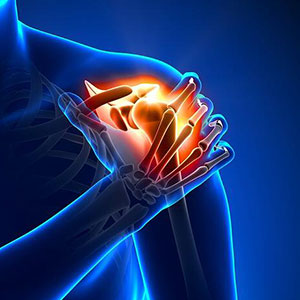
Arthroscopic Joint Repair Implants
High-strength suture anchors, interference screws, and PEEK buttons engineered for shoulder, knee, and hip arthroscopic joint preservation procedures. Delivering exceptional tensile strength and reduced micro-motion.

Joint Arthroplasty Surgical Instrumentation Kits
Complete surgical instrumentation sets including broaches, trial heads, reamers, and alignment guides crafted from corrosion-resistant surgical stainless steel, ensuring surgical precision and seamless intra-operative intra-articular fitting.
Material & Mechanical Performance Standards
| Prosthesis Parameter | Titanium Grade 5 (Ti-6Al-4V ELI) | Stainless Steel 316L / SS LVM | Ultra-High Polyethylene (UHMWPE) |
|---|---|---|---|
| Primary Standard | ISO 5832-3 / ASTM F136 | ISO 5832-1 / ASTM F138 | ISO 5834-2 / ASTM F648 |
| Tensile Strength (MPa) | ≥ 860 MPa | ≥ 690 MPa | ≥ 40 MPa |
| Yield Strength (MPa) | ≥ 795 MPa | ≥ 310 MPa | ≥ 21 MPa |
| Osseointegration Profile | Excellent (Porous HA / Plasma Spraying) | Moderate (Cemented Fixation Preferred) | N/A (Articular Surface) |
| Corrosion Resistance | Superior Passivated Oxide Layer | High Resistance (Low Carbon Content) | Inert Biopolymer |
Technological Breakthroughs Shaping Next-Generation Joint Prostheses
The field of joint reconstruction is undergoing a technological renaissance. Modern orthopedic surgeons and hospital procurement boards no longer accept high revision rates caused by aseptic loosening, wear debris-induced osteolysis, or stress shielding. To address these clinical challenges, implant manufacturers are adopting revolutionary materials and digital fabrication methodologies.
A. Additive Manufacturing & Porous Osseointegrative Structures
Traditional smooth or grit-blasted implant stems relied heavily on bone cement (PMMA) for fixation. Contemporary cementless orthopedic joint prostheses utilize 3D porous titanium lattice structures that mimic trabecular bone geometry. By matching the elastic modulus of human cancellous bone (1.5 to 3.0 GPa), 3D-printed porous implants dramatically minimize stress shielding—a phenomenon where rigid metal implants absorb natural bone loads, leading to localized bone resorption.
B. Advanced Wear-Resistant Tribological Interfaces
The longevity of a joint replacement heavily depends on the bearing surface friction coefficient. Highly cross-linked polyethylene (XLPE) blended with Vitamin E (α-tocopherol) has established a new benchmark in joint tribology. The antioxidant properties of Vitamin E prevent free-radical oxidation, significantly reducing wear debris particles that trigger osteolysis and joint failure. Combined with femoral heads crafted from Cobalt-Chromium-Molybdenum (CoCrMo) or Biolox Delta ceramics, joint service life can now comfortably exceed 25 to 30 years.
C. Smart Sensors and Patient-Specific Implants (PSI)
The future of arthroplasty lies in digitized precision. Pre-operative CT/MRI scanning combined with CAD/CAM technology enables the manufacture of Patient-Specific Implants and custom surgical cutting guides. Furthermore, embedded micro-sensors within the tibial or femoral component are beginning to offer real-time telemetry on intra-articular pressure, joint kinematics, and early signs of bacterial infection, providing actionable data directly to orthopedic care teams.
Future Procurement Trends in Global Orthopedic Implant Distribution
Global supply chain disruptions, changing healthcare reimbursement models, and stringent regulatory frameworks (such as the EU MDR 2017/745) are fundamentally altering how medical device buyers source joint prostheses. Importers, OEM buyers, and ministry of health purchasing agents are pivoting toward strategic manufacturing hubs like India to maintain margins without compromising quality.
1. Shifting to High-Value Manufacturing Hubs
Healthcare providers worldwide face shrinking budgets and rising surgical volumes. India has emerged as a premier destination for orthopedic manufacturing, offering European and American certified quality (ISO 13485, CE) at significantly optimized production costs, allowing distributors to achieve competitive margins.
2. Supply Chain Diversification & Buffer Stocking
B2B buyers are moving away from single-source domestic suppliers toward multi-regional procurement strategies. Establishing direct OEM/ODM partnerships with certified Indian exporters ensures continuous delivery of critical orthopedic implants during global logistics bottlenecks.
3. Rigorous Regulatory Harmonization & UDI Compliance
Traceability is mandatory. Global buyers prioritize suppliers capable of providing complete raw material mill test certificates (MTC), 100% Unique Device Identification (UDI) laser marking, non-destructive testing (NDT), and cleanroom sterile barrier packaging.
Why Global Procurement Leaders Partner with Remak Ortho
At Remak Ortho Pvt Ltd, quality is not merely a department—it is the foundational philosophy embedded in every step of our manufacturing workflow. Our state-of-the-art facility in Ahmedabad, Gujarat, is equipped with high-precision CNC multi-axis turning centers, vertical machining centers (VMC), and automated Swiss-type sliding head lathes designed specifically for complex implant micro-machining.
ISO 13485:2016, CE Mark, Indian FDA, and WHO-GMP accredited facility ensuring uncompromising biological safety and dimensional stability.
From raw bar stock inspection to CNC machining, surface polishing, ultrasonic cleaning, and cleanroom packaging—100% quality controlled.
Trusted by healthcare institutions, government tenders, and orthopedic distributors across 30+ countries in LATAM, Africa, Middle East, and Asia.
Every batch of raw material—whether Titanium Grade 5 (Ti-6Al-4V ELI) or SS 316L/LVM—undergoes chemical analysis, tensile testing, and microstructural verification prior to production. Our coordinate measuring machines (CMM) and optical profile projectors ensure that tolerances on critical taper joints and modular interfaces meet sub-micron accuracy, virtually eliminating intra-operative fitting errors.
Frequently Asked Questions by Global Procurement Officers
To assist hospital purchasing departments, medical device importers, and OEM partners, we have compiled comprehensive answers to the most common queries encountered in international orthopedic procurement.
When importing joint prostheses, buyers must ensure that raw materials comply strictly with medical-grade standards such as ASTM F136 / ISO 5832-3 for Titanium Grade 5 (Ti-6Al-4V ELI), ASTM F138 / ISO 5832-1 for Implant-Grade Stainless Steel 316L, and ISO 5834-2 for UHMWPE. Manufacturers should provide complete Material Test Certificates (MTC) with heat number traceability for every batch. Remak Ortho provides full chemical, physical, and metallurgical test documentation with all shipments.
Titanium Grade 5 (Ti-6Al-4V ELI) offers a significantly lower elastic modulus (~110 GPa) compared to Stainless Steel 316L (~200 GPa), making it closer to human bone and reducing stress shielding. Titanium also forms a self-healing passivated oxide layer, delivering superior bio-compatibility and osseointegration capability for cementless applications. Stainless Steel 316L/LVM, however, provides exceptional shear strength and cost efficiency, making it an excellent material for trauma fixations, temporary joint spacers, and cemented partial prostheses.
We provide a complete regulatory dossier package required by foreign health authorities (such as ANVISA, SFDA, MOH, or local drug authorities). This includes ISO 13485:2016 certificates, CE declaration of conformity, Free Sale Certificates (FSC), Certificate of Analysis (CoA), sterilization validation reports (Gamma/EO), stability testing data, and biocompatibility test reports (ISO 10993).
Yes. We specialize in OEM contract manufacturing and custom ODM solution development. Utilizing our multi-axis CNC and VMC machinery, our R&D engineering team can work directly from client CAD models, 2D technical drawings, or physical samples to produce custom joint implant geometries, specialized broaches, and private-label surgical kits under strict non-disclosure agreements (NDA).
Our implants are cleaned using multi-stage ultrasonic aqueous washing systems and packaged within ISO Class 7 (Class 10,000) cleanrooms. Products are sealed in medical-grade Tyvek double-blister blisters ensuring sterile barrier integrity. We supply products both in non-sterile bulk condition (ready for hospital autoclave) or pre-sterilized via validated Gamma Irradiation, fully compliant with ISO 11607 packaging standards.
Standard catalog products (such as bipolar prostheses, trauma plates, pedicle screws, and standard instruments) are maintained in stock for rapid dispatch within 1 to 2 weeks. Custom OEM manufacturing or large-volume tender orders typically require 4 to 6 weeks, inclusive of raw material verification, CNC machining, surface finishing, and quality control inspection.
Partner with a Premier Orthopedic Joint Prosthesis Manufacturer
Expand your medical product distribution portfolio or secure OEM contract manufacturing with Remak Ortho Pvt Ltd. Our technical team is ready to provide instant quotations, regulatory dossiers, and product catalogs.